2024 - Geneological Research and Material Documentation at Woodlawn Cemetary, NYC
Project Details:
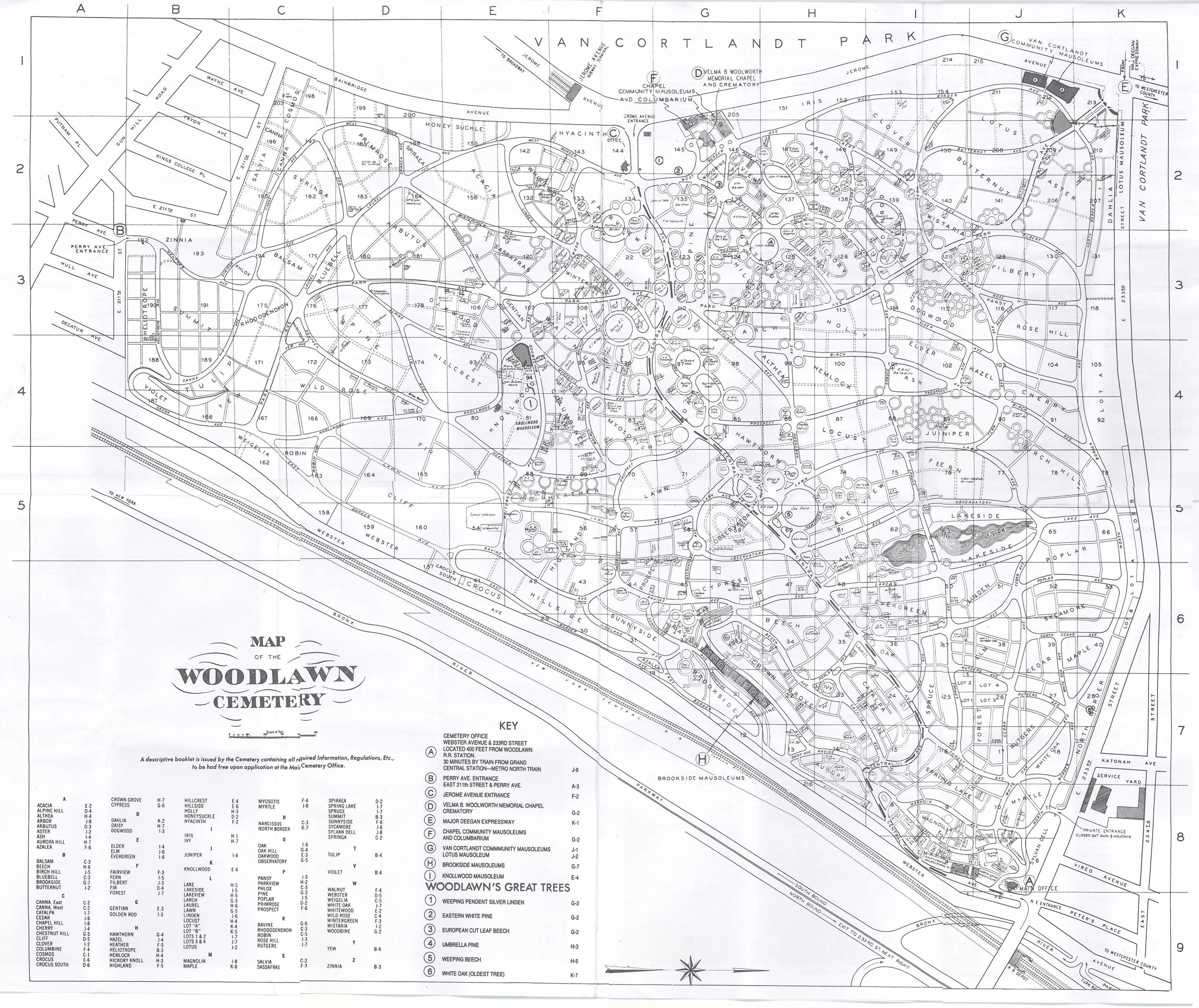
Location: Woodlawn Cemetery, Bronx, New York (Plot 15328, Pine Avenue)
Methods: AutoCAD documentation, site photography, archival research, condition assessment, genealogical tracing
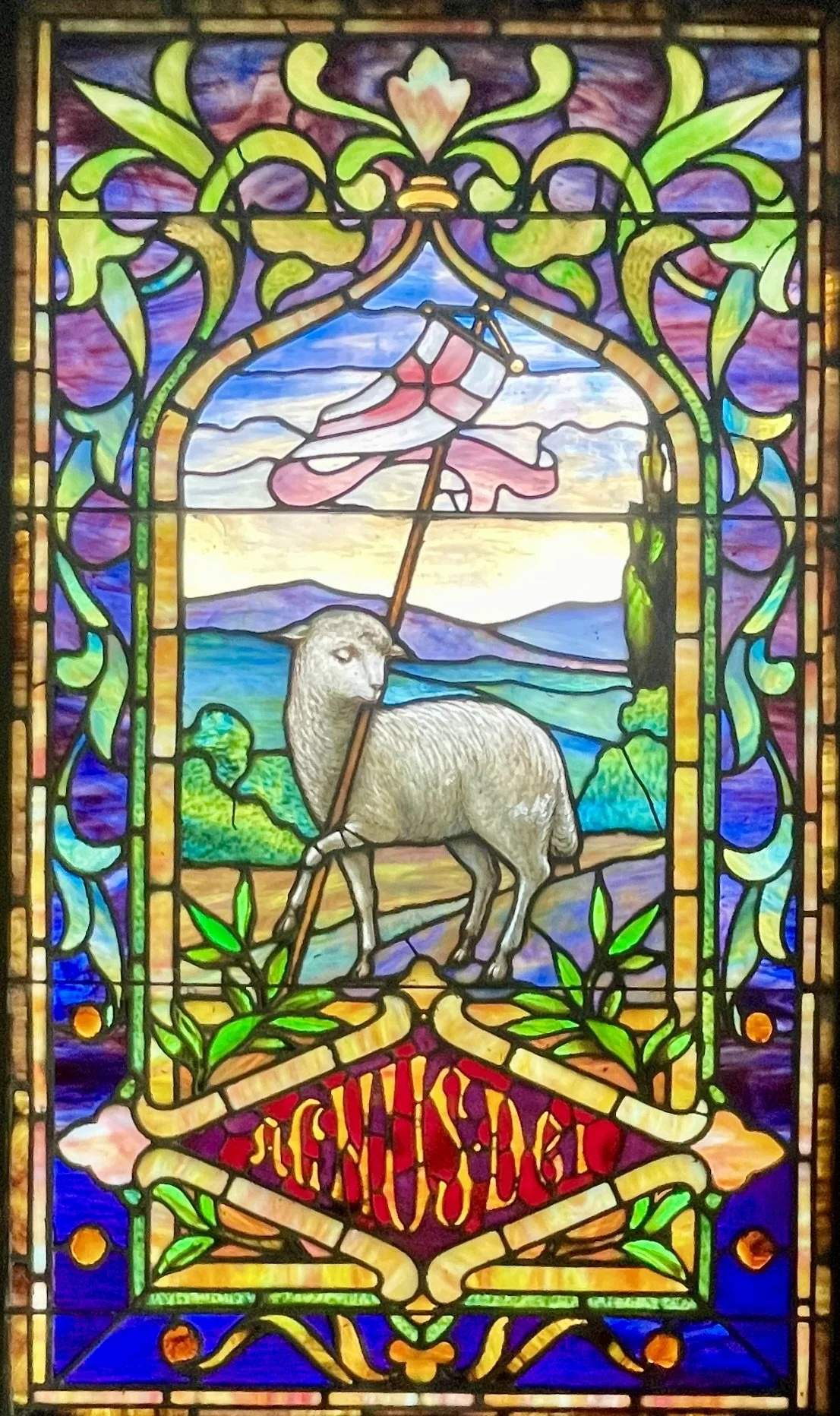
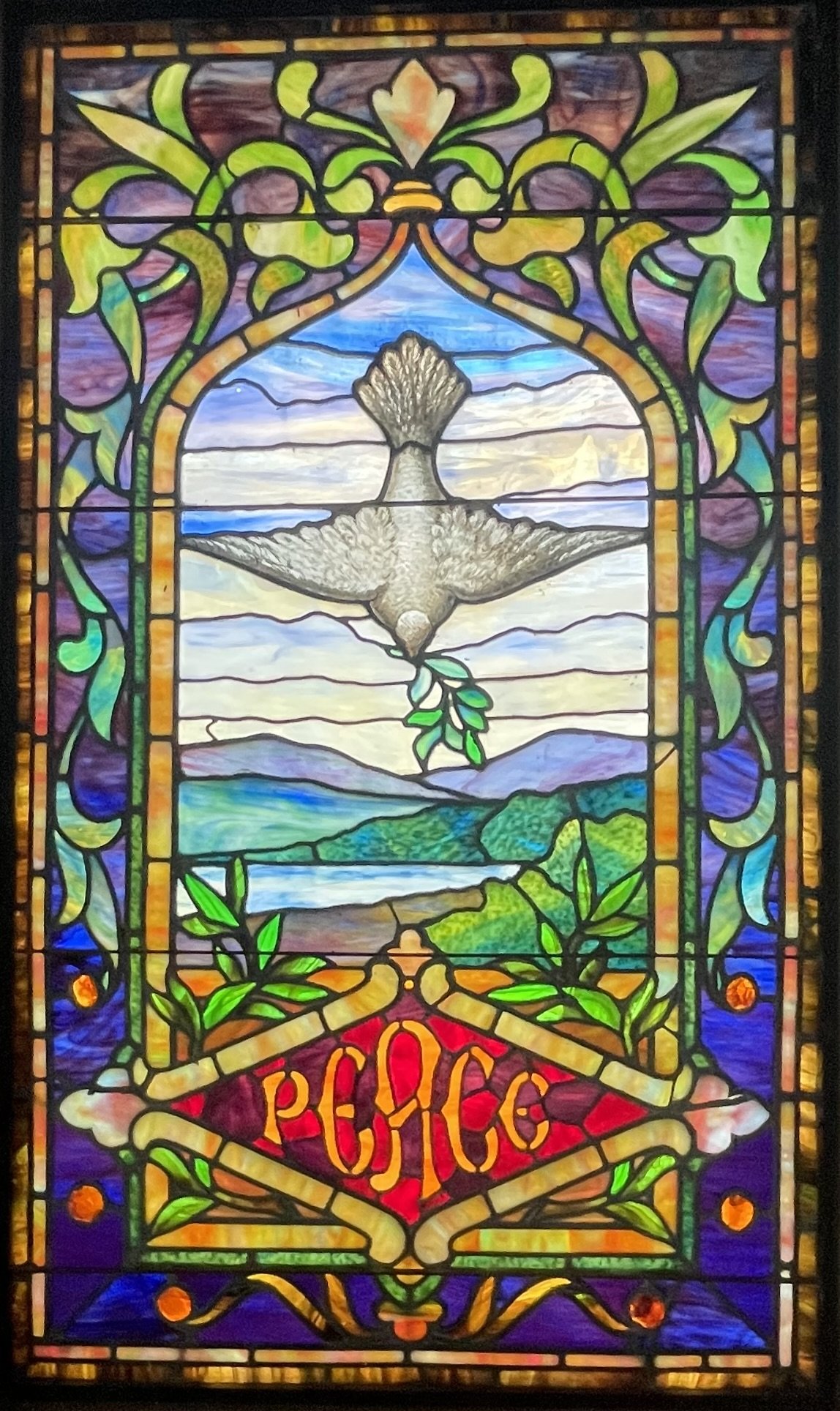
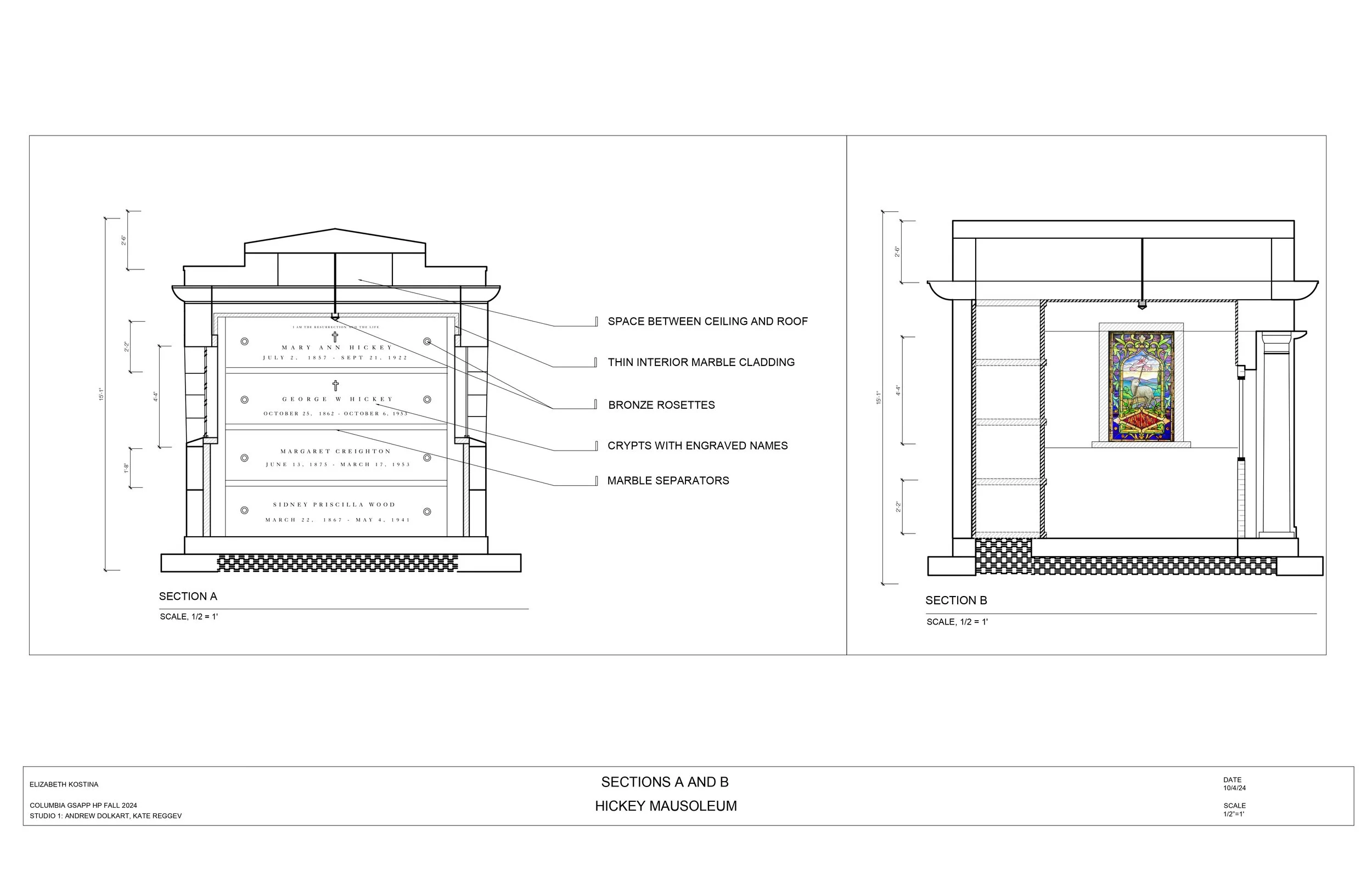
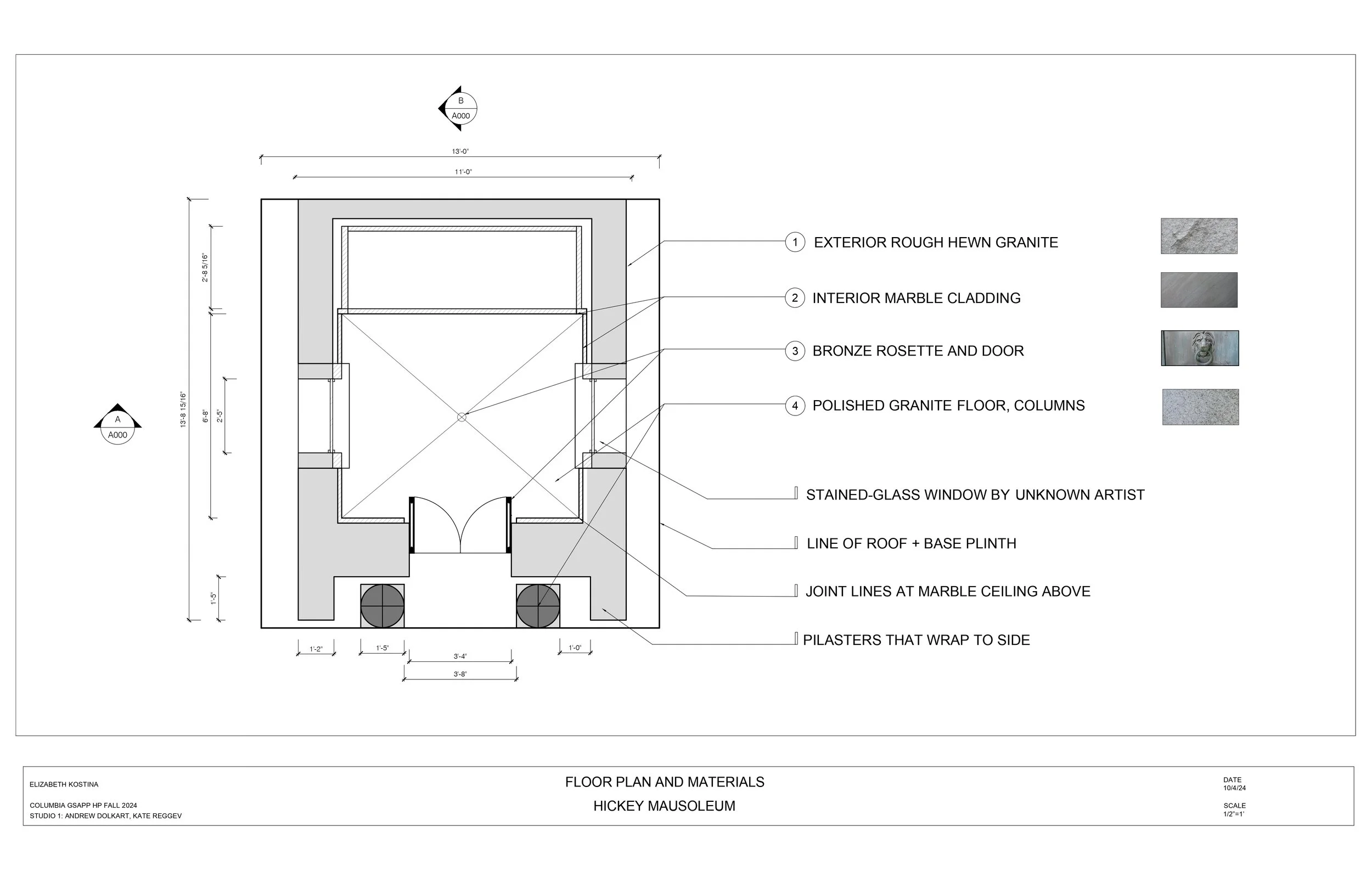
Materials documented: Barre granite (exterior), Vermont Imperial Danby marble (interior), bronze door and hardware, opalescent stained glass windows
Archives consulted: Avery Architecture Library (Woodlawn Cemetery Archive), Ancestry.com, Library and Archives Canada, Brooklyn Daily Eagle, Watertown Daily Times
Studio instructors: Andrew Dolkart, Kate Reggev (Columbia GSAPP Historic Preservation Program)
Project Overview
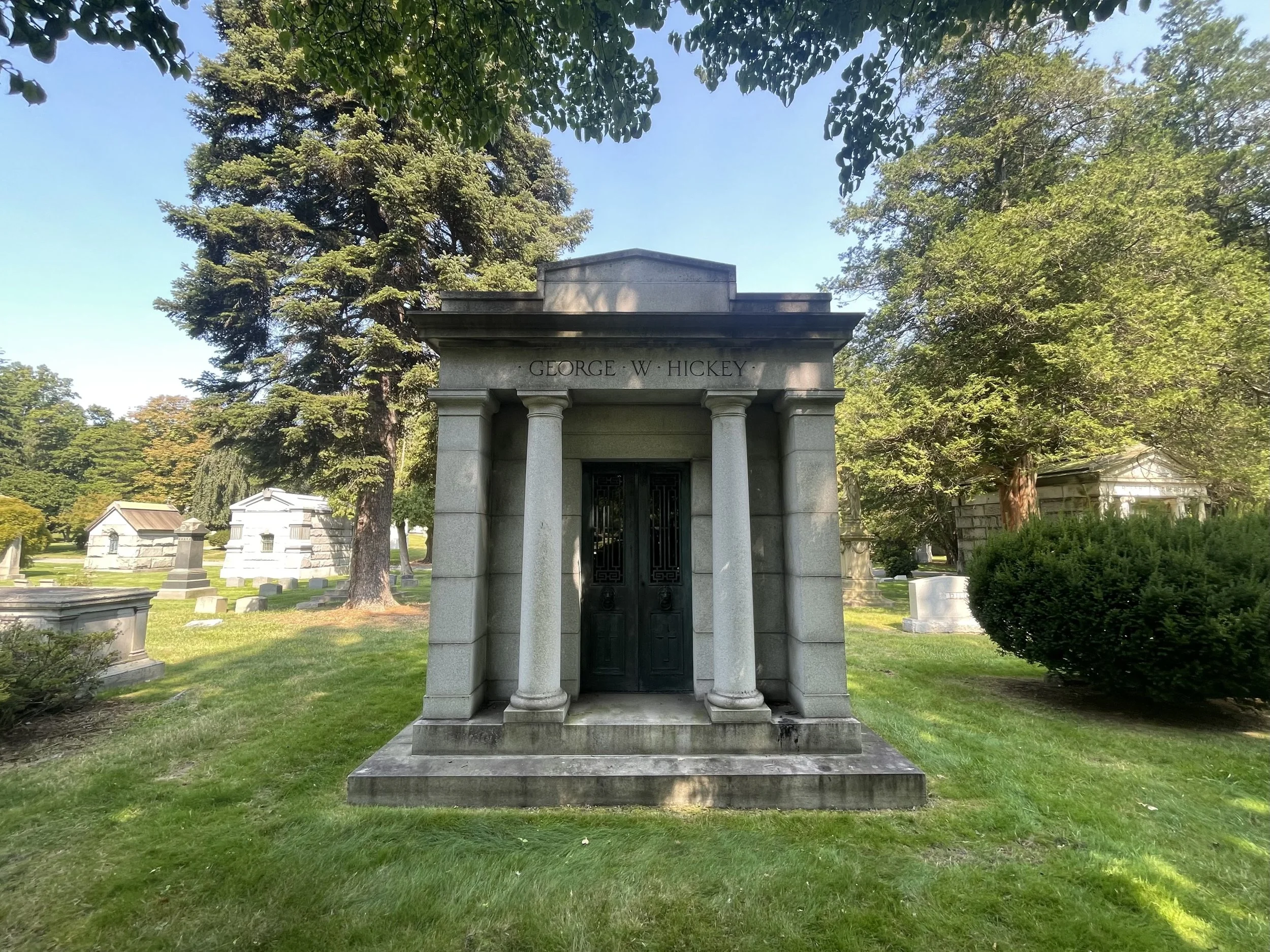
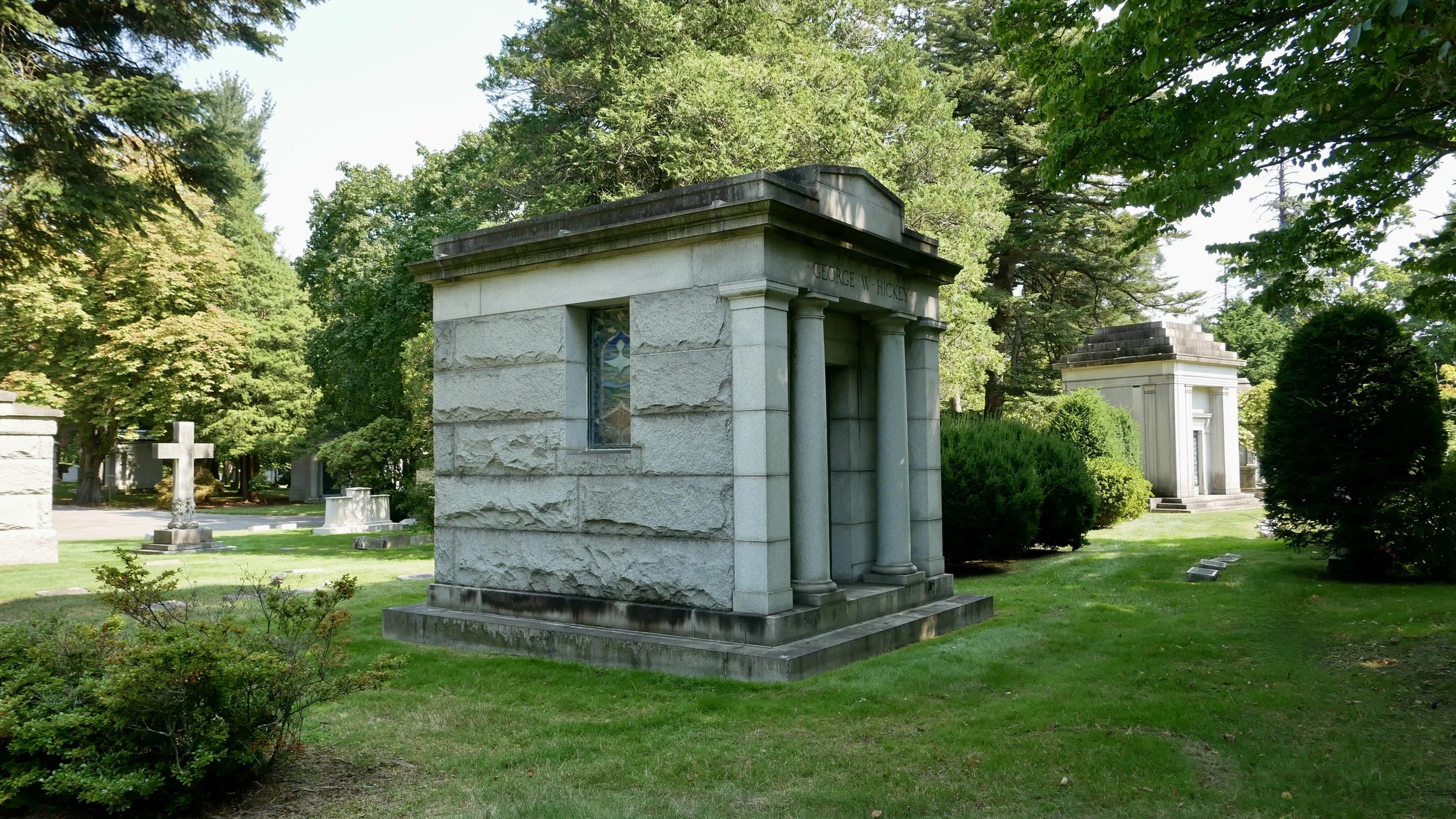
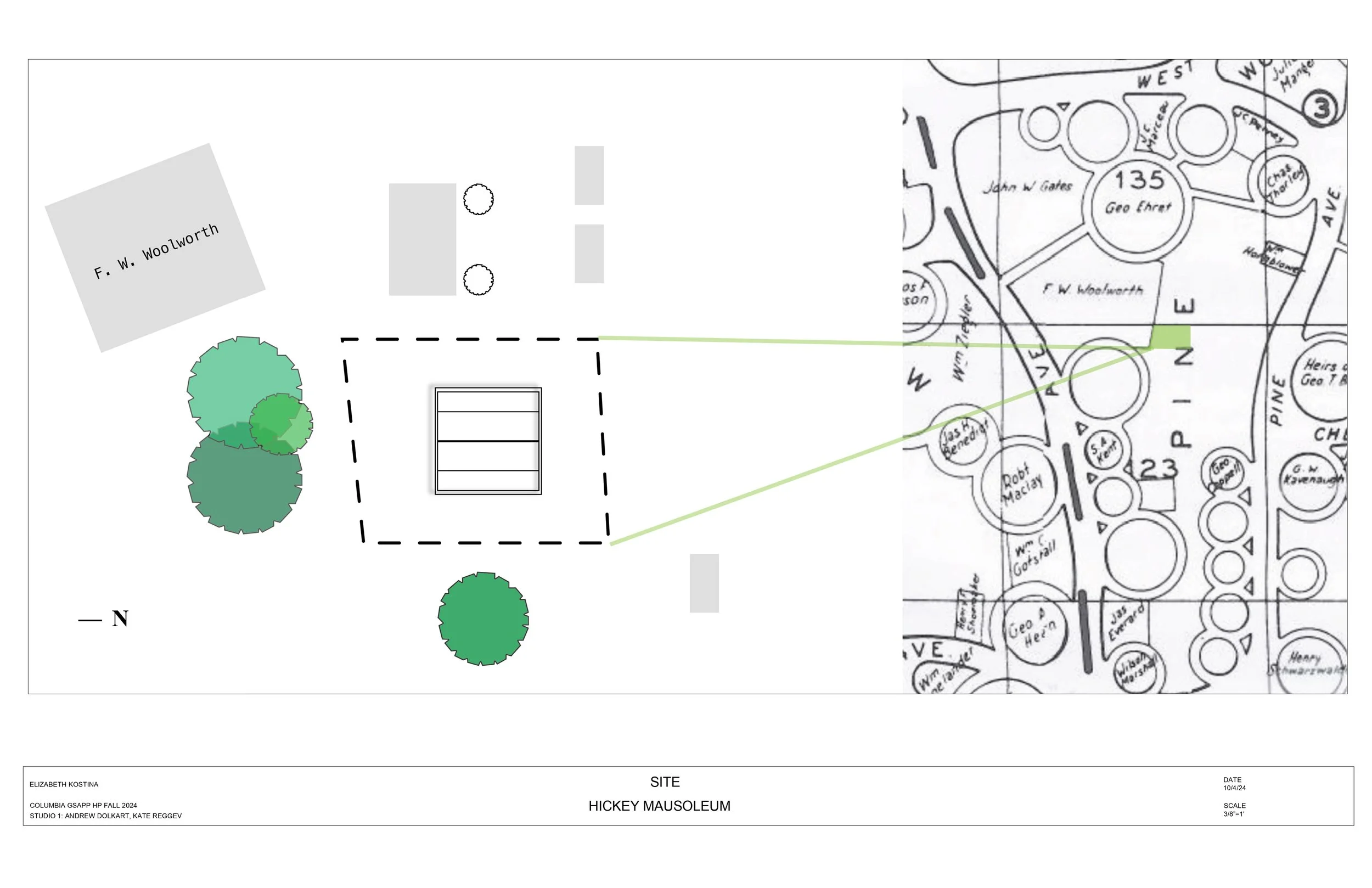
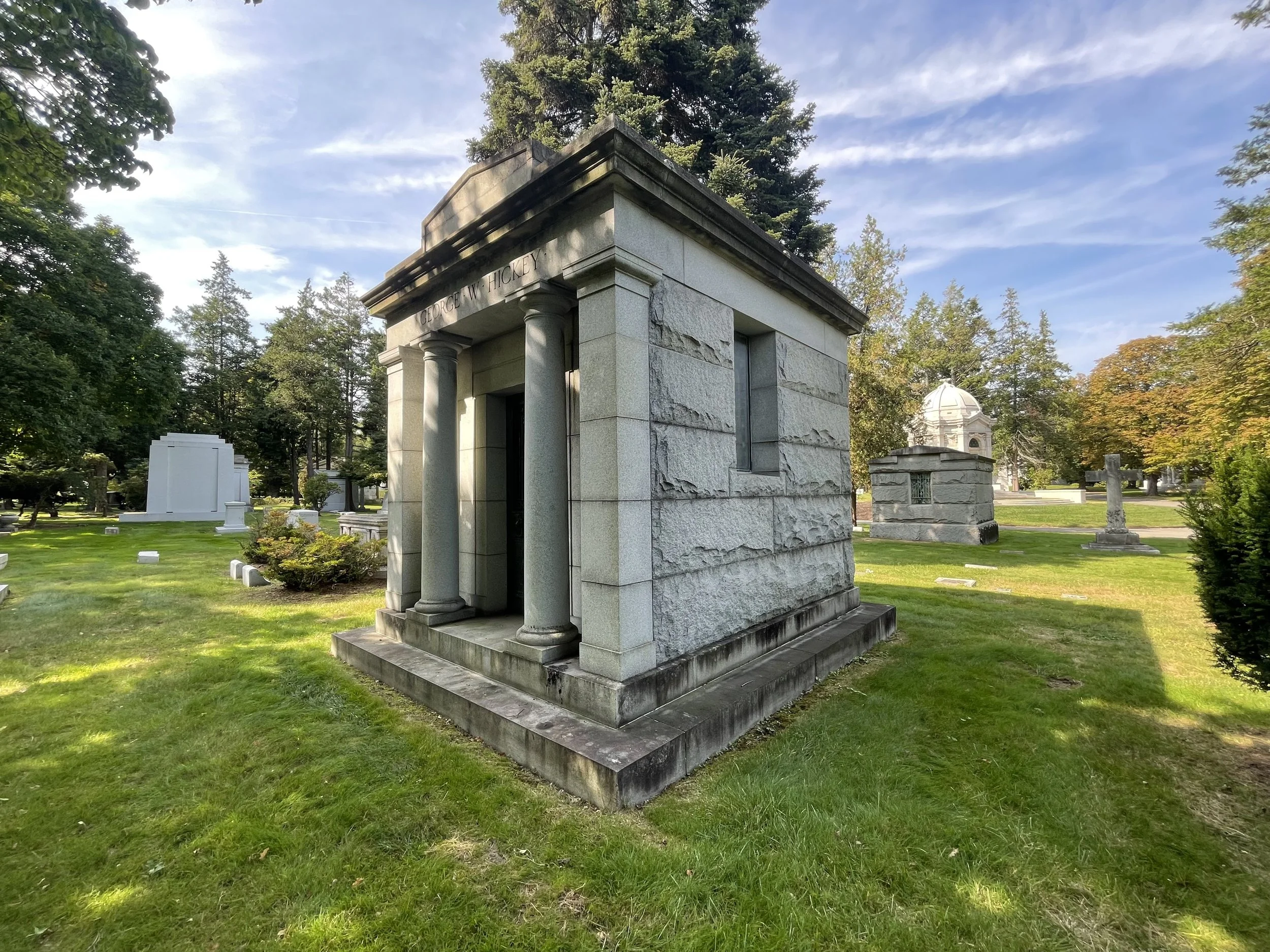
This project combines architectural documentation with genealogical research to understand how a modest mausoleum at Woodlawn Cemetery reveals connections between preservation, family history, and social relationships in early 20th-century New York. The George W. Hickey Mausoleum sits adjacent to the Woolworth family plot at Woodlawn Cemetery in the Bronx. Through measured drawings, condition assessment, and archival research into the Hickey and Creighton families, the project examines how burial sites encode social networks and economic relationships. Mary Hickey (née Creighton) was the sister of Jennie Woolworth (wife of F.W. Woolworth, founder of the F.W. Woolworth Company), and the proximity of their mausoleums reveals how family ties shaped memorial practices.
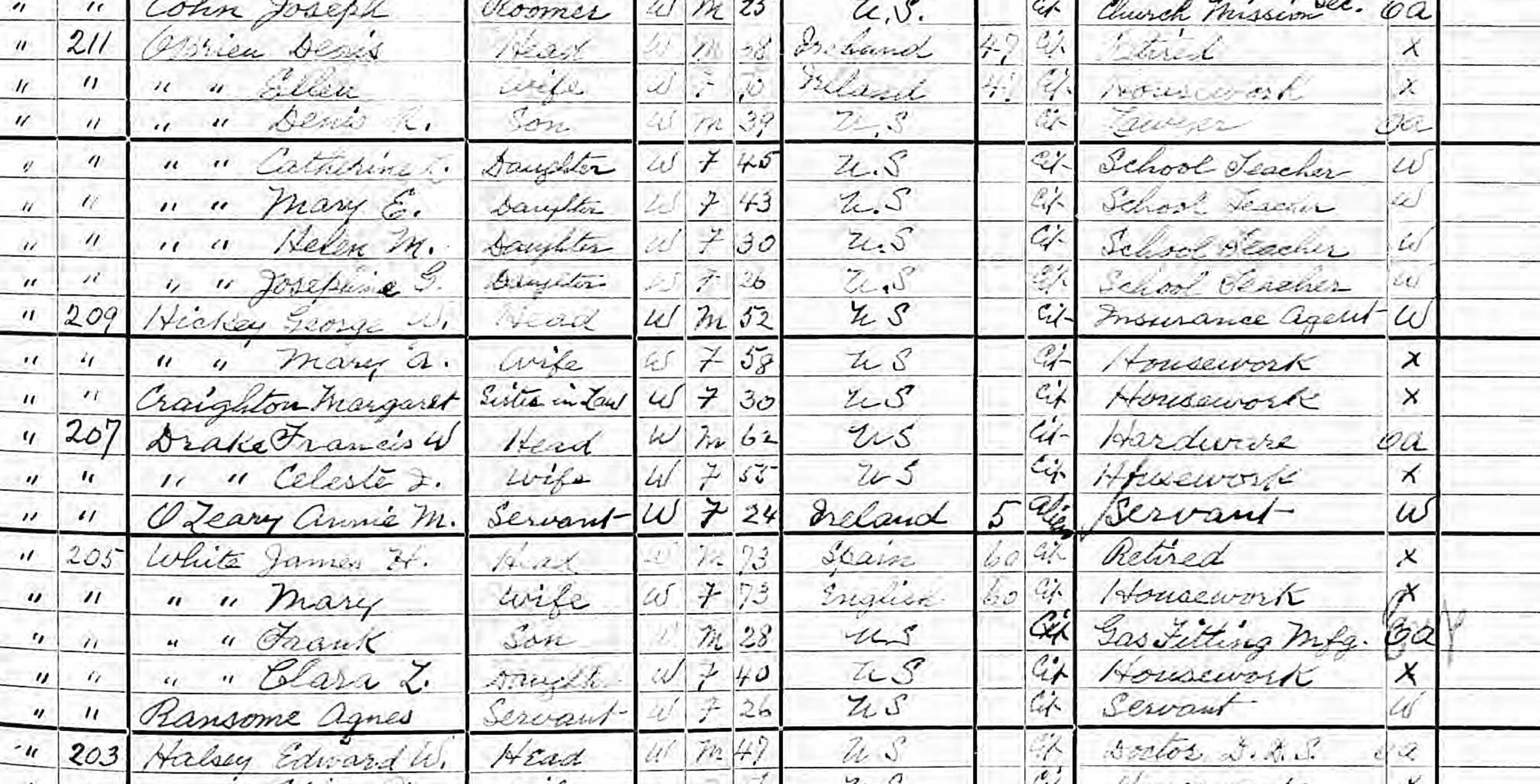
The research uncovered that the Hickeys lived in a Woolworth-owned brownstone at 209 Jefferson Avenue in Brooklyn, that Mary managed the 18th Woolworth store in Poughkeepsie, and that George used Mary's estate—valued at $300,000 in 1923 (approximately $5.5 million today)—to purchase the adjacent burial plot and construct the mausoleum. The project traces these social and economic connections through census records, immigration documents, correspondence in the Avery Library archives, and on-site documentation.
Material Investigation
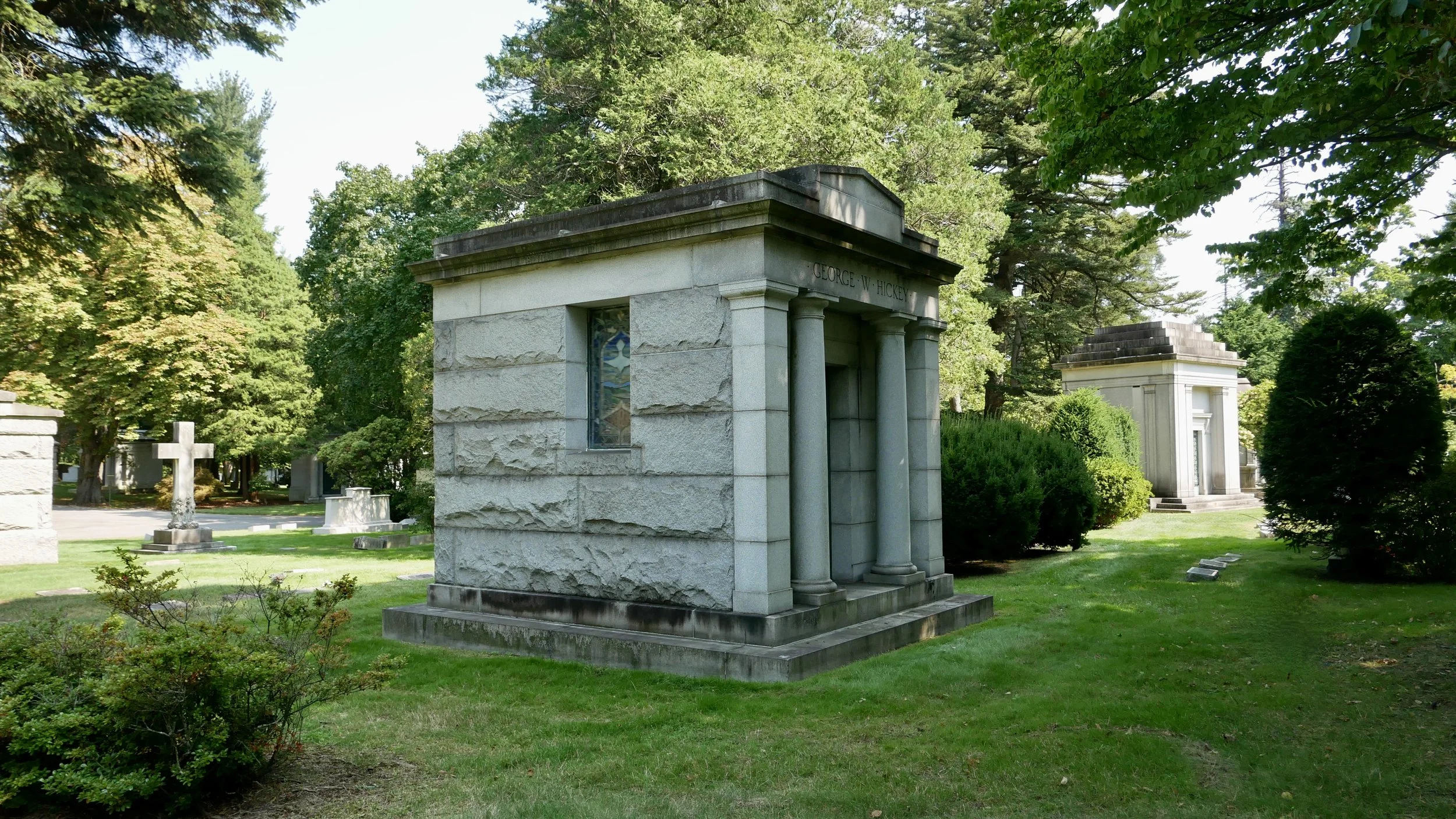
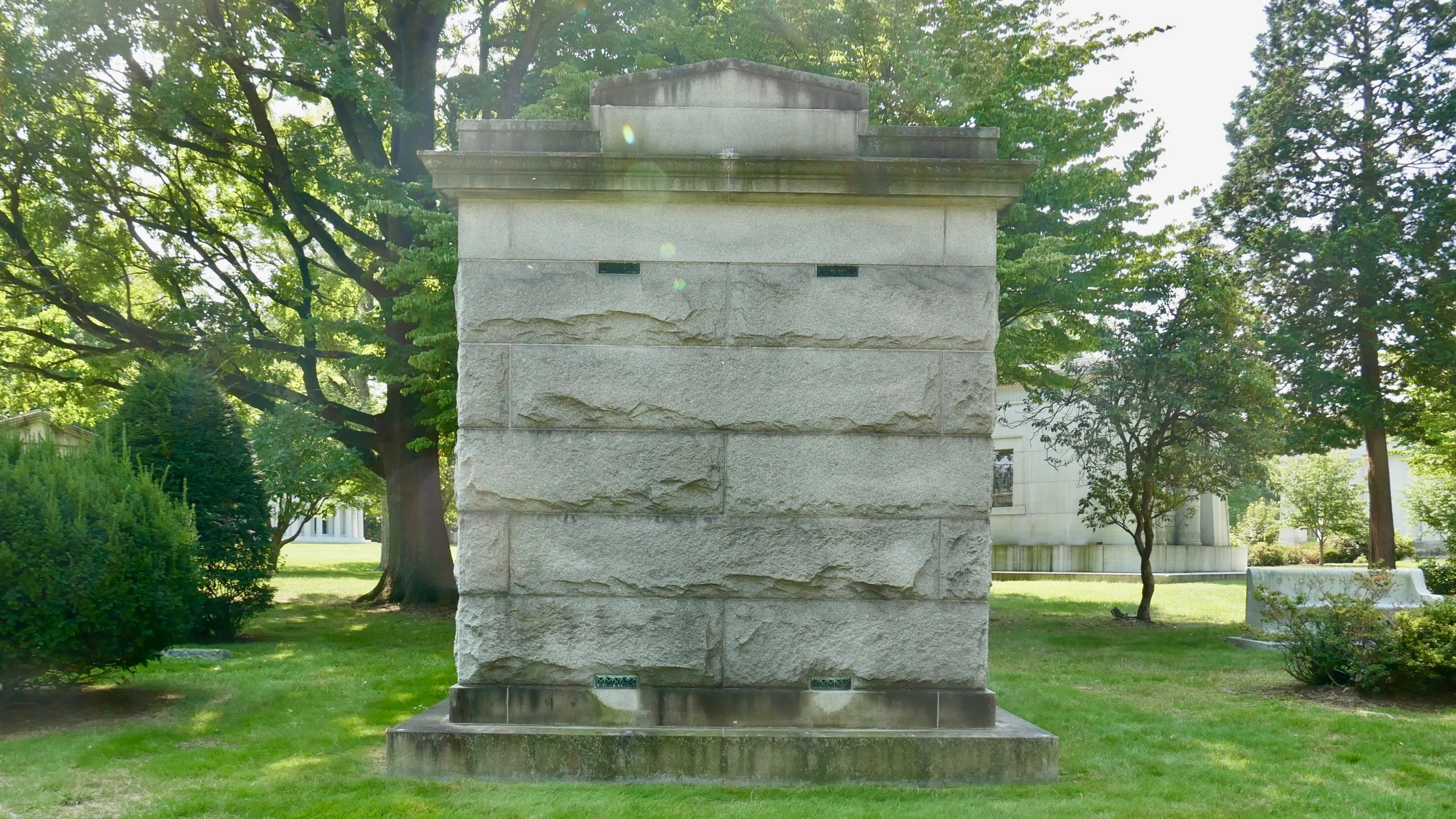
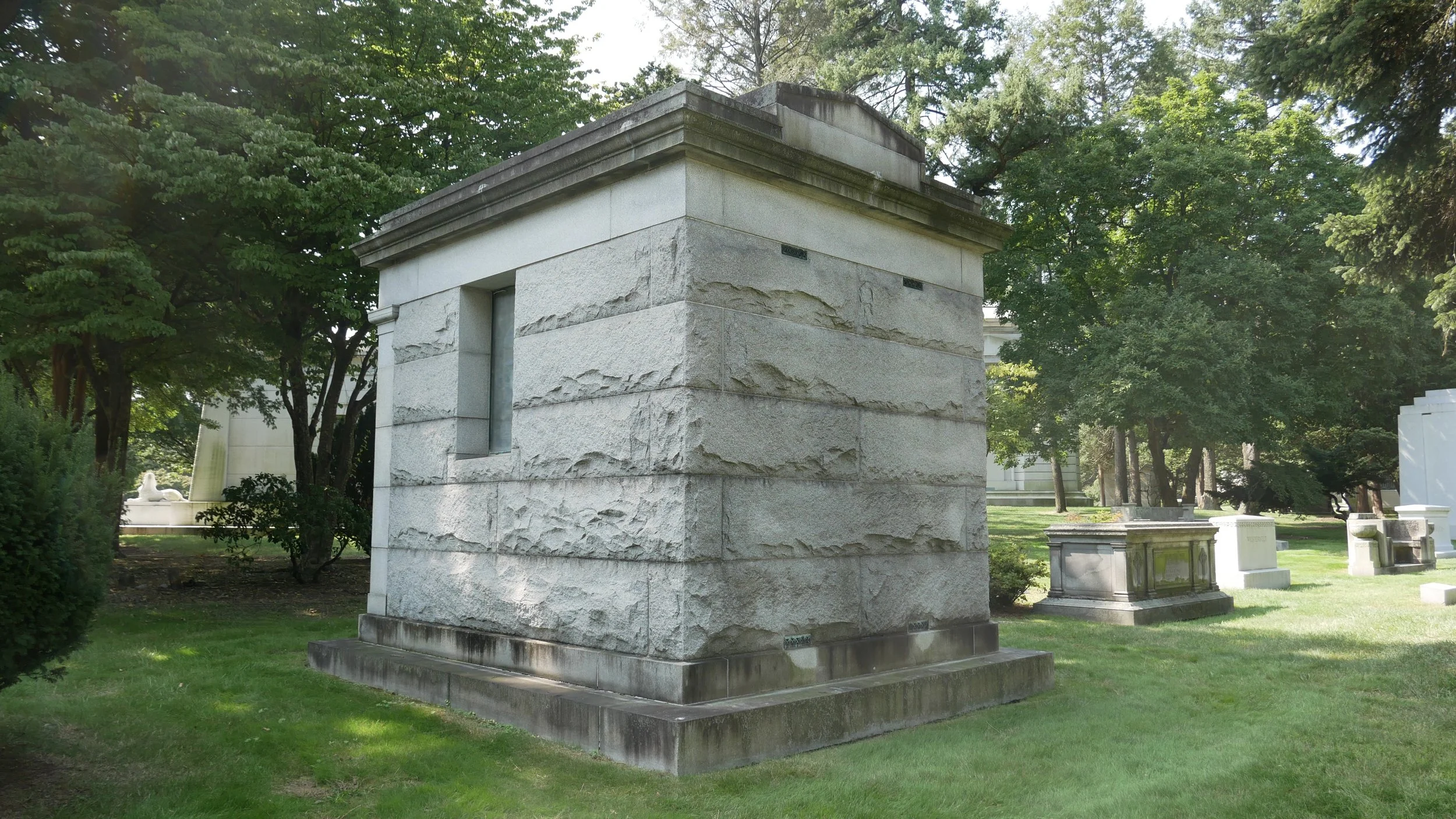
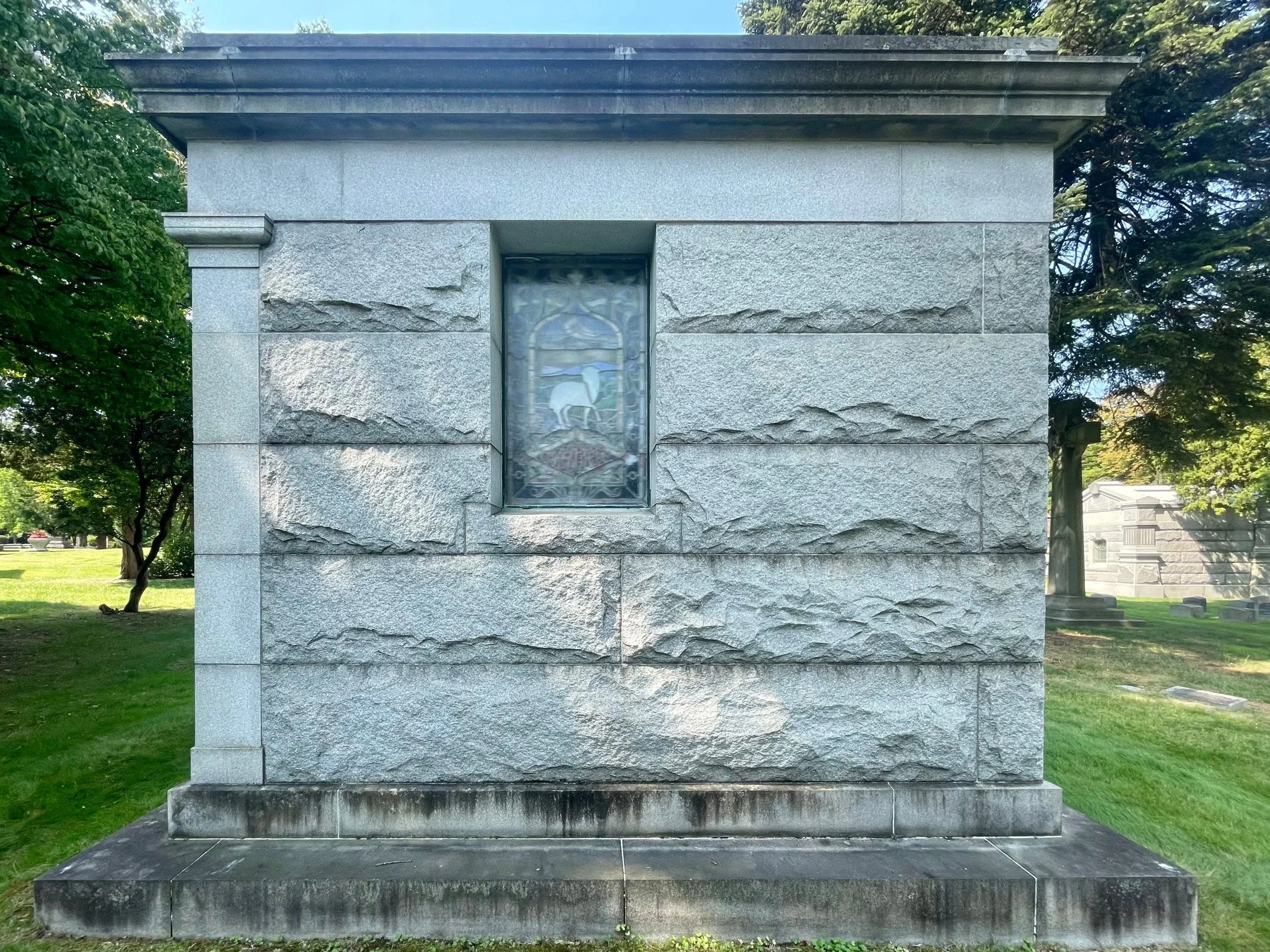
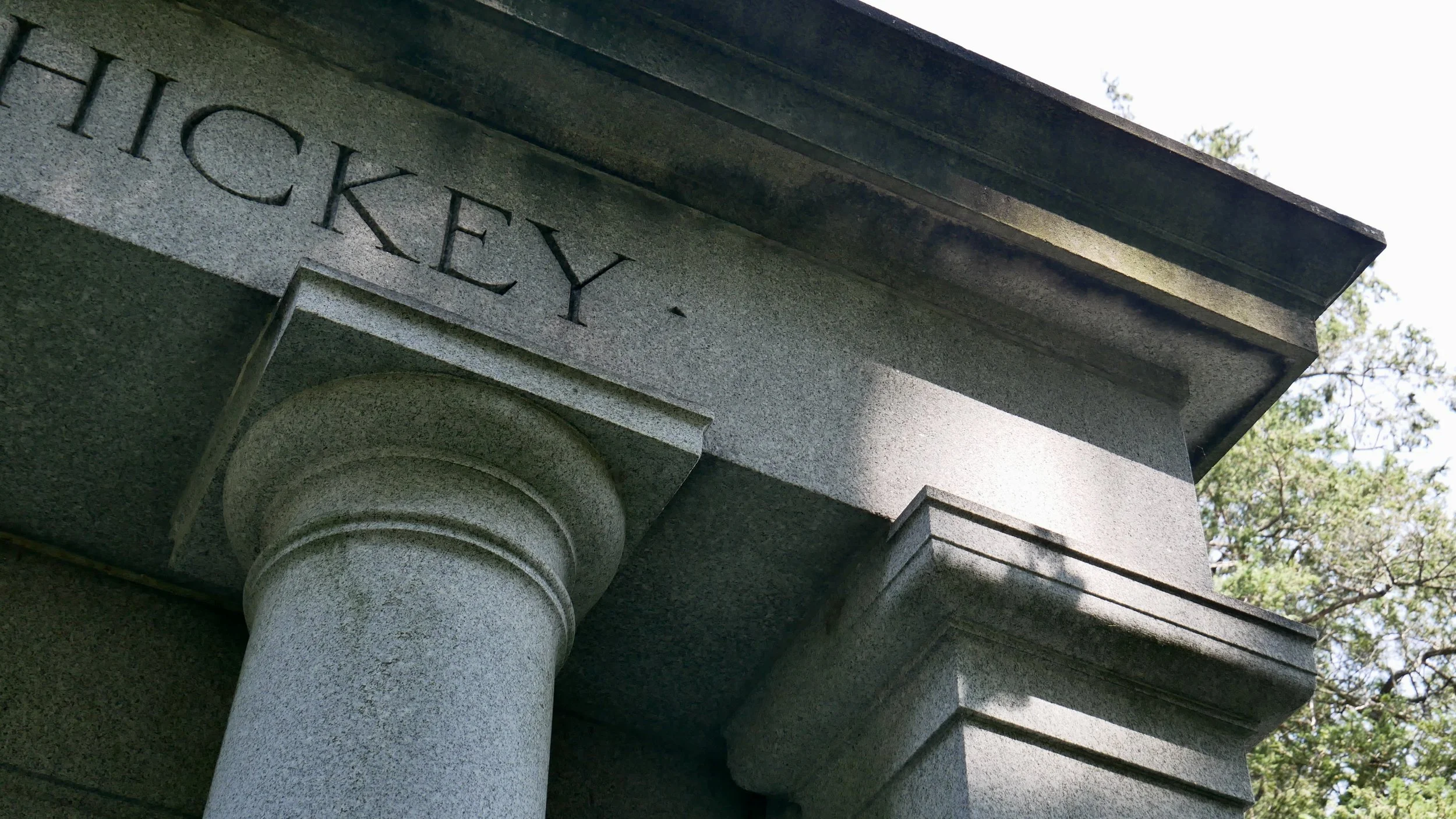
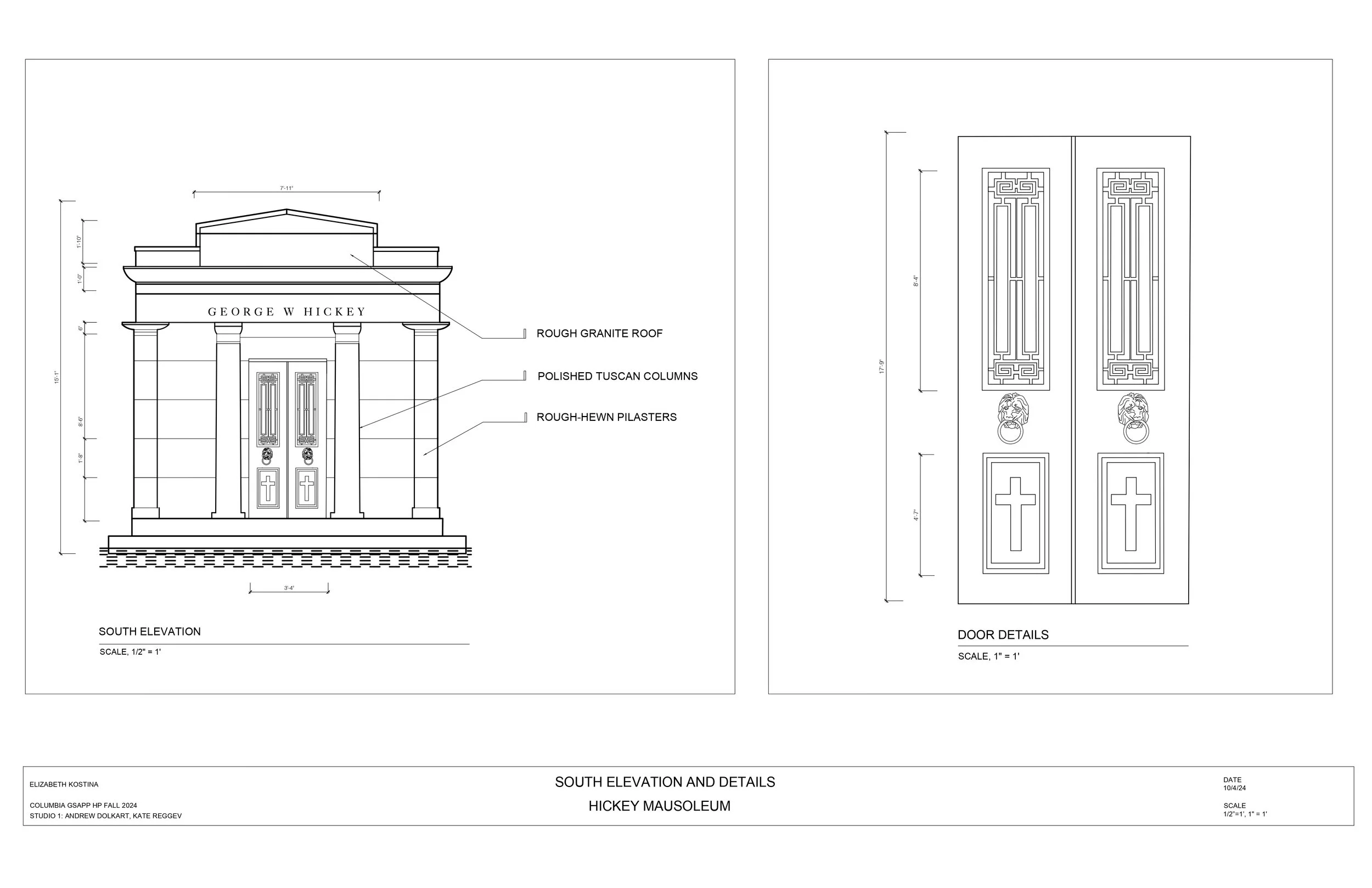
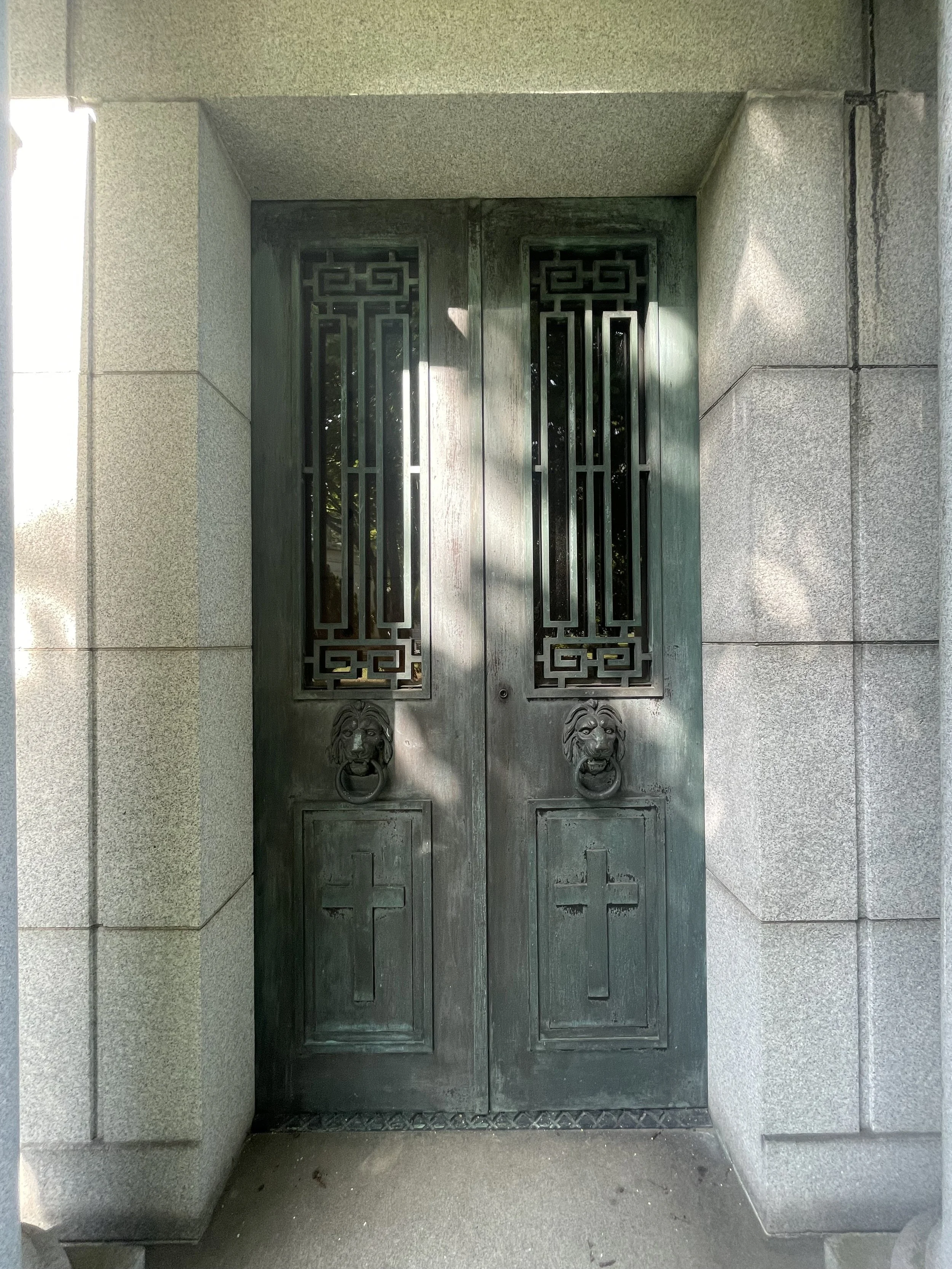
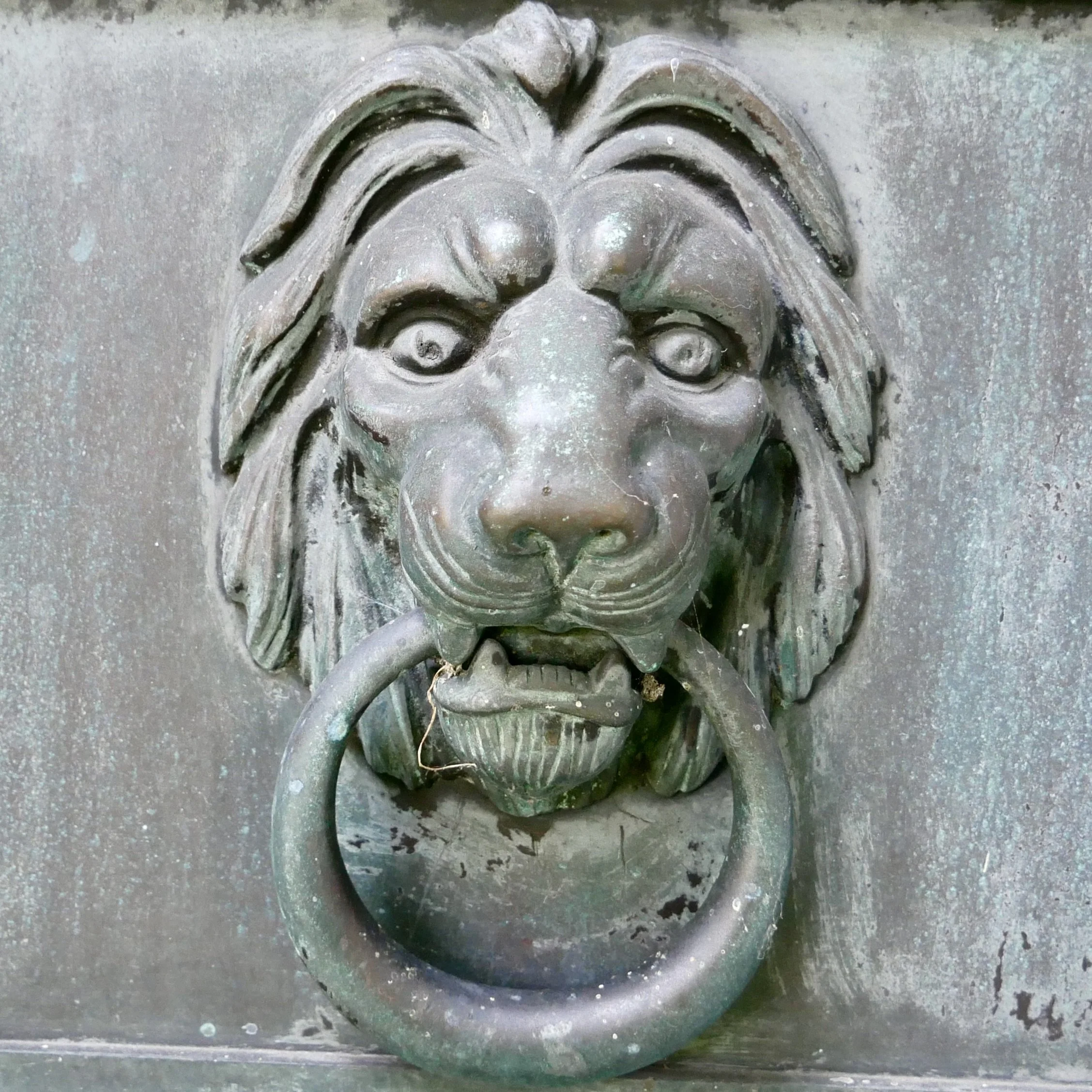
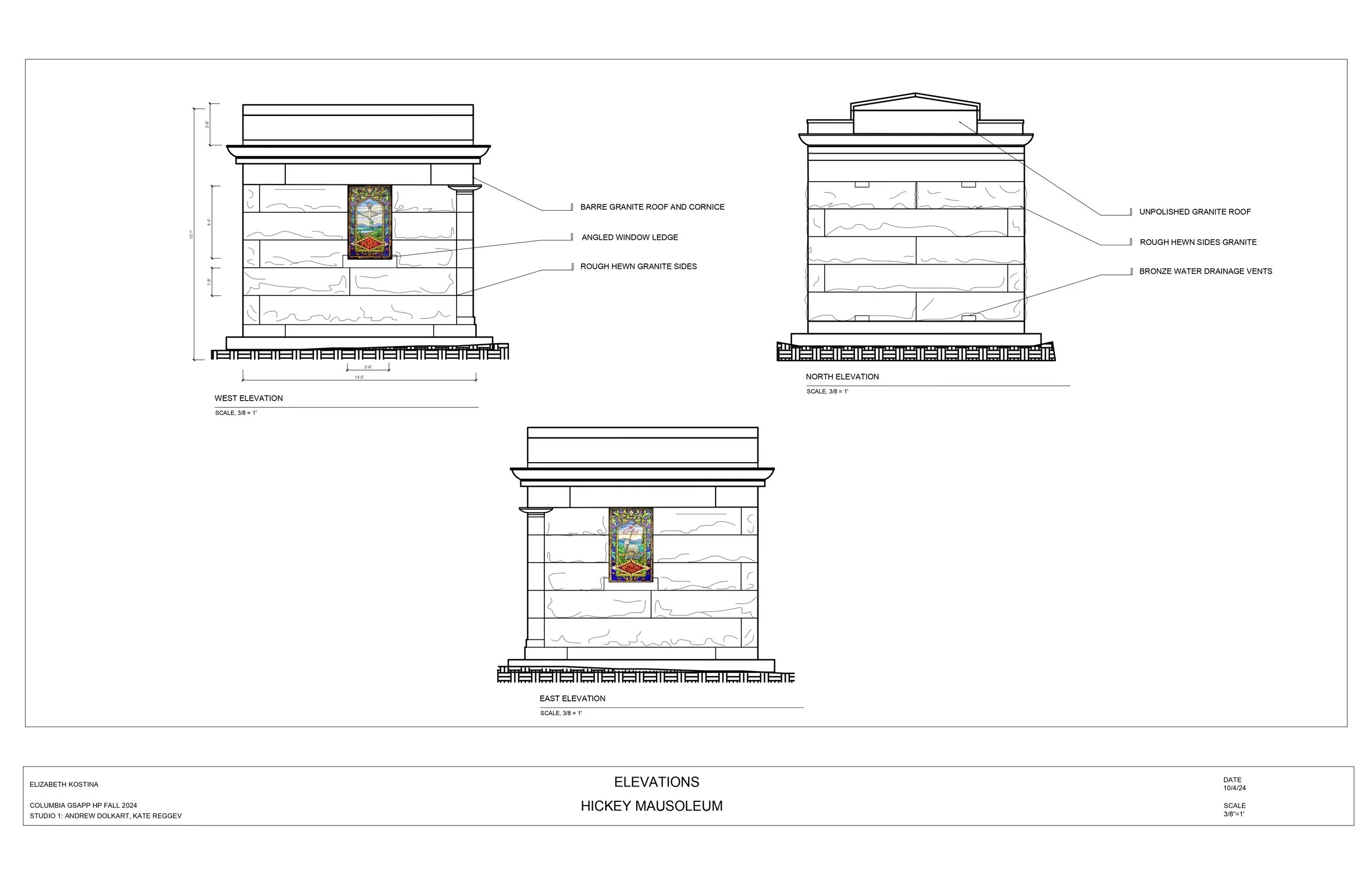
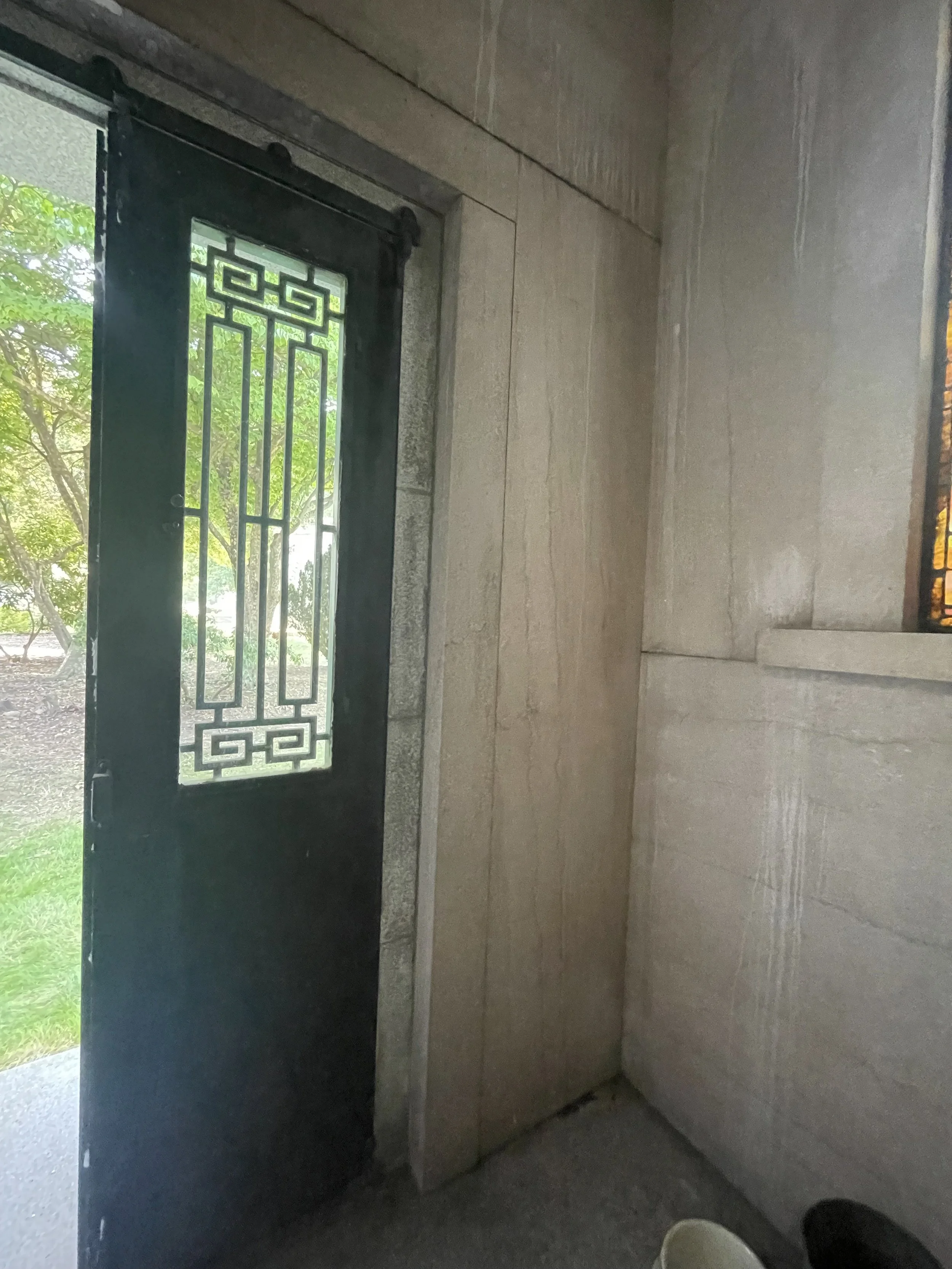
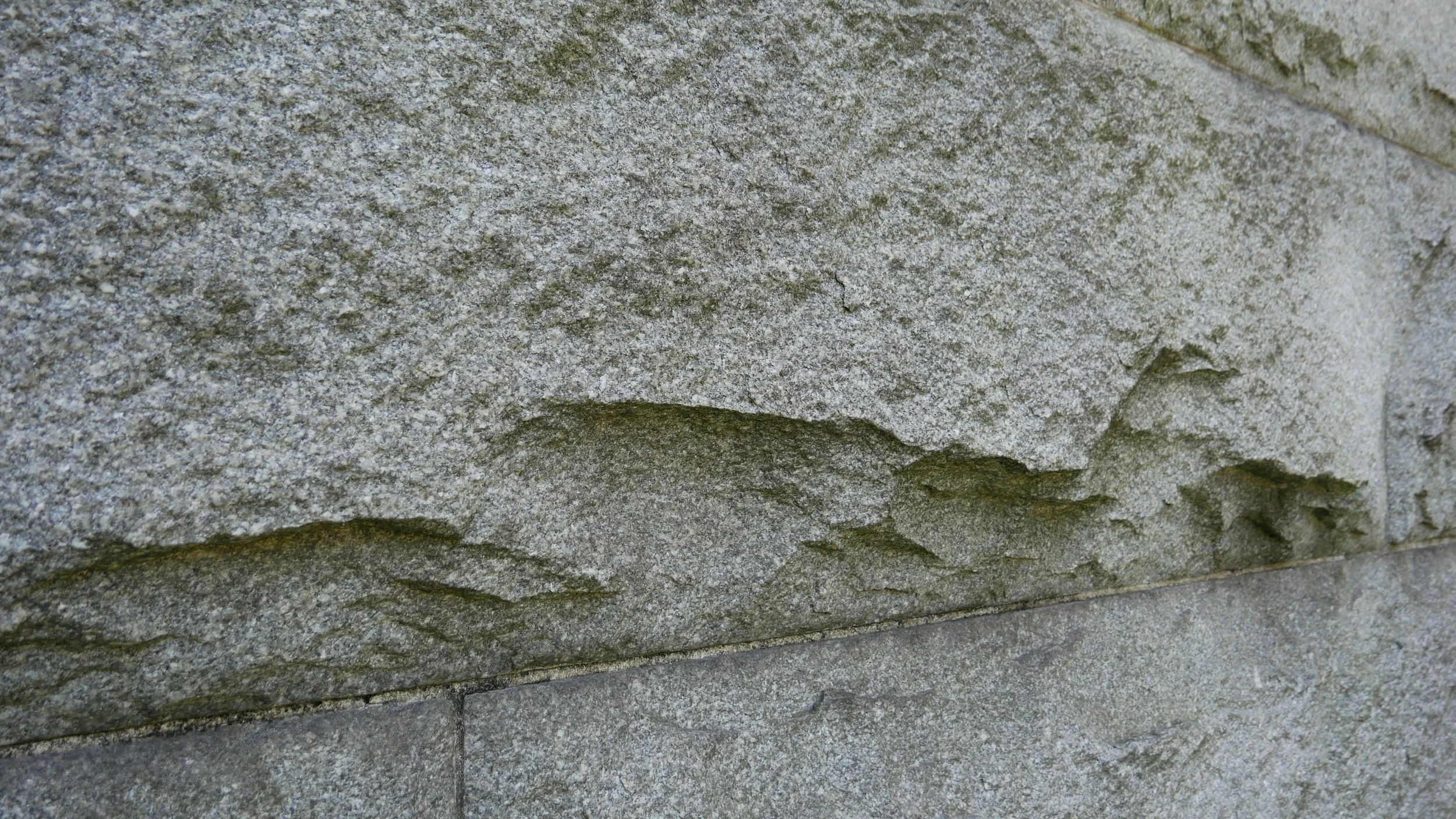
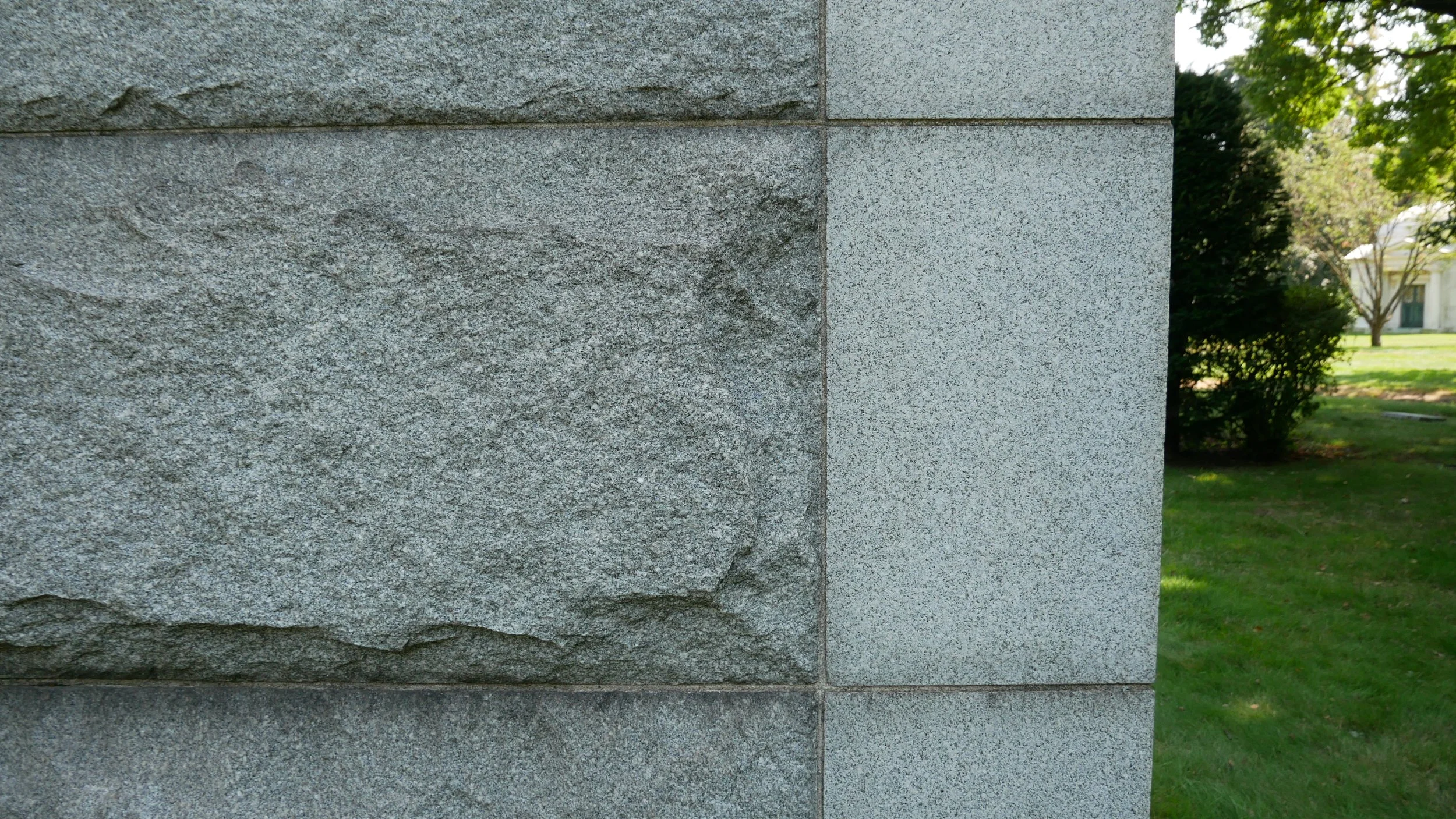
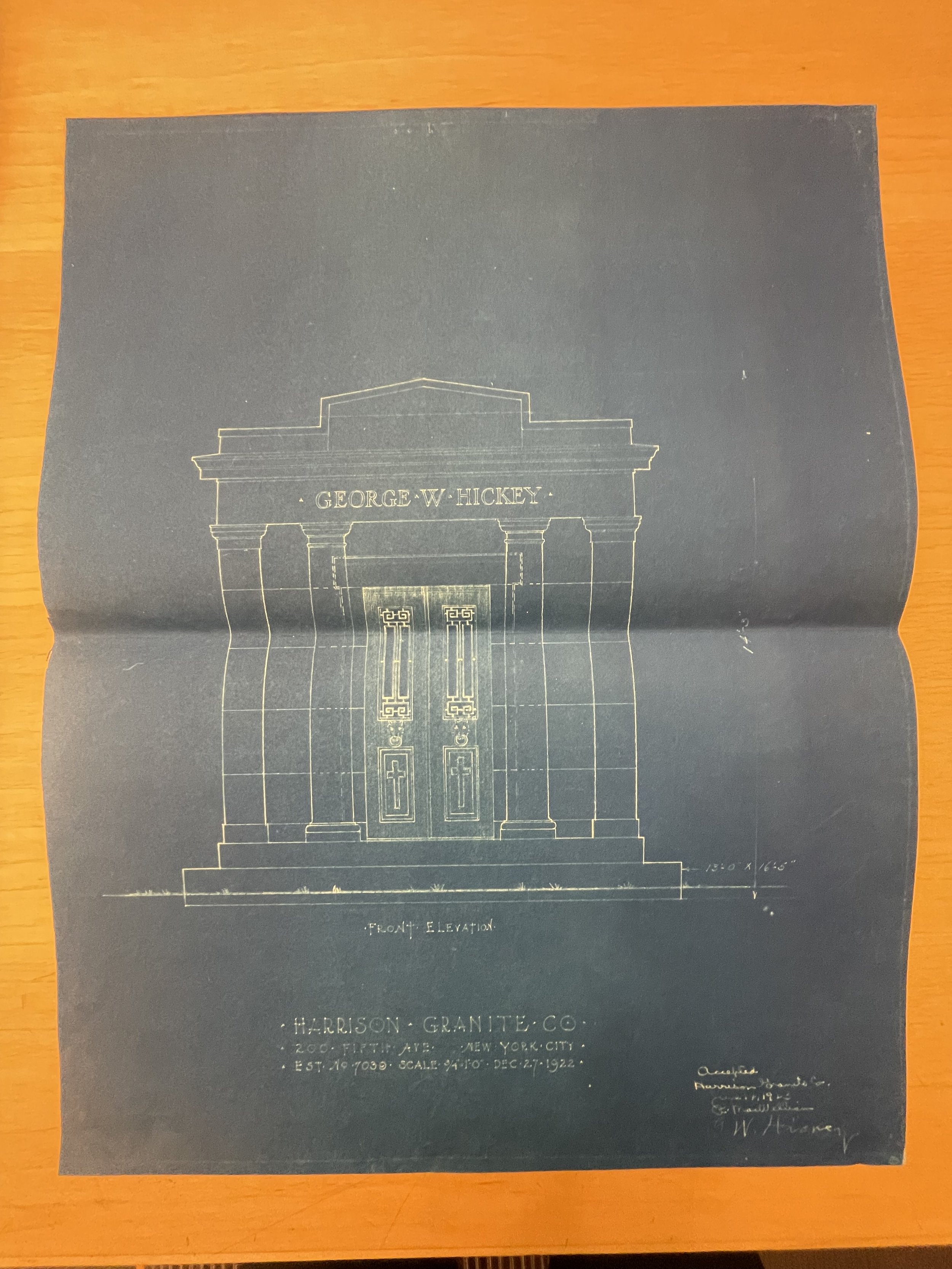
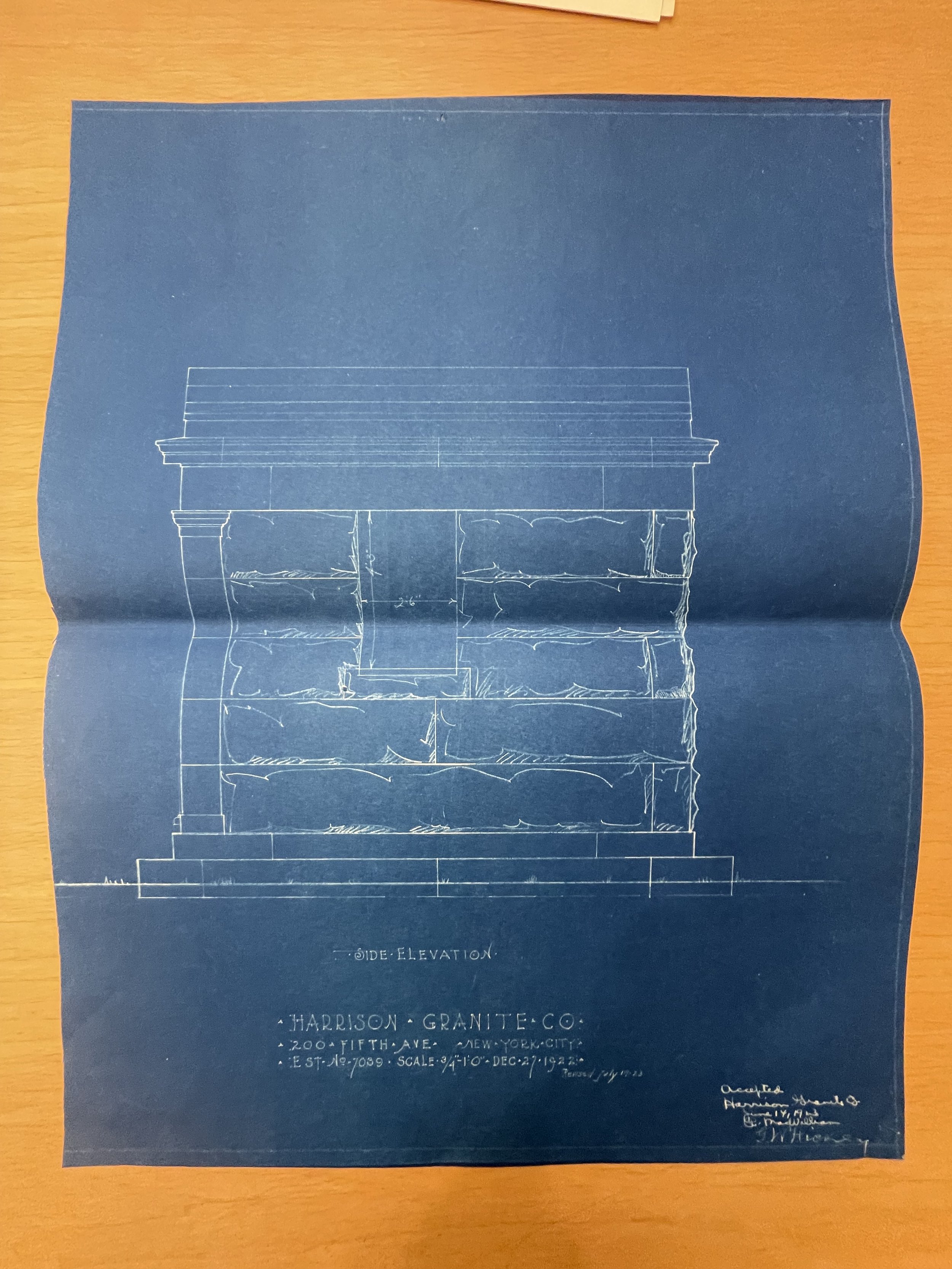
The mausoleum follows a temple-front design with bilaterally symmetrical proportions. The exterior is constructed of Barre granite quarried in Vermont, polished on the Tuscan columns, rough-hewn on the pilasters and side walls. This contrast between smooth and textured granite creates visual tension while remaining structurally modest. The interior is clad in lightly veined marble (likely Vermont Imperial Danby), with a bronze door featuring lion head knockers and Christian cross motifs.
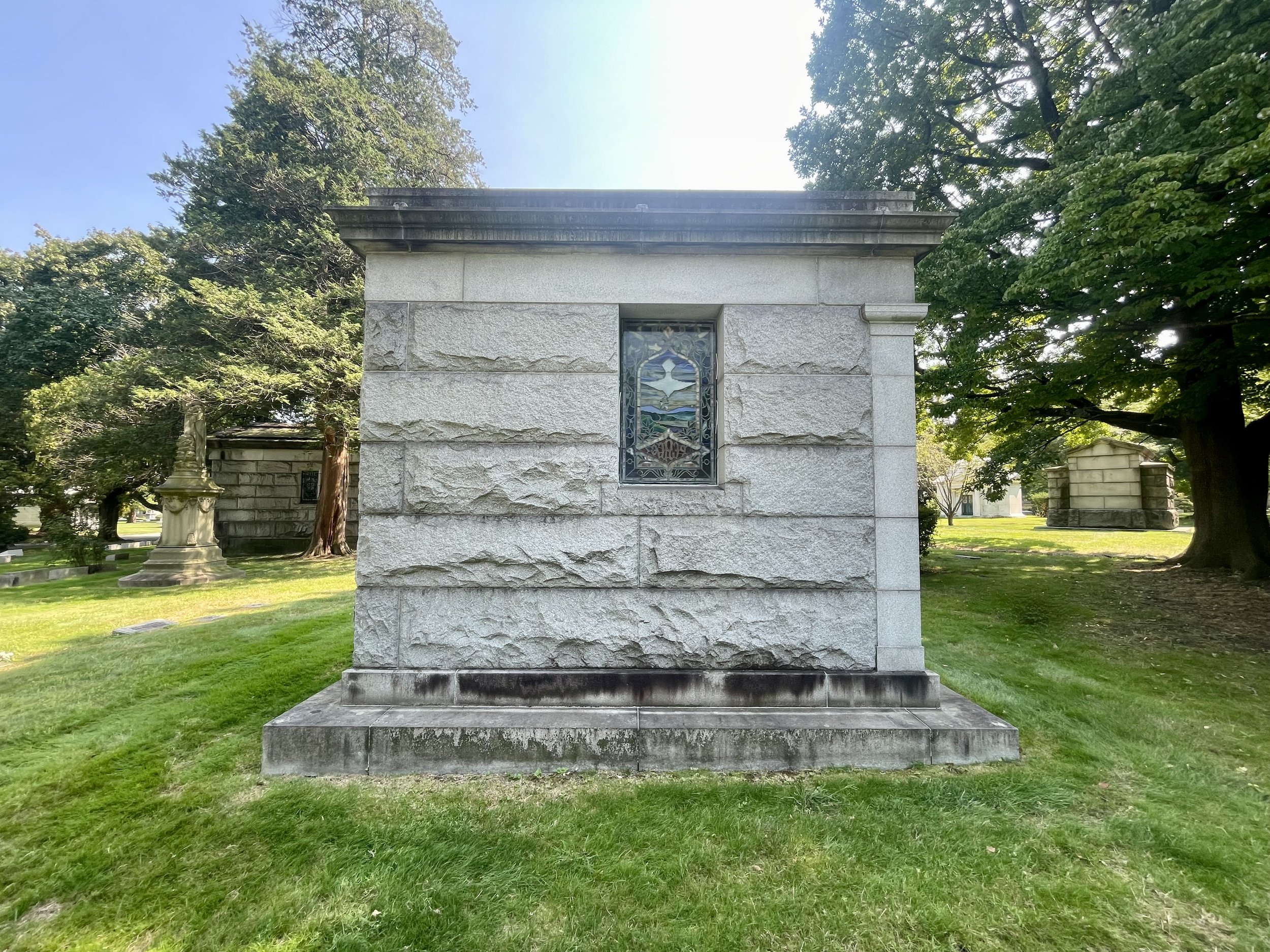
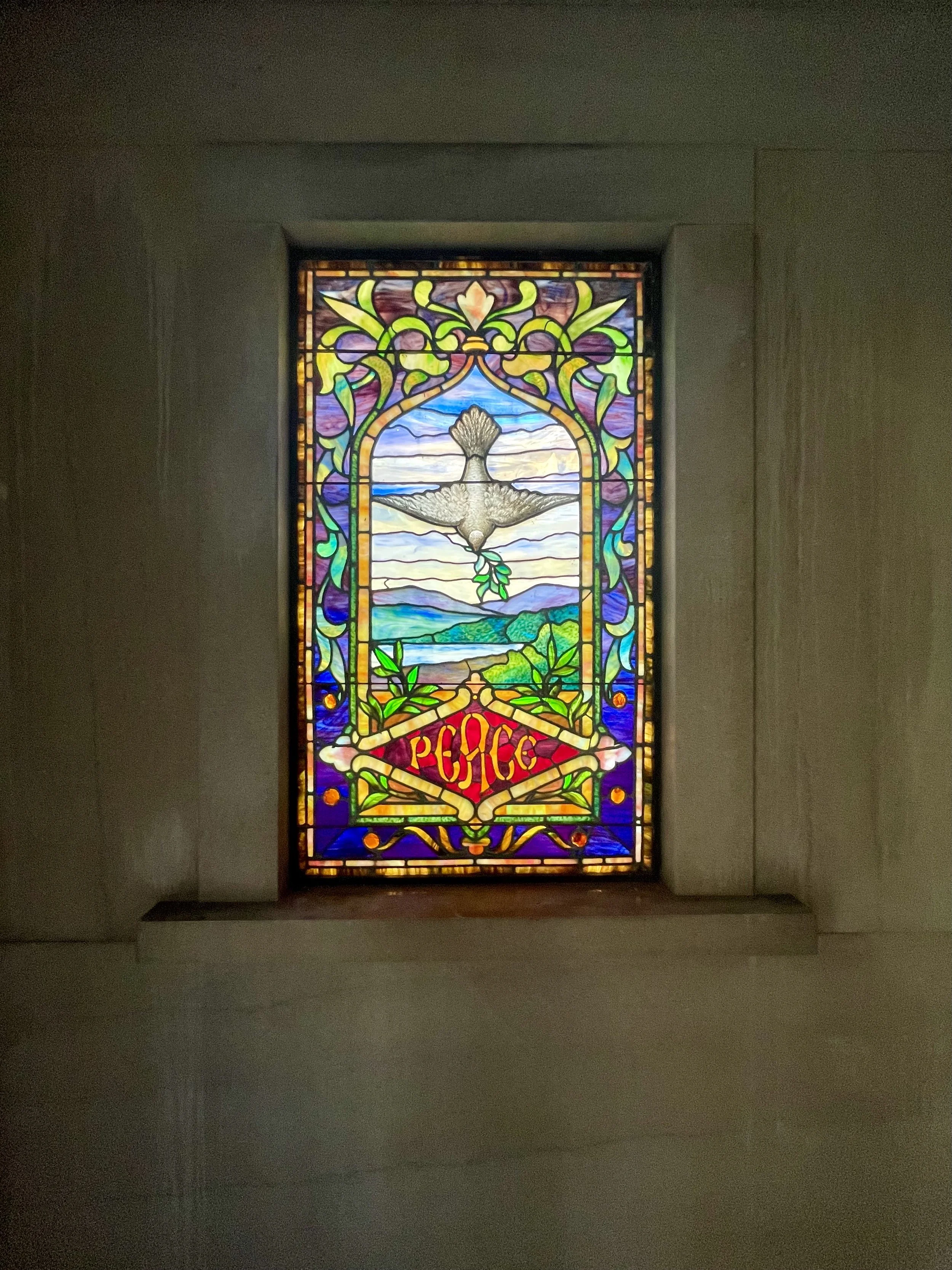
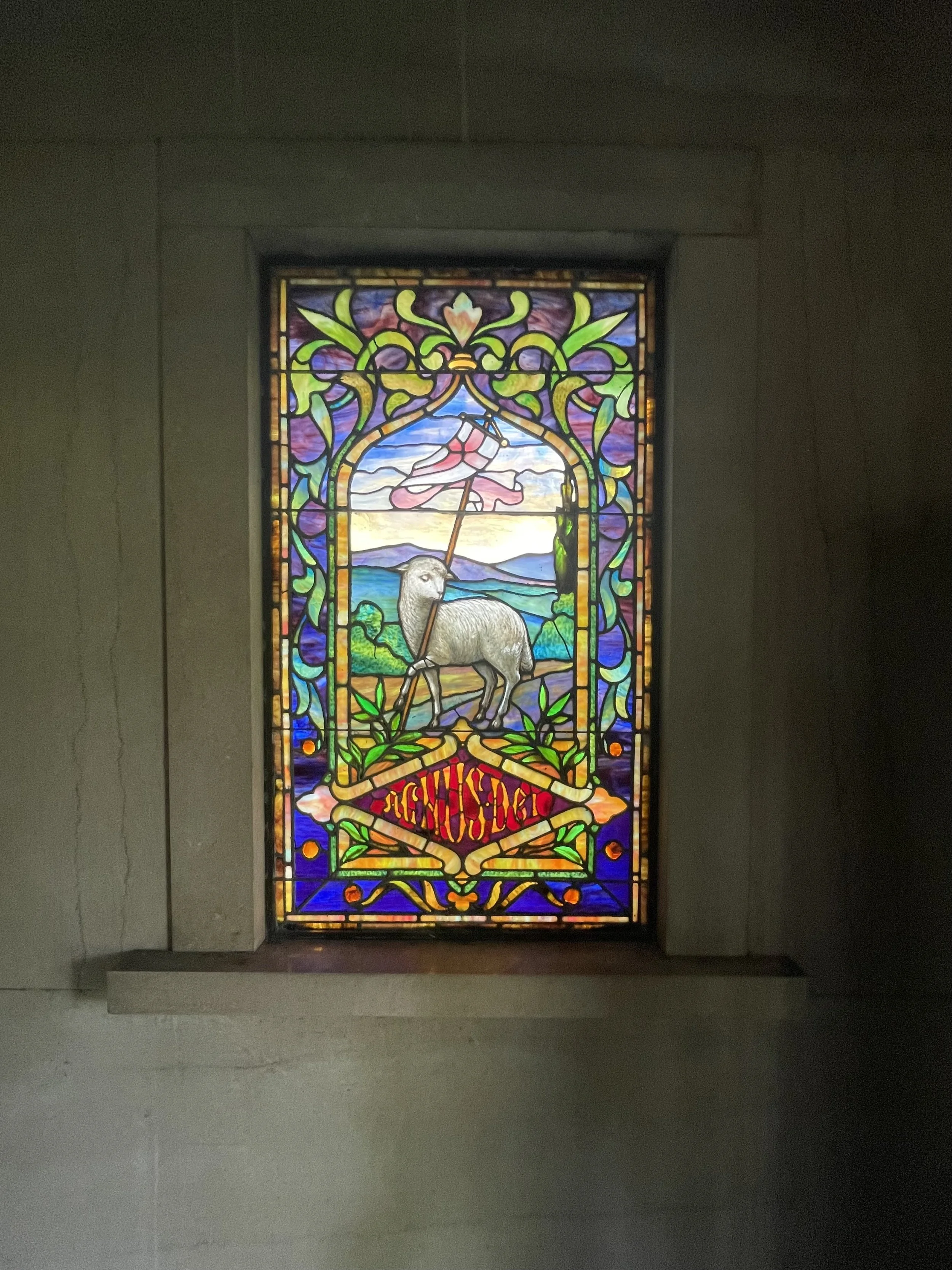
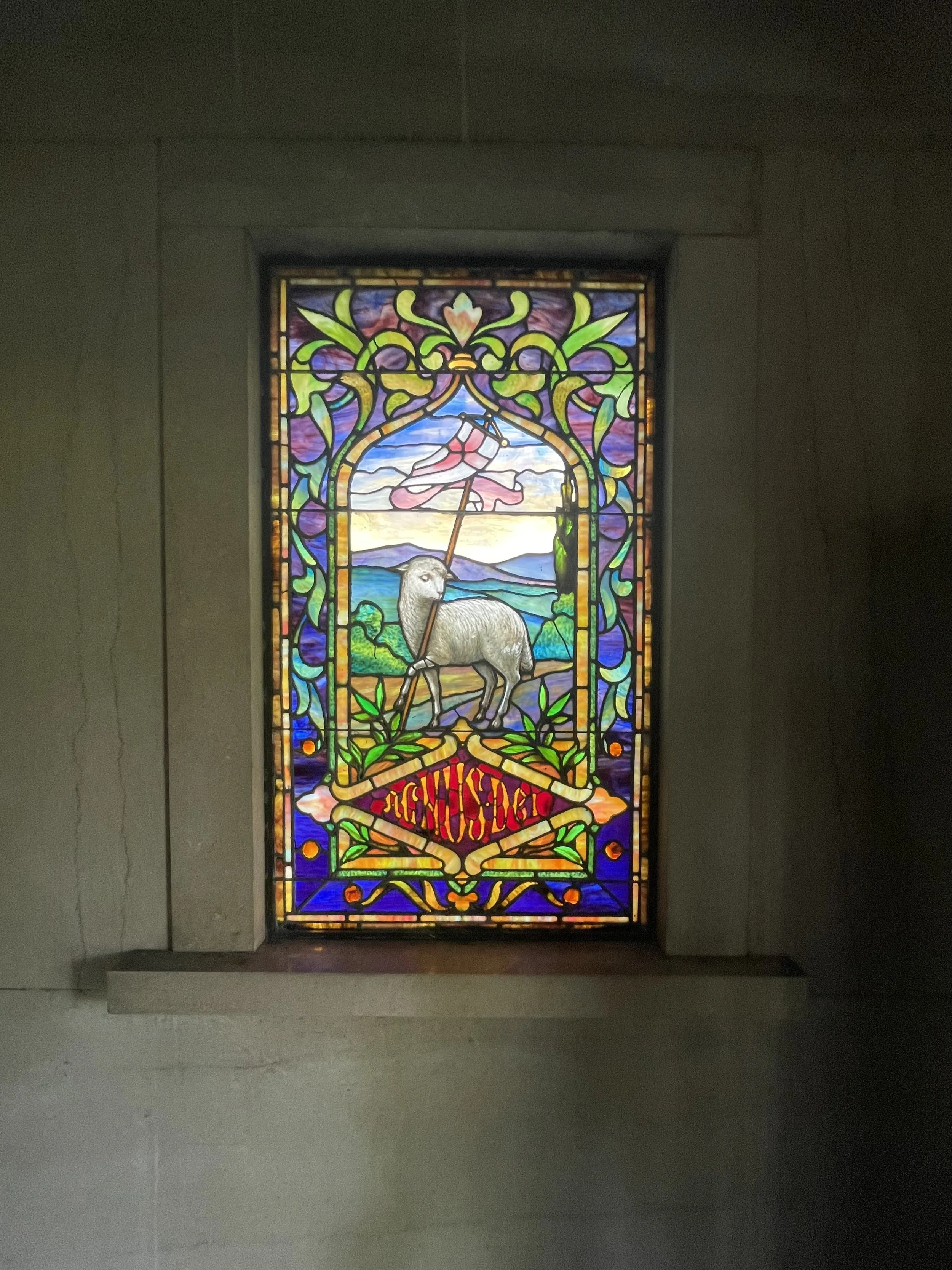
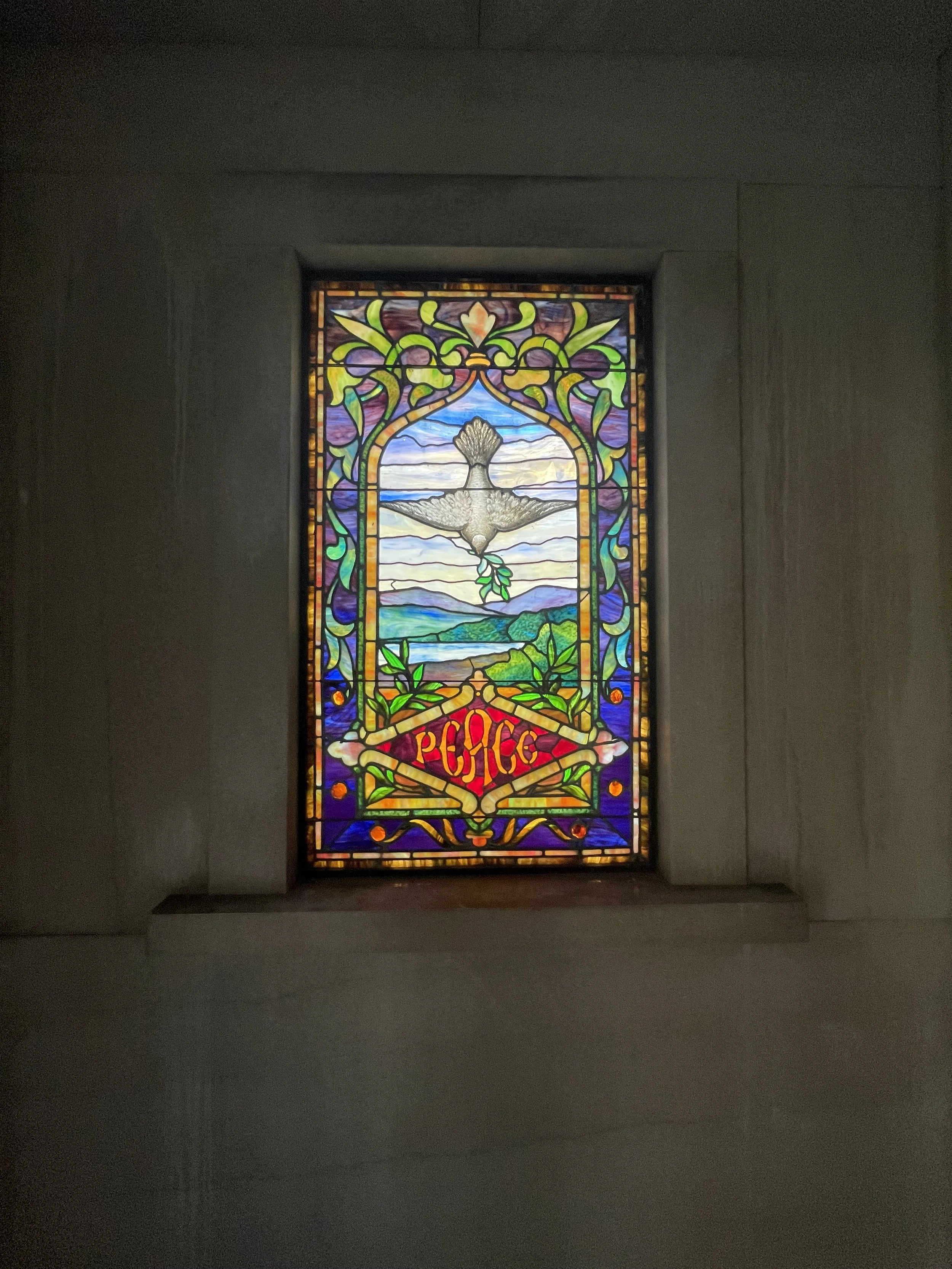
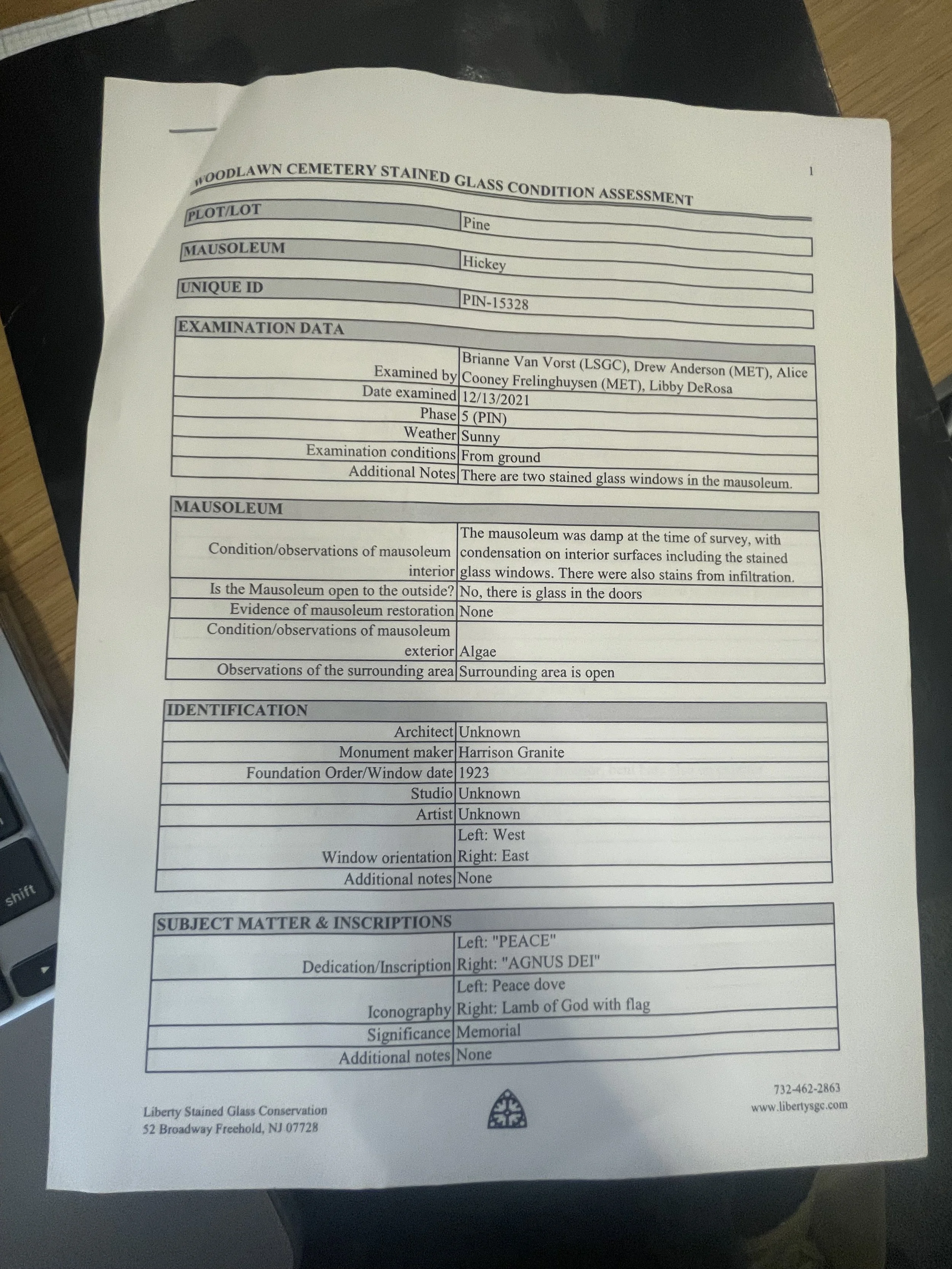
Two stained-glass windows by an unknown artist depict a dove with an olive branch ("Peace") and a lamb with an Episcopal banner ("Agnus Dei"), standard Christian iconography representing hope, redemption, and resurrection. Unlike wealthier Woodlawn mausoleums, these are not Tiffany windows, reflecting the Hickeys' middle-class position despite their Woolworth connections.
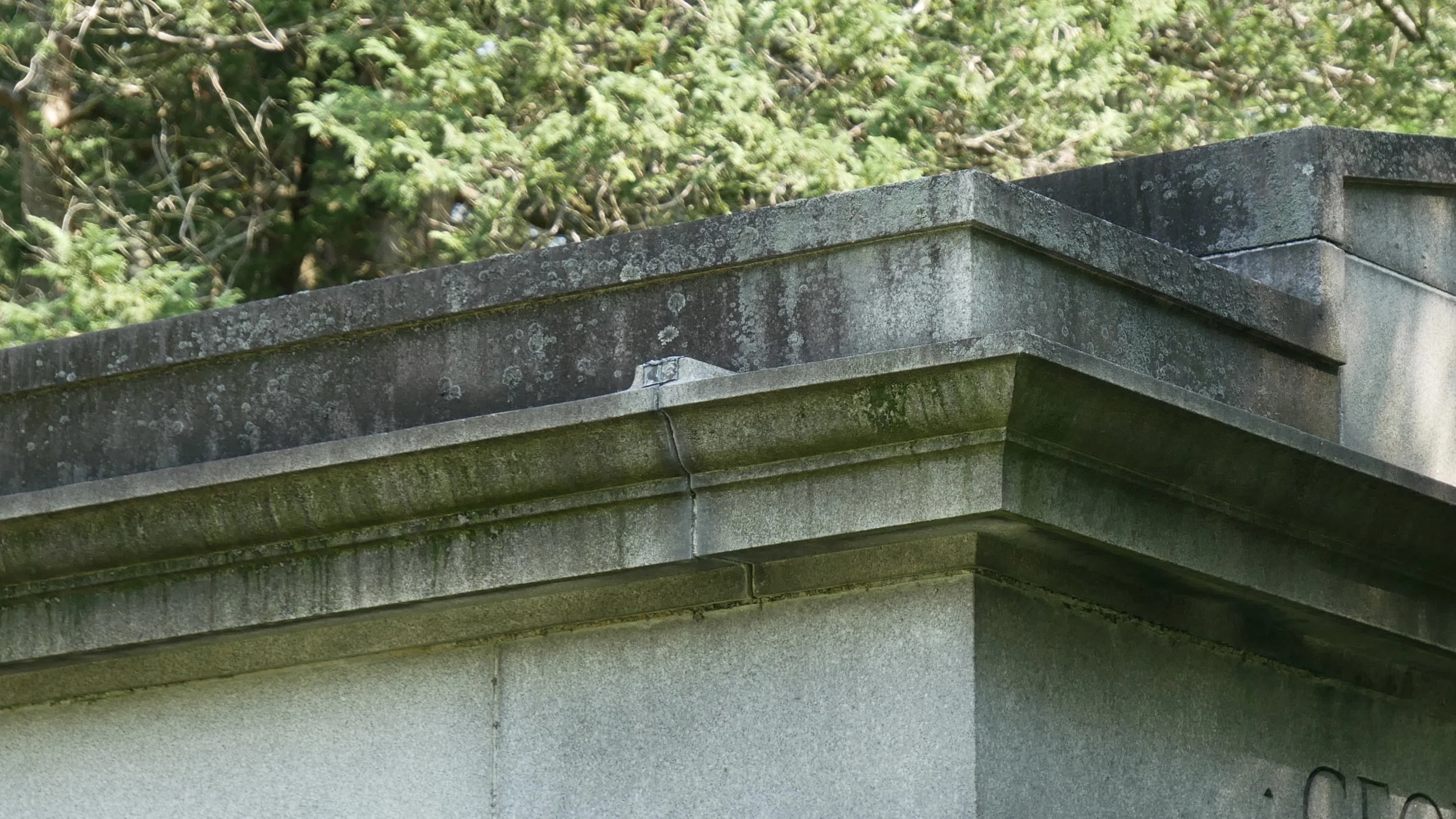
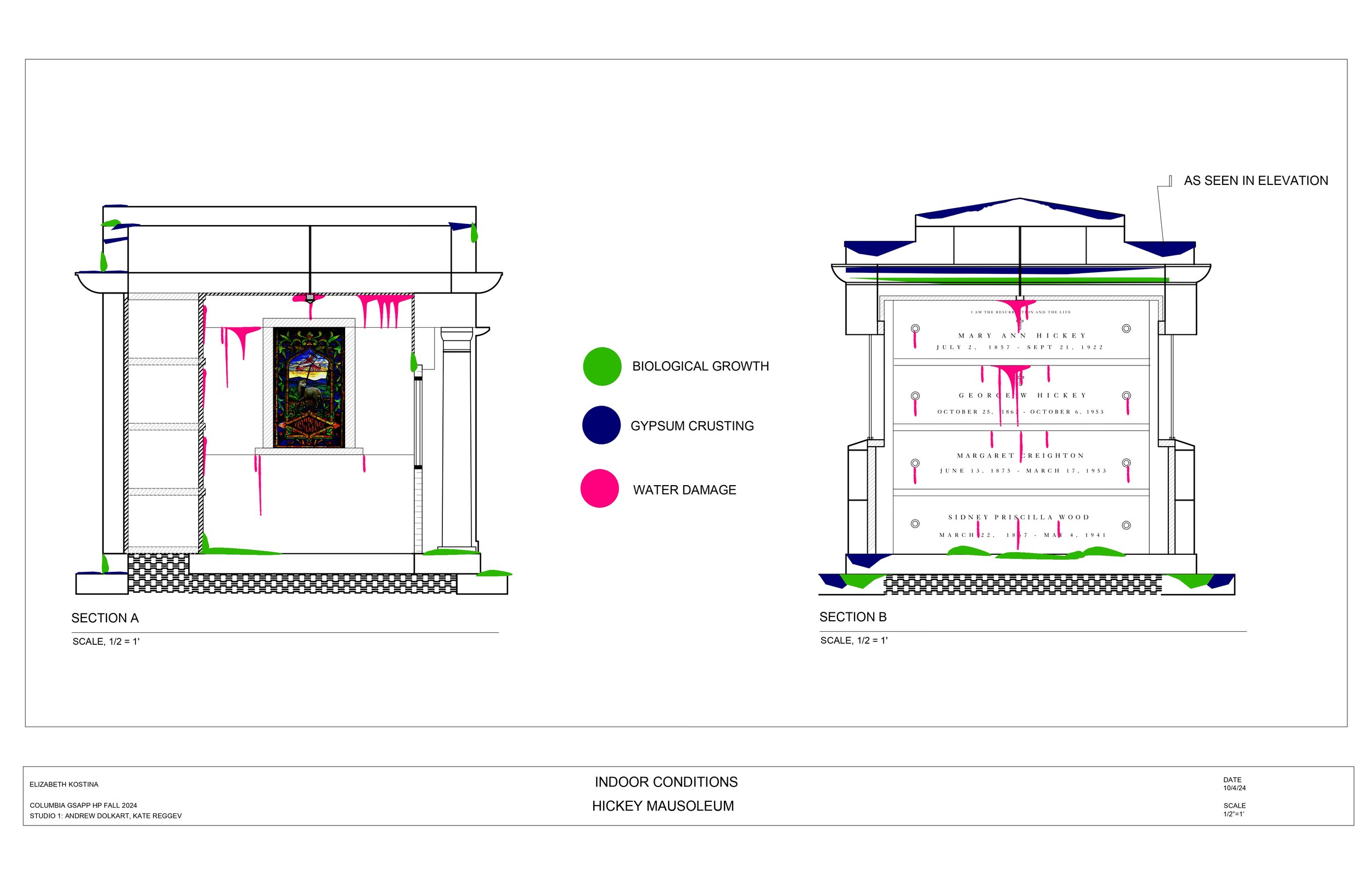
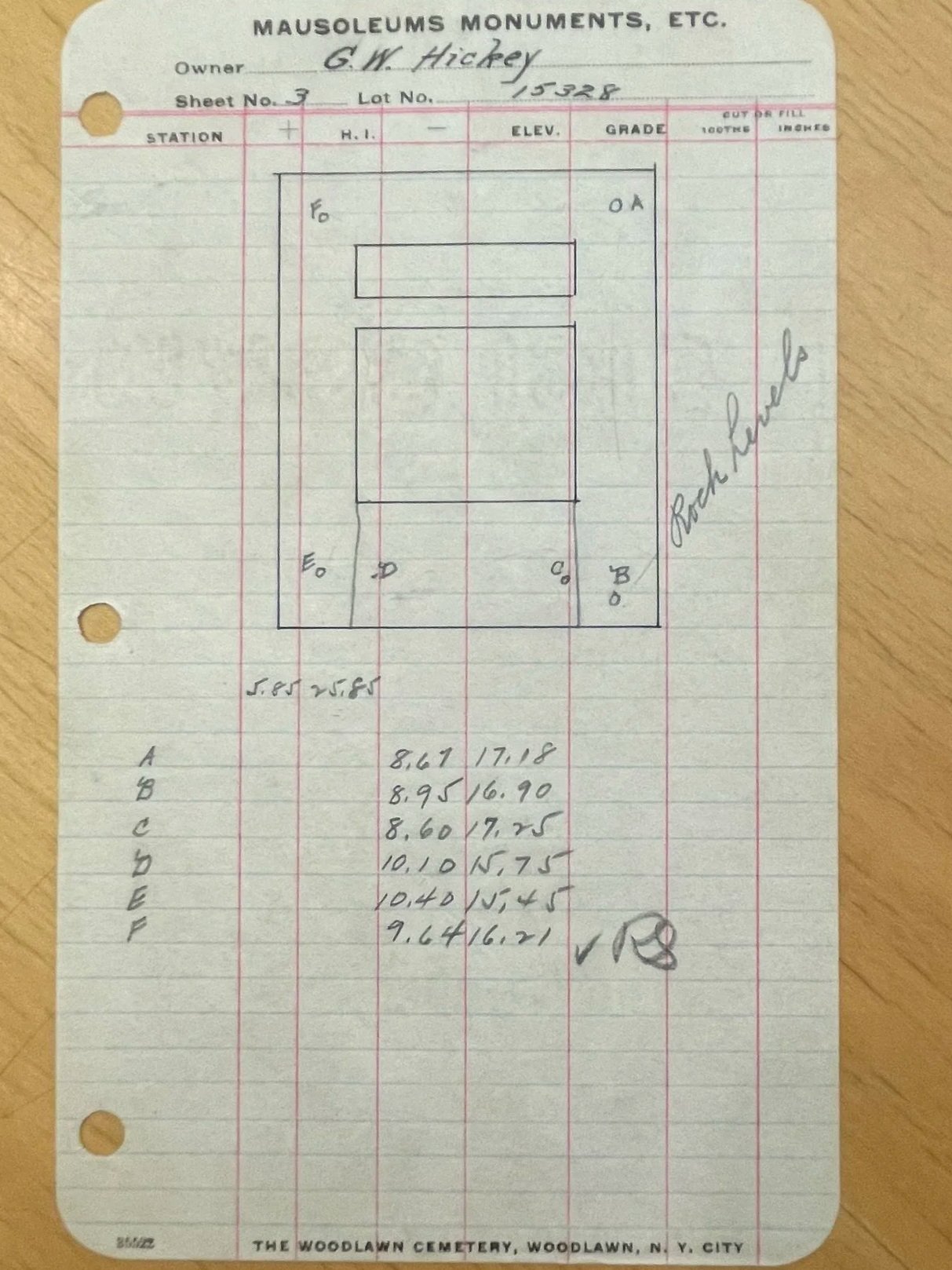
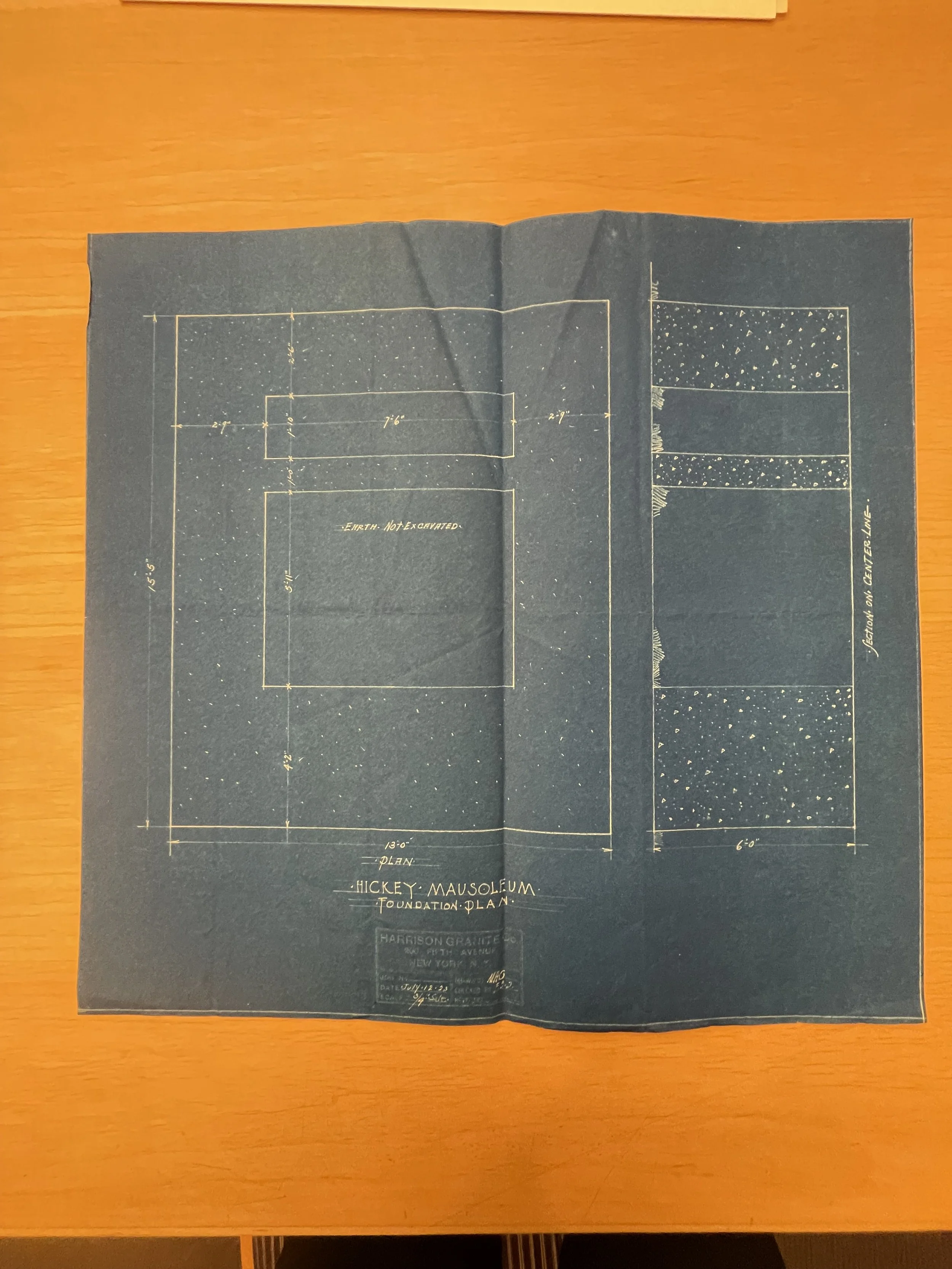
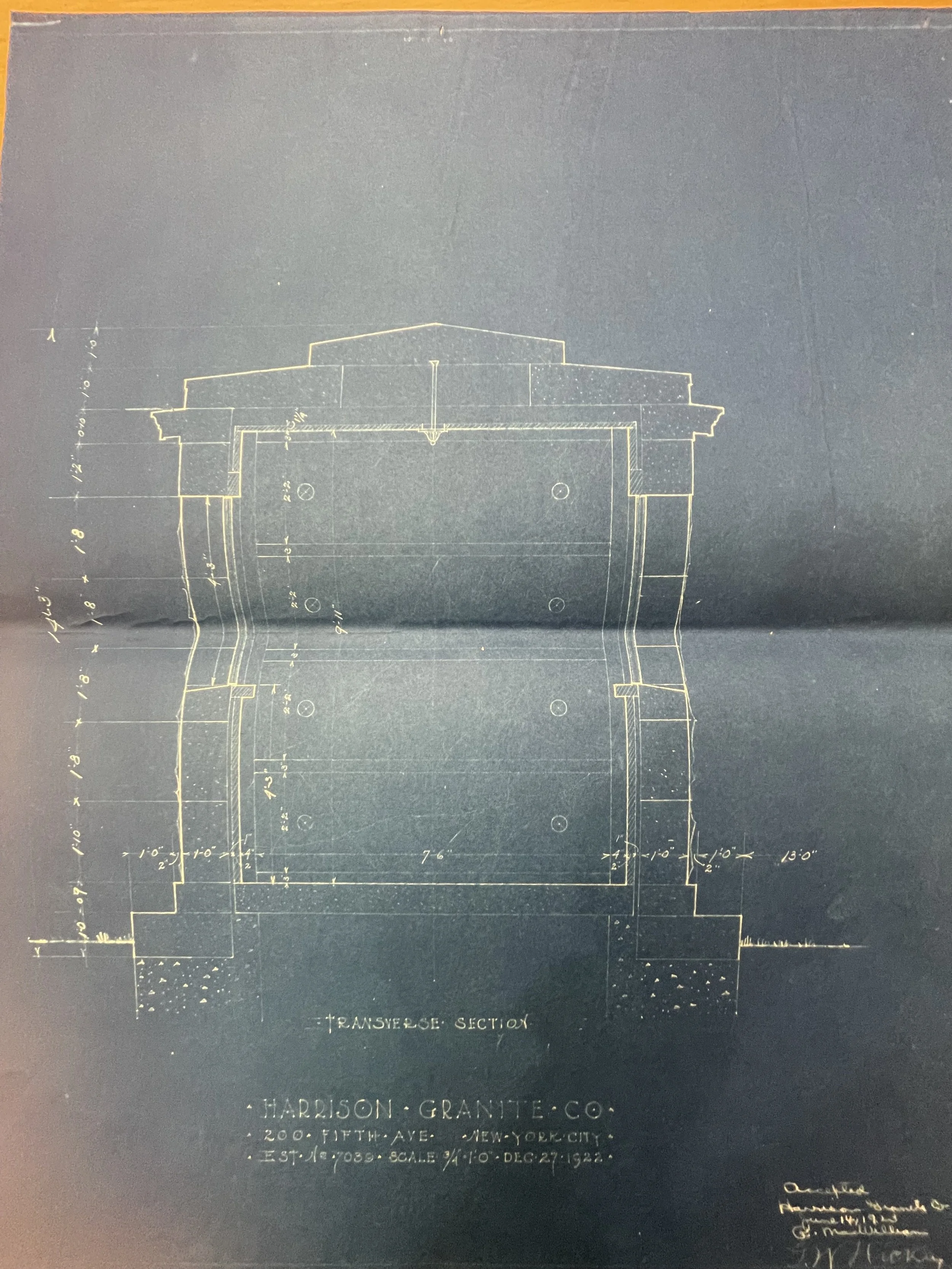
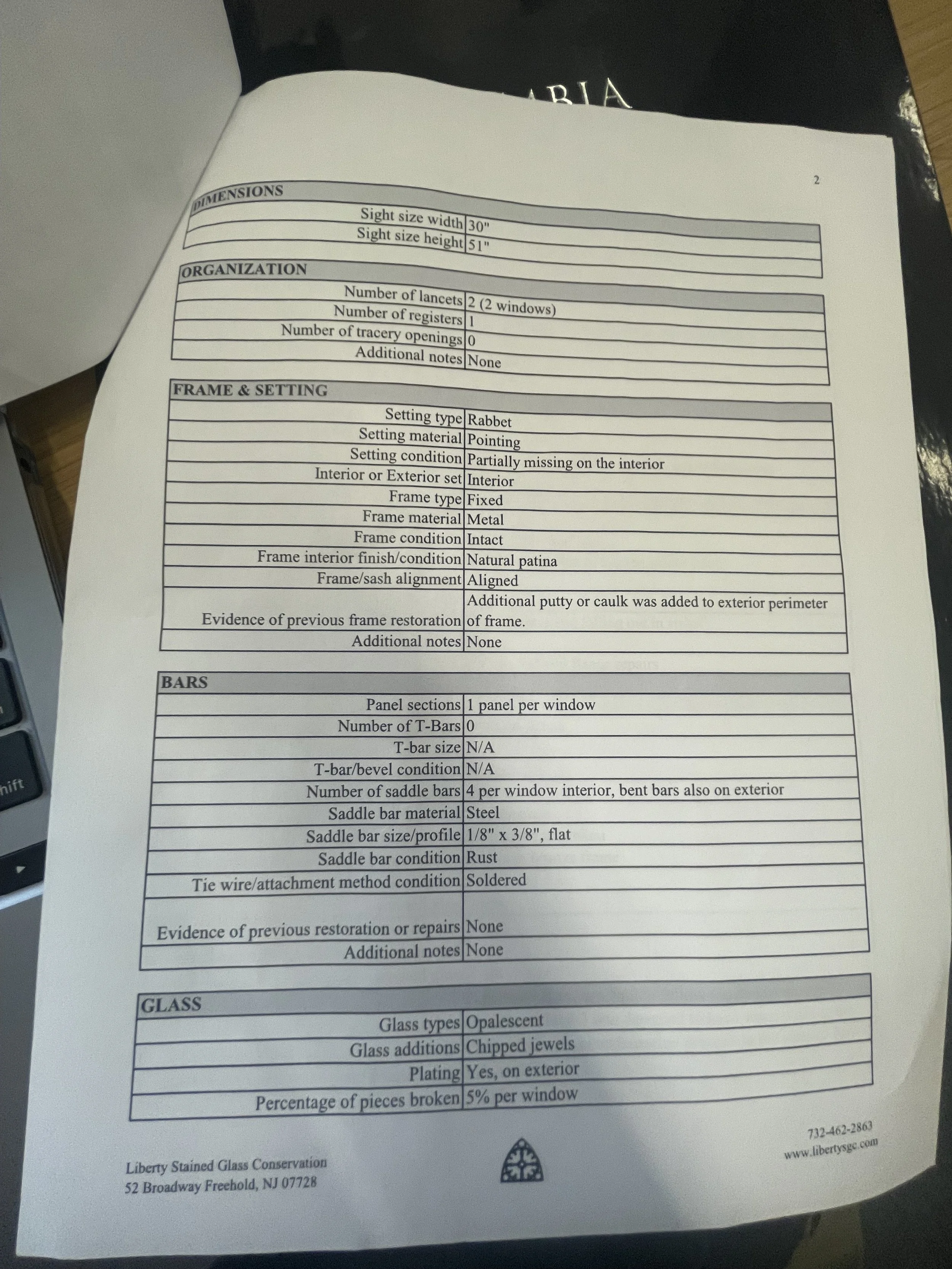
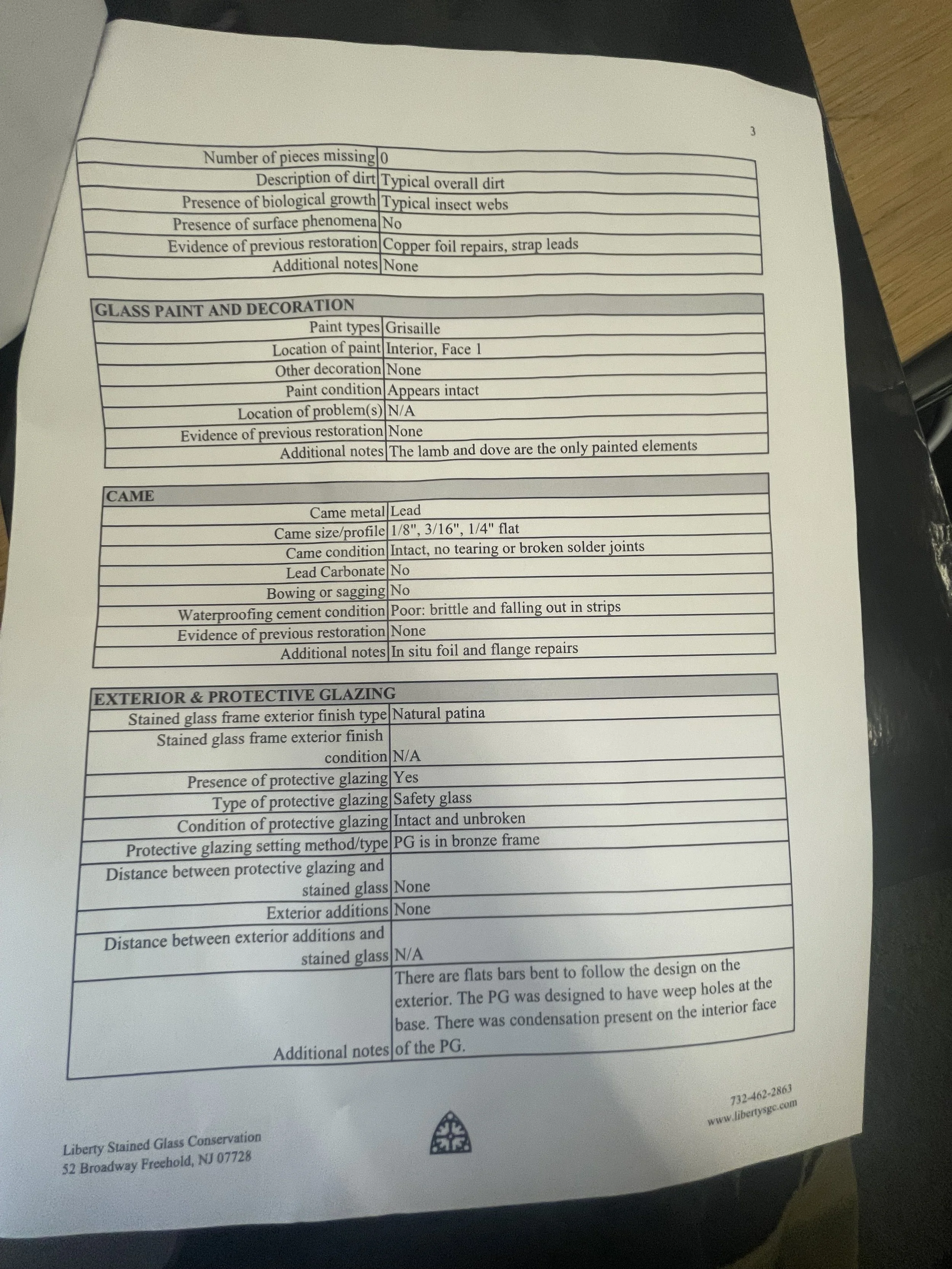
The condition assessment documented gypsum crusting, biological growth (lichen and algae), and water damage along interior marble joints, typical deterioration patterns for early 20th-century granite and marble structures. Measured drawings in AutoCAD include site plans, elevations, sections, floor plans, and material documentation showing construction details and current conditions.

Genealogical Research
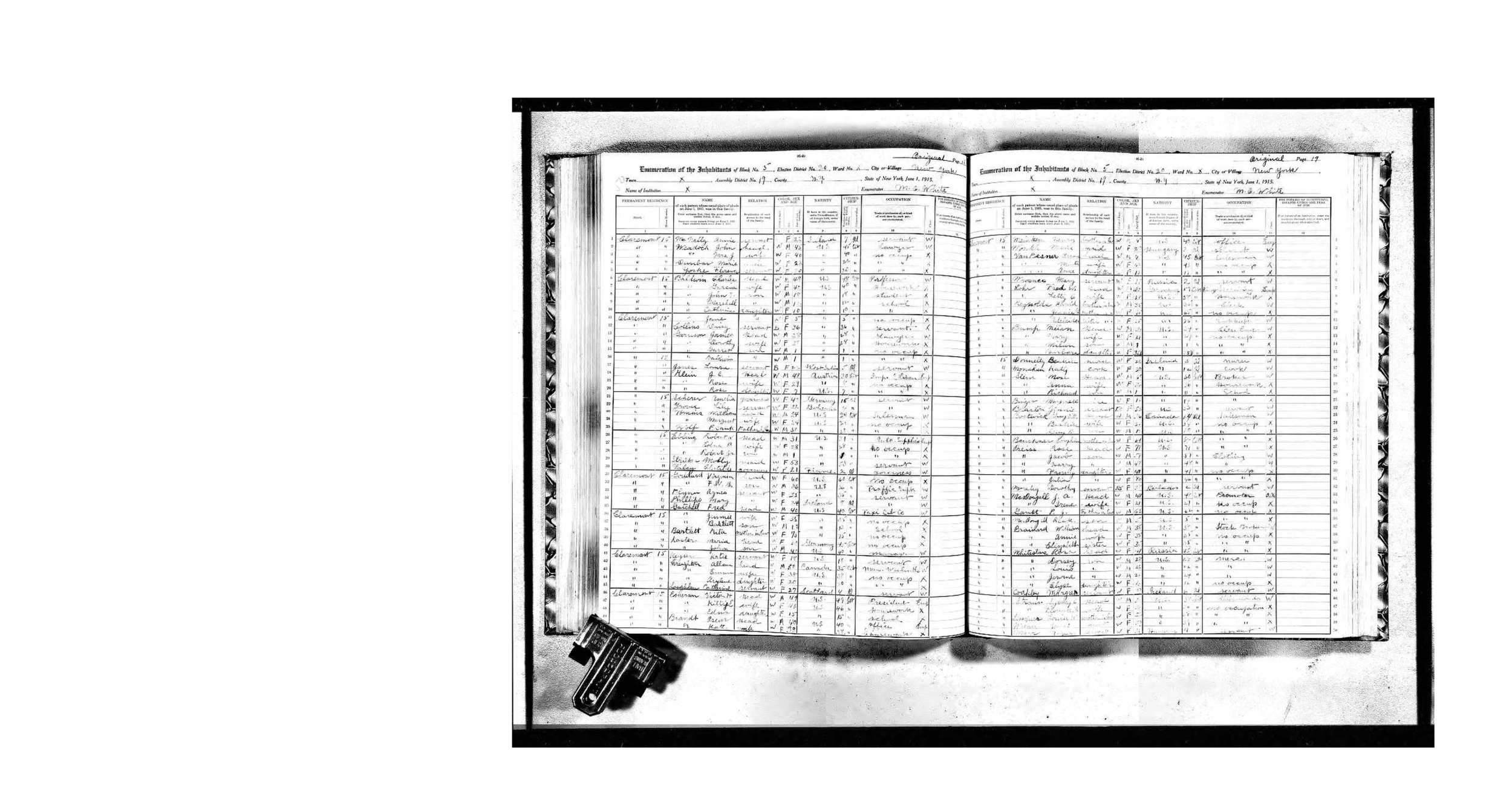
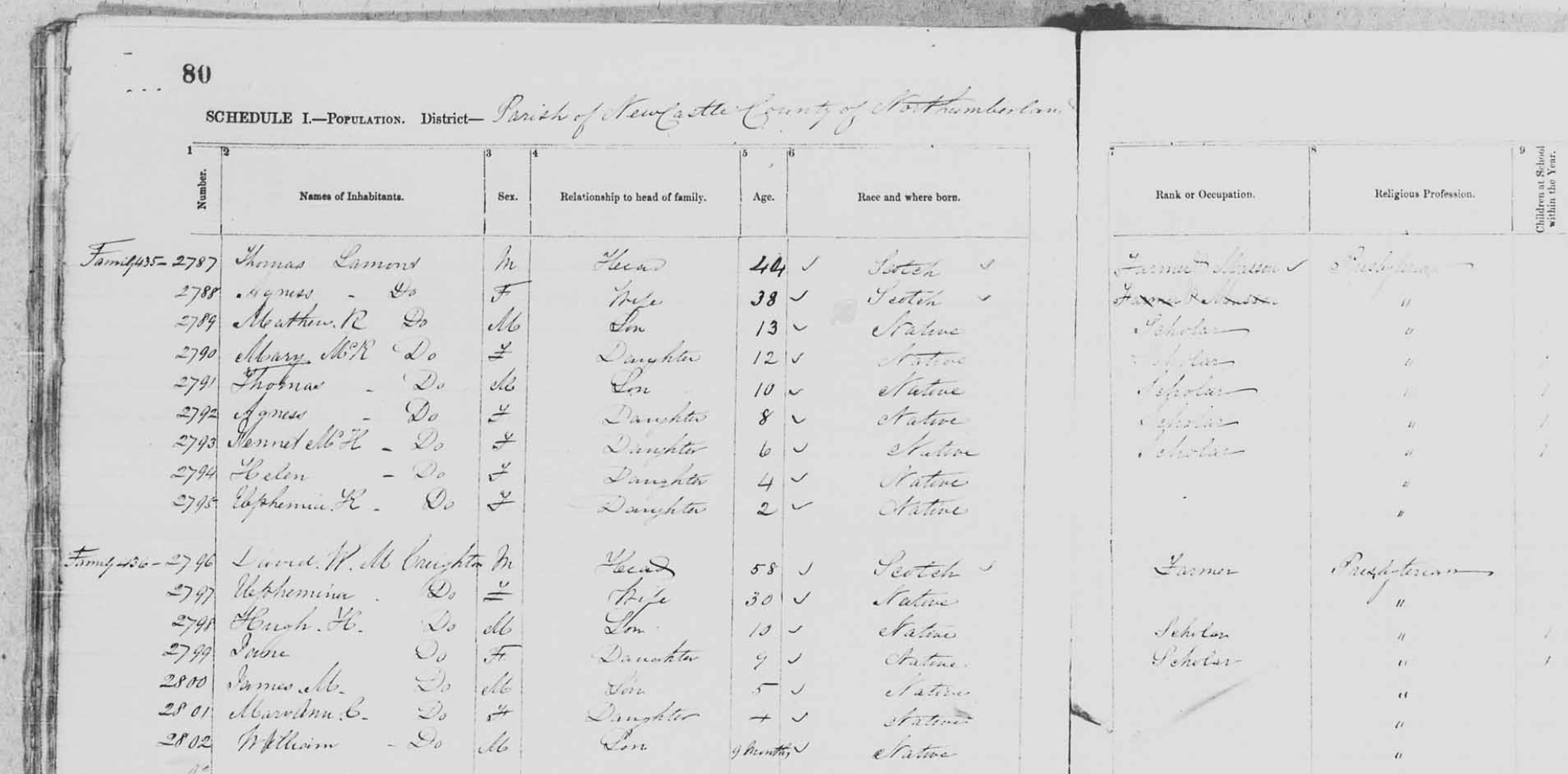
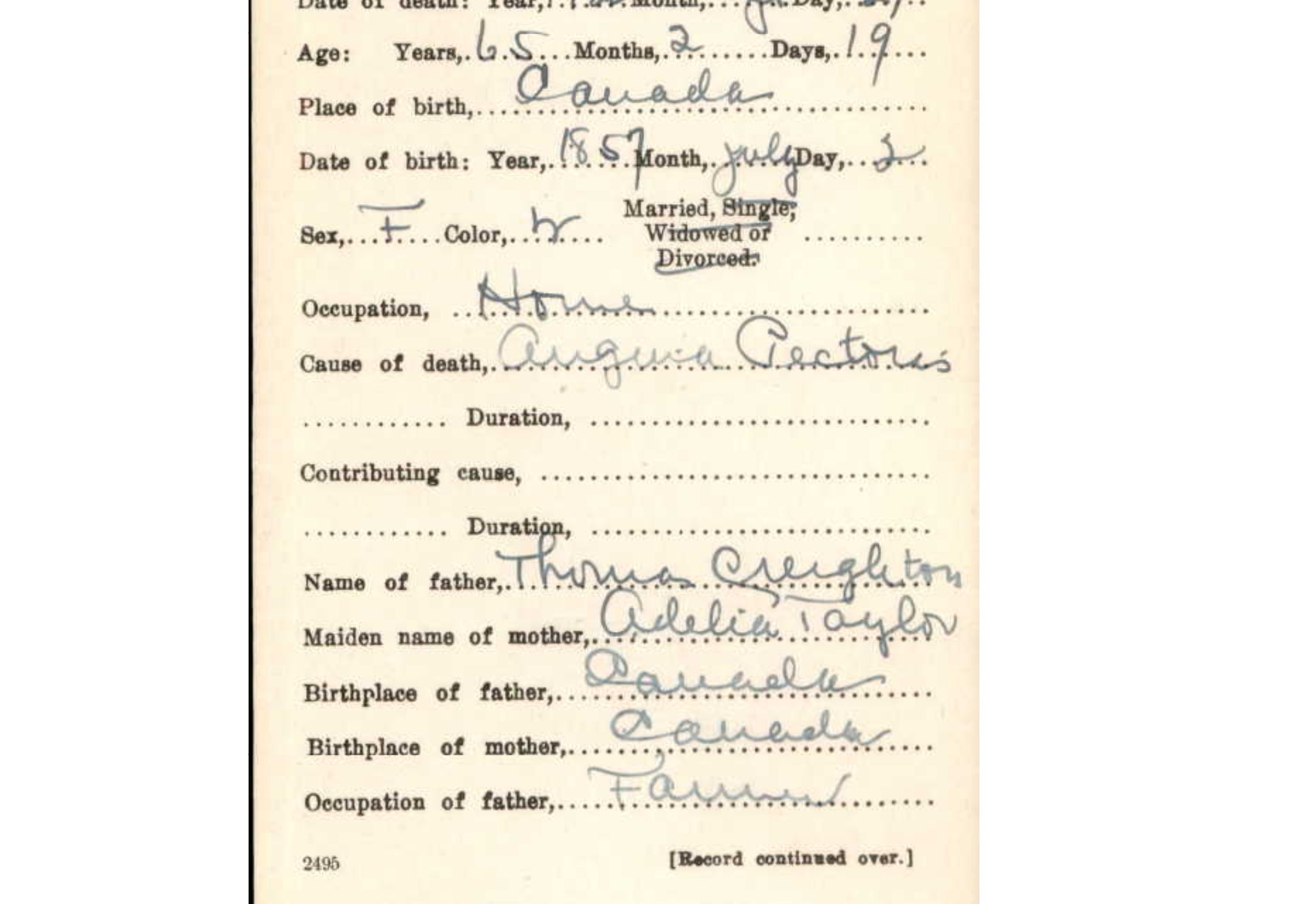
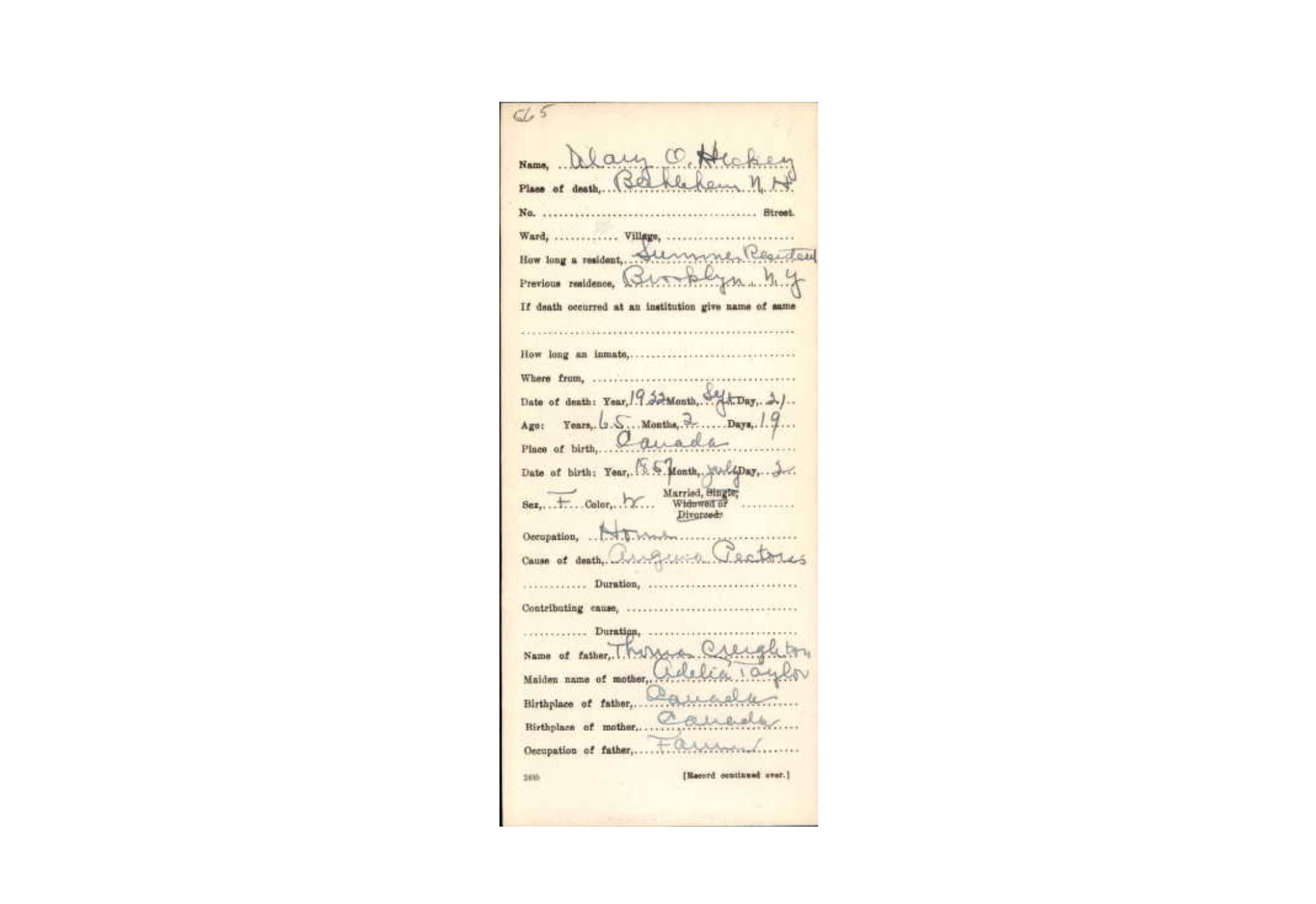
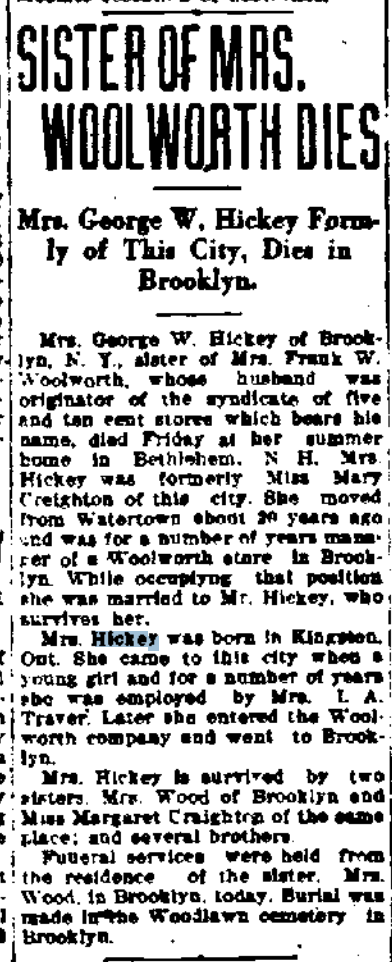
Archival research traced the Hickey and Creighton families through census records (1861–1940), immigration documents, marriage licenses, and newspaper obituaries. Mary Creighton was born in Picton, Ontario, and came to Watertown, New York as a young girl, where she likely met George Hickey. George worked as a telegraph printer and later as an insurance agent for Equitable Life Assurance Society.
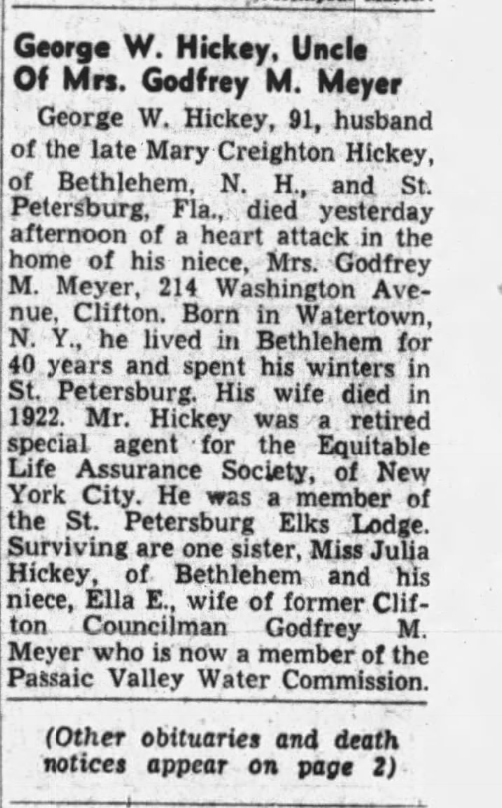
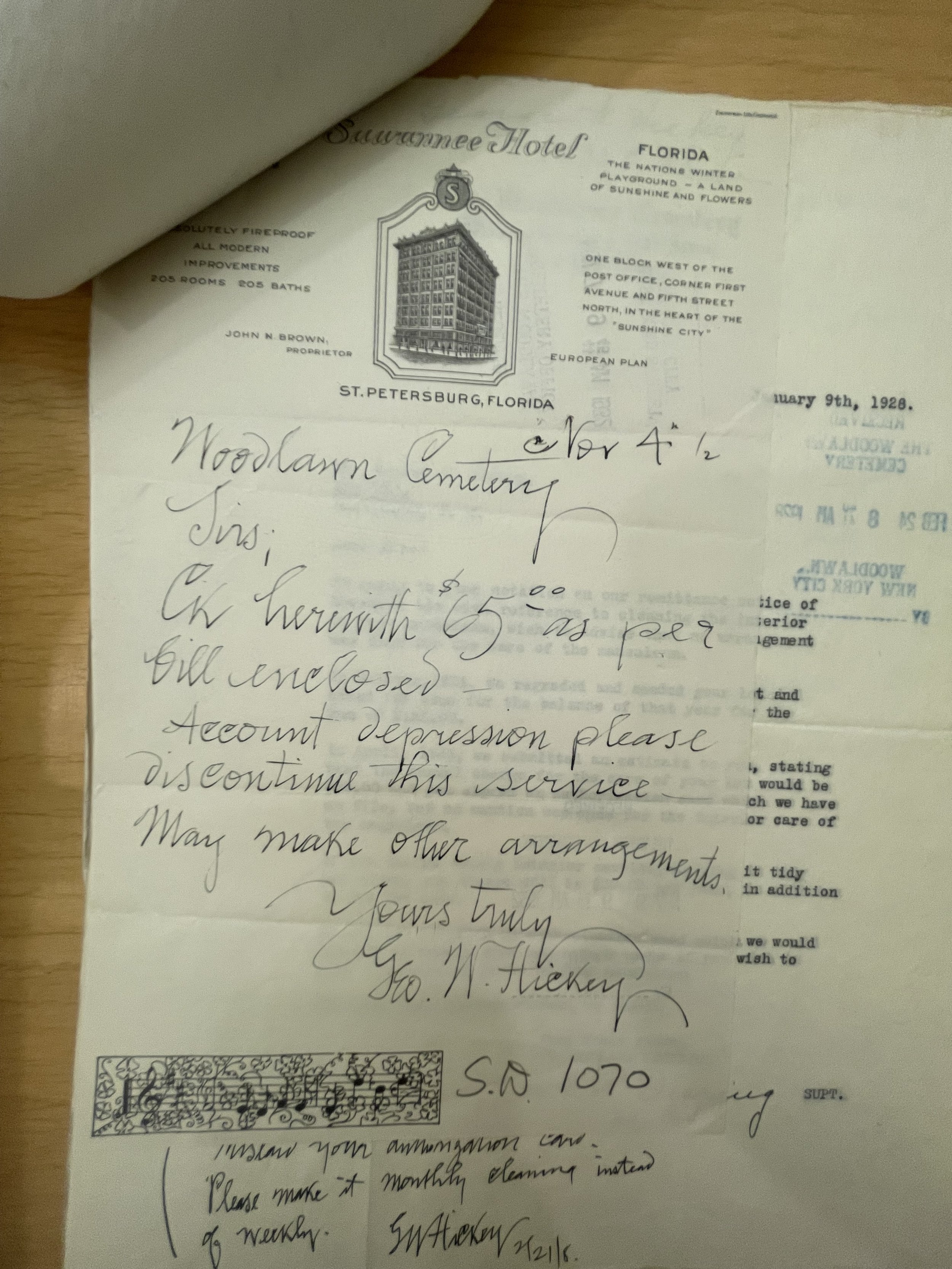
After Mary's death in 1922, George traveled extensively (Puerto Rico, England, Hawaii, Brazil, Gibraltar, Germany, California, Florida) and spent winters at the Suwannee Hotel in St. Petersburg, Florida—evidenced by letterhead correspondence in the Avery archives. He died in 1953 at his niece's home in New Jersey.
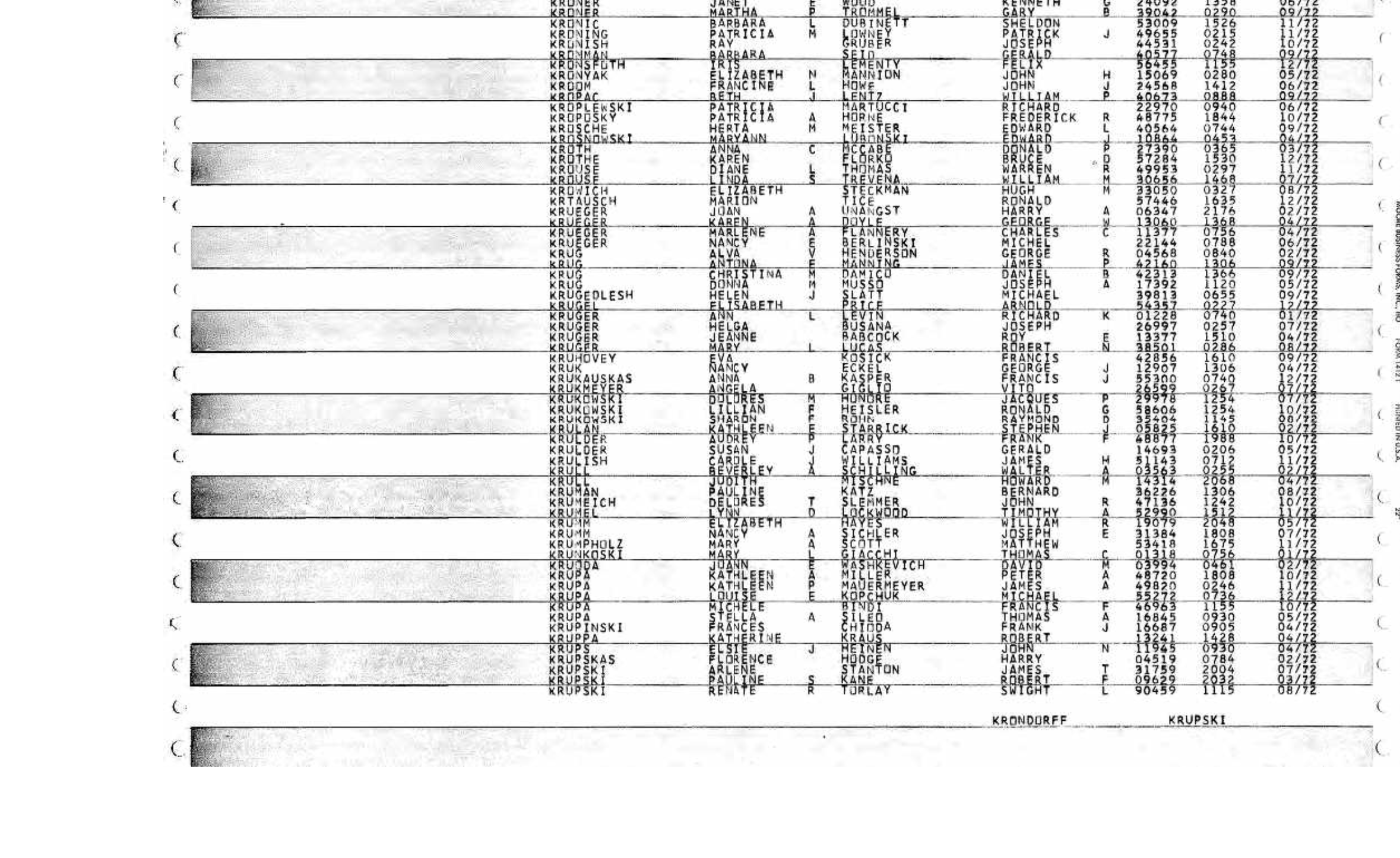
The project also traced descendants of Sidney Priscilla Wood (Mary's sister, also interred in the mausoleum) through four generations to living family members in South Carolina, demonstrating how genealogical methods extend preservation research beyond built fabric into social history.
Archival Research
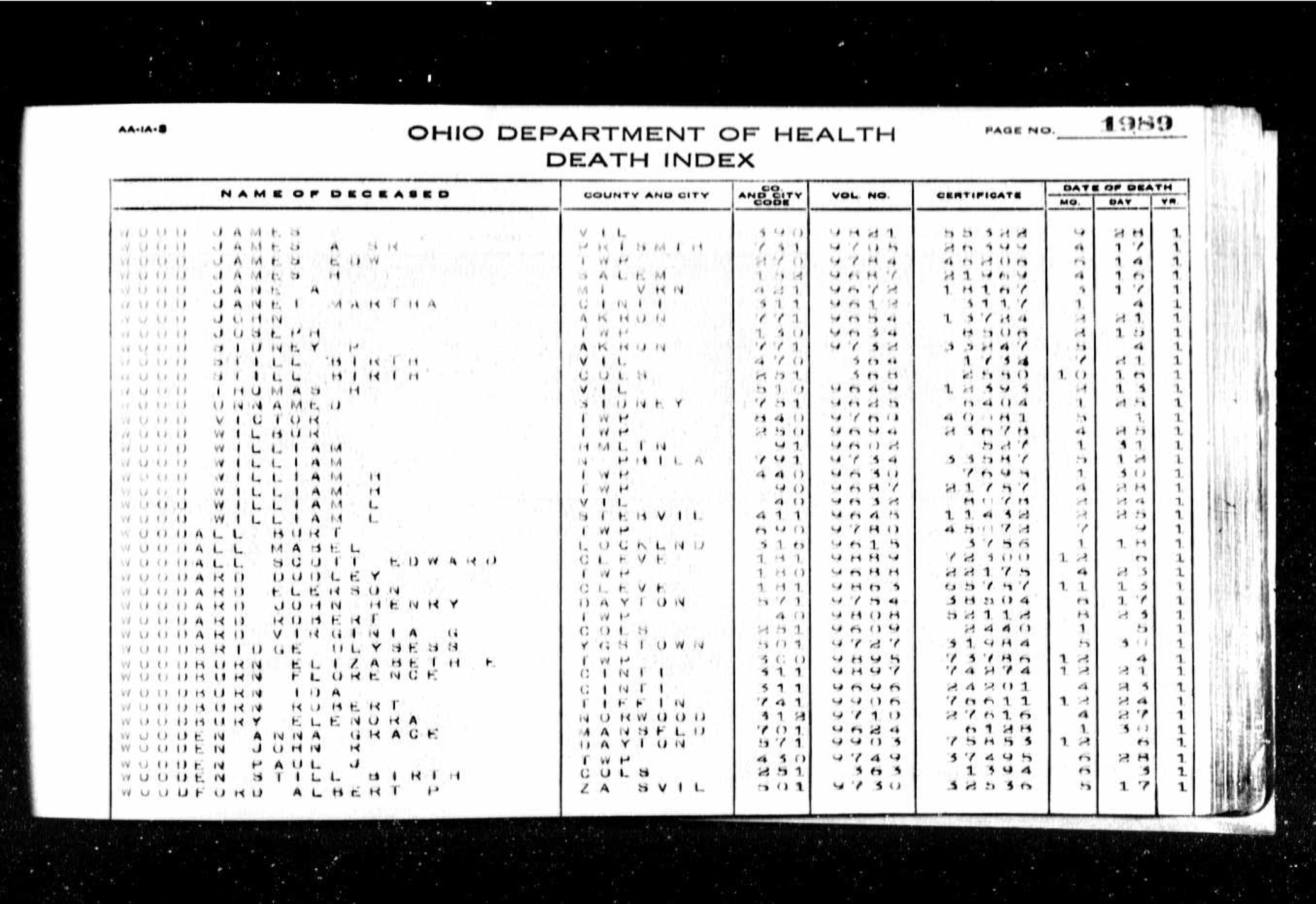
The genealogical investigation began with the four individuals interred in the mausoleum and expanded outward through multiple archival sources to reconstruct the social and economic context of the burial site.
Primary sources consulted:
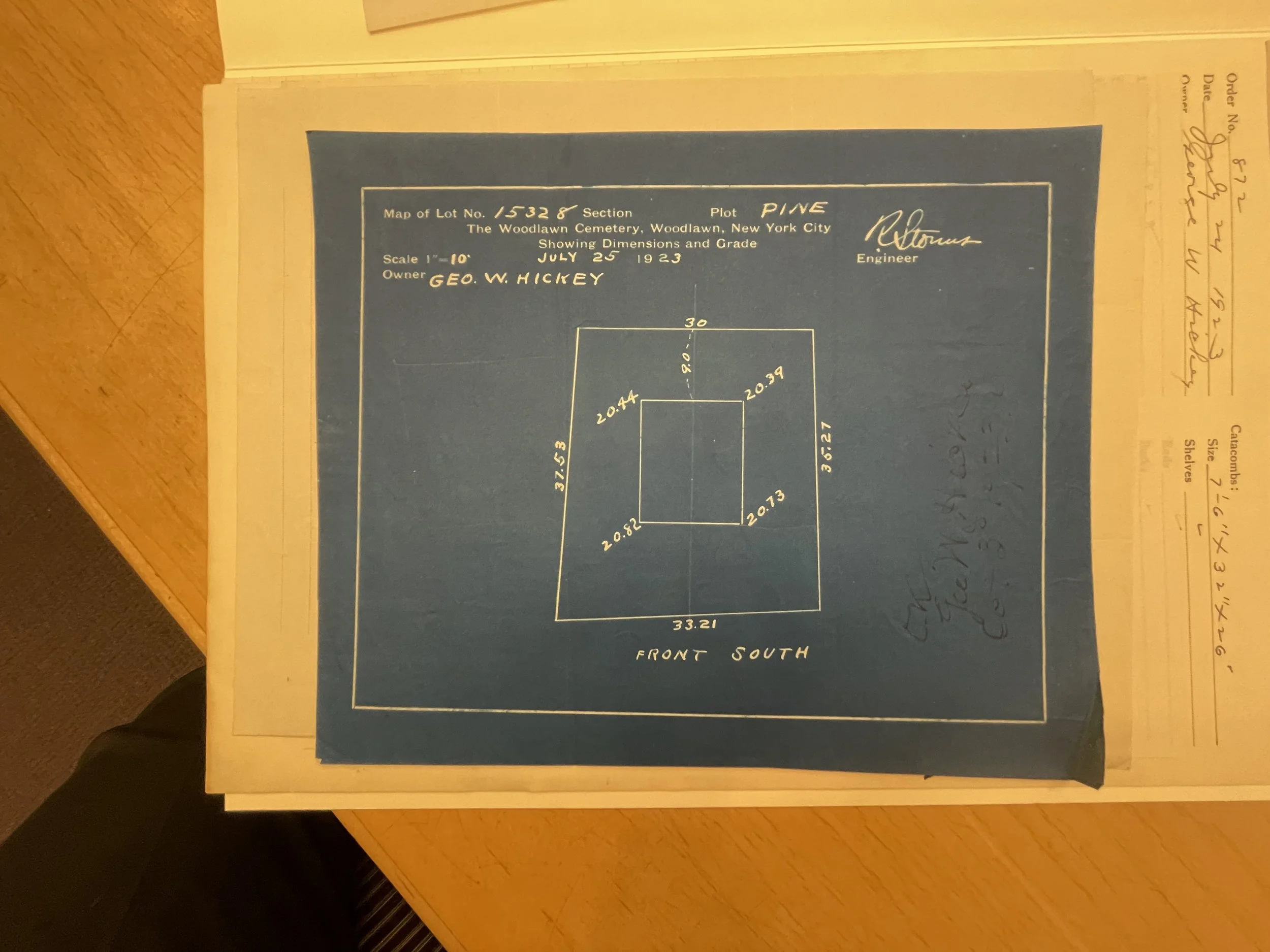
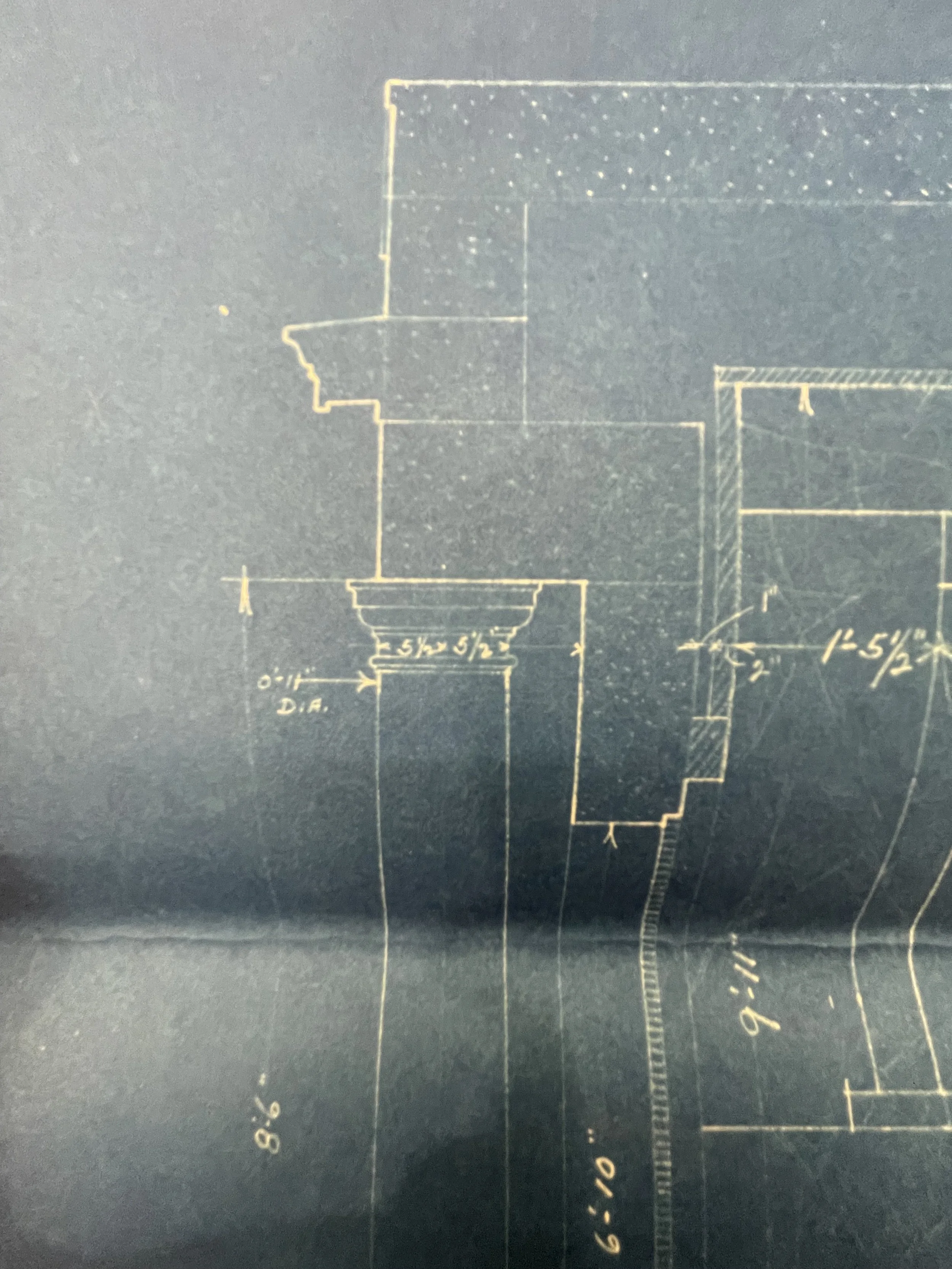
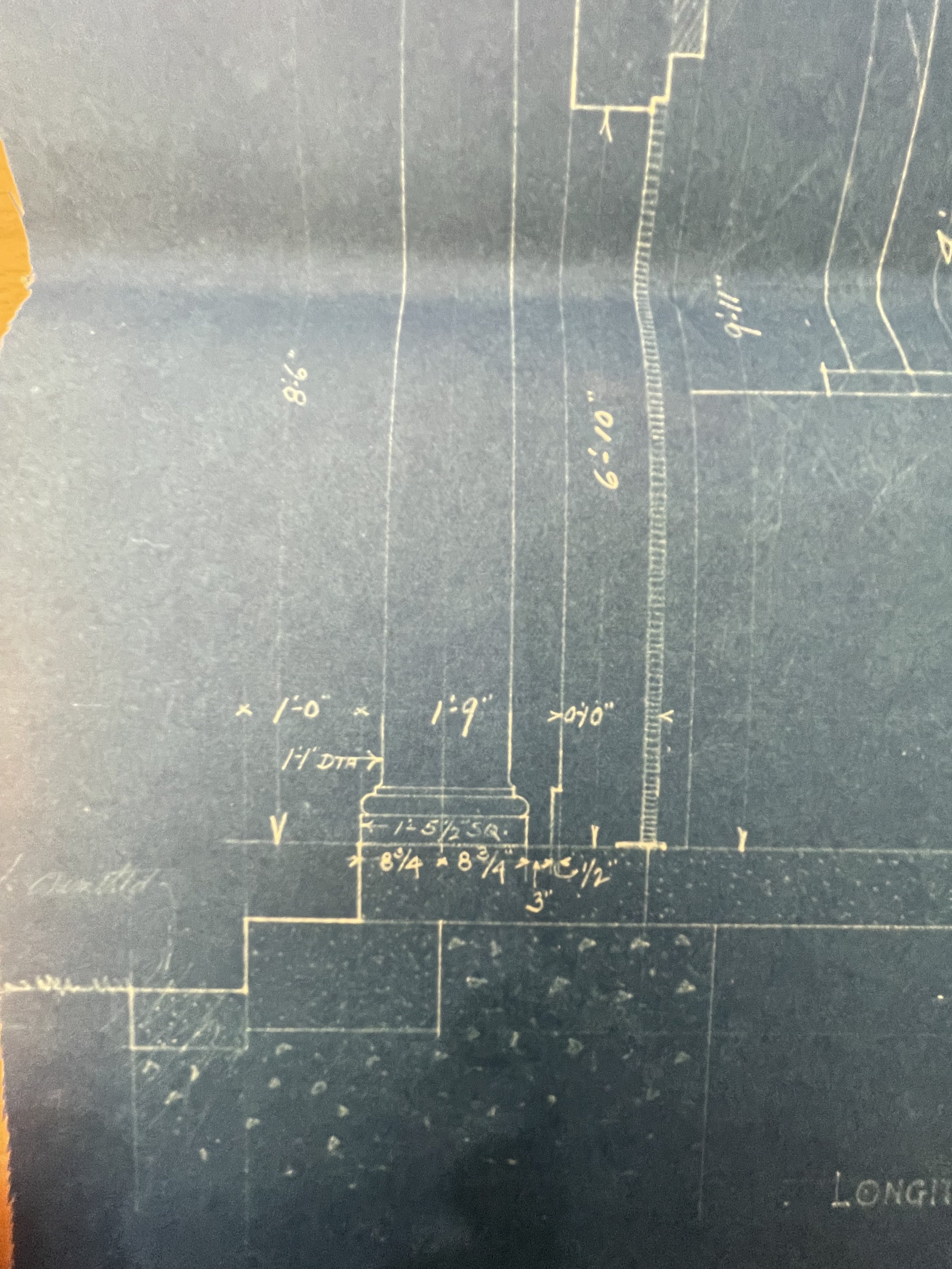
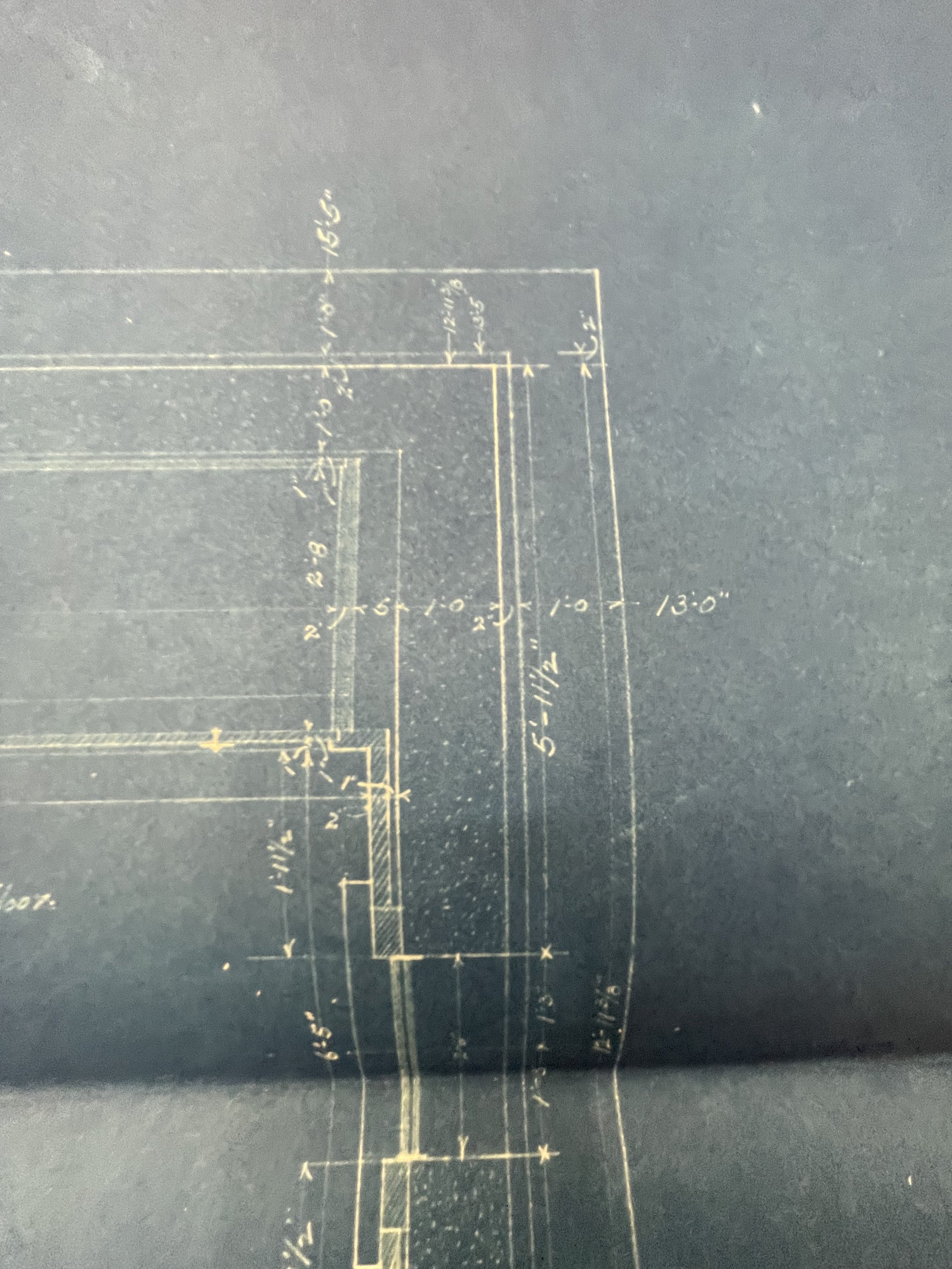
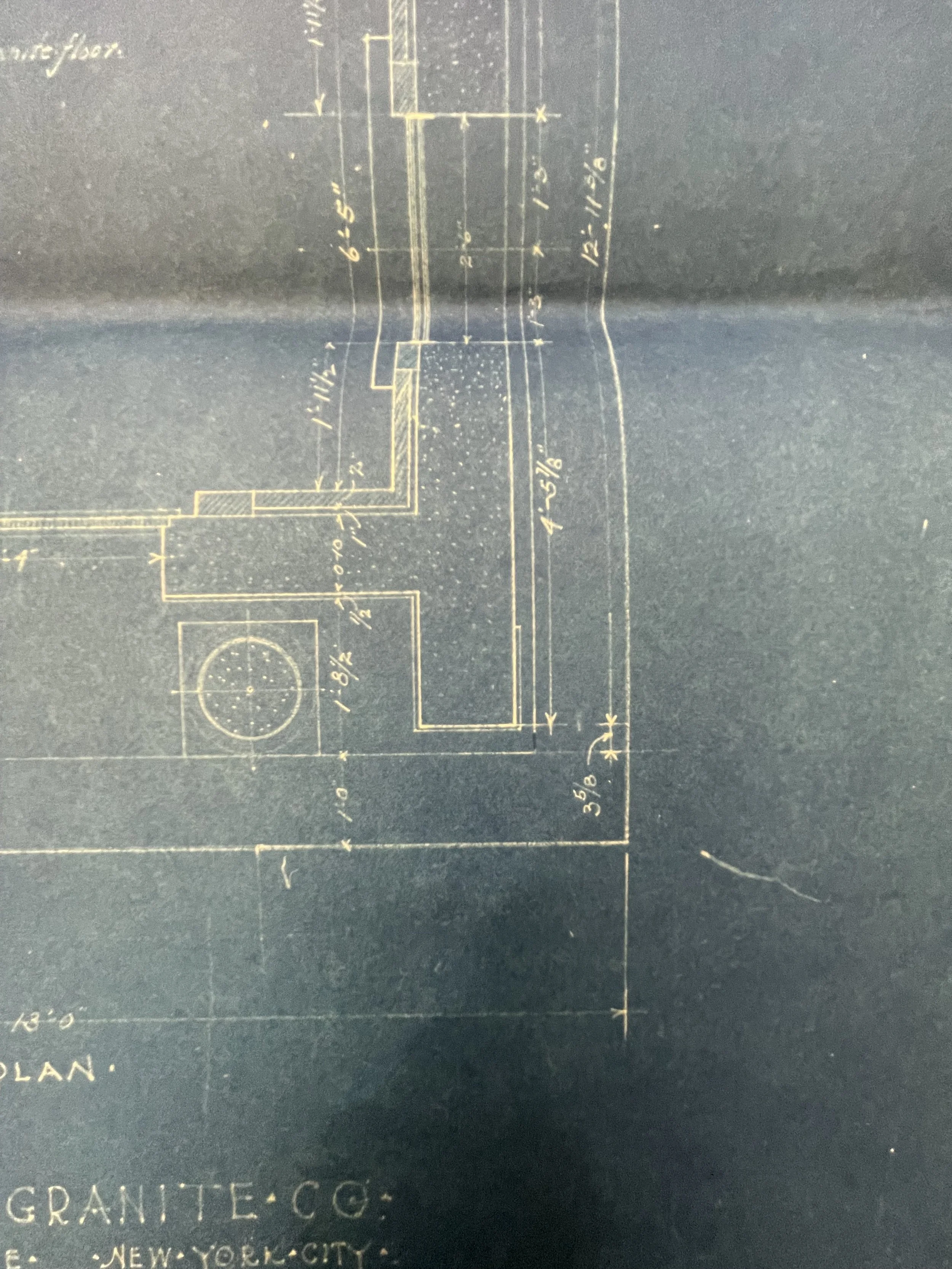
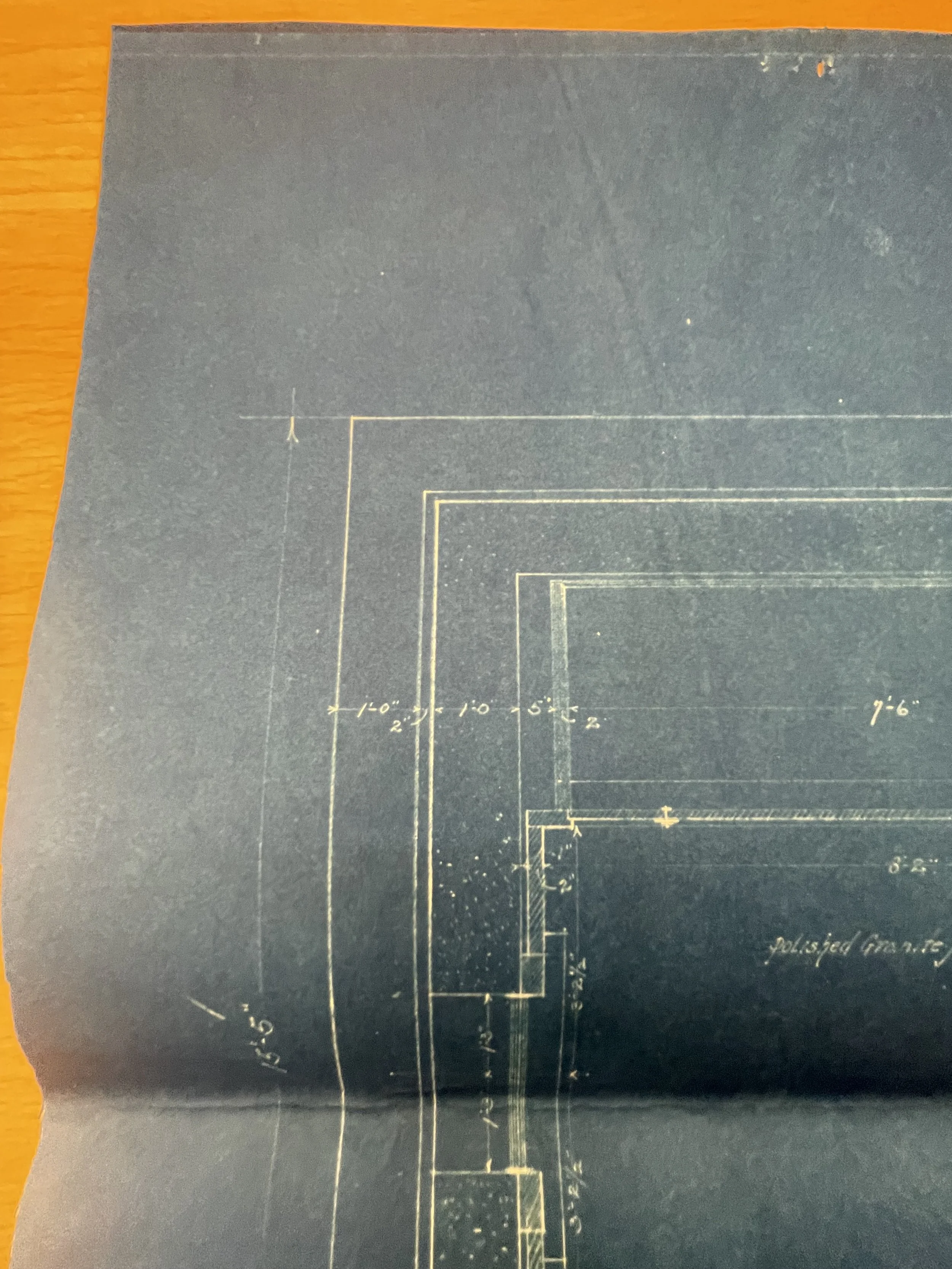
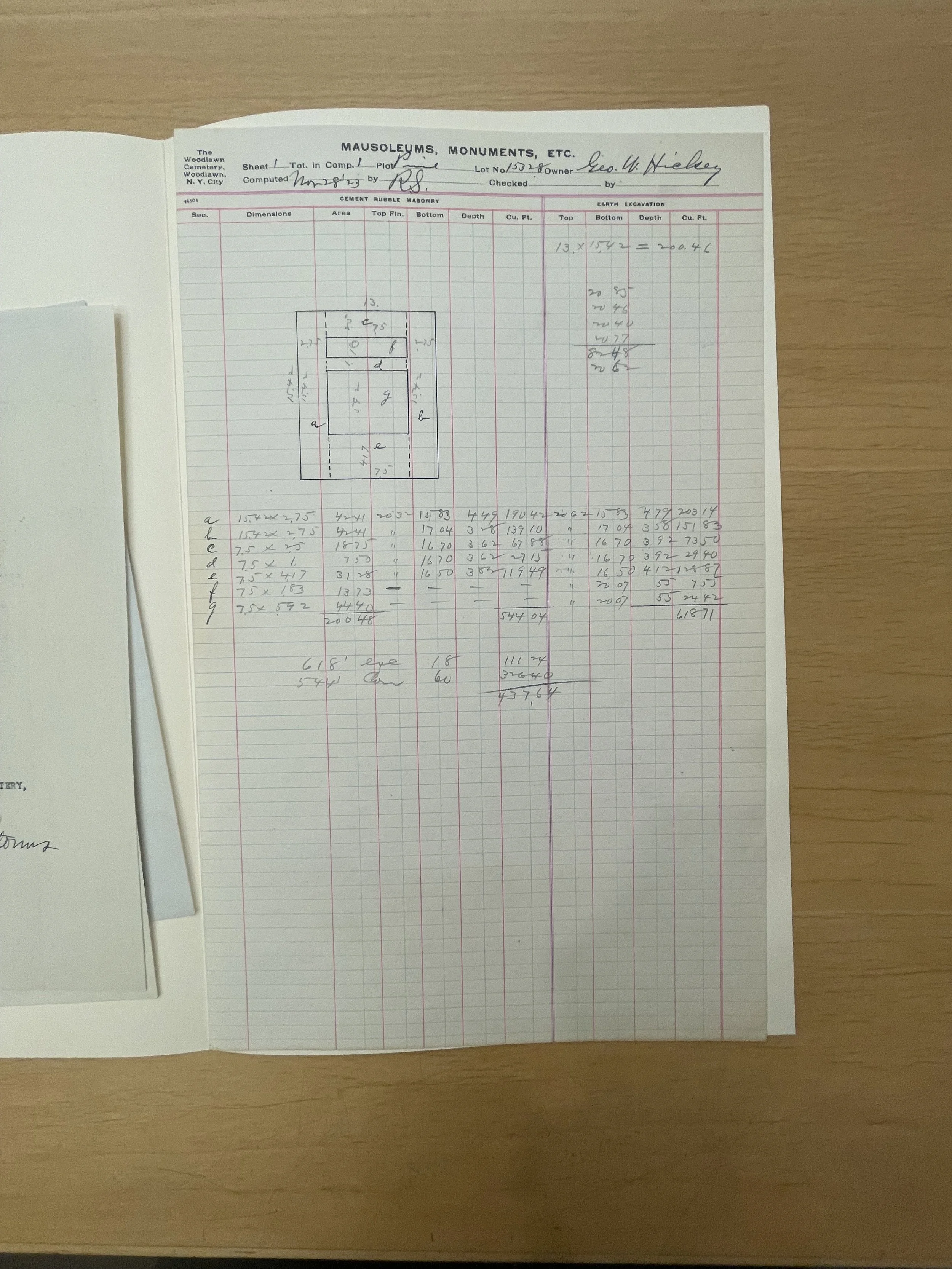
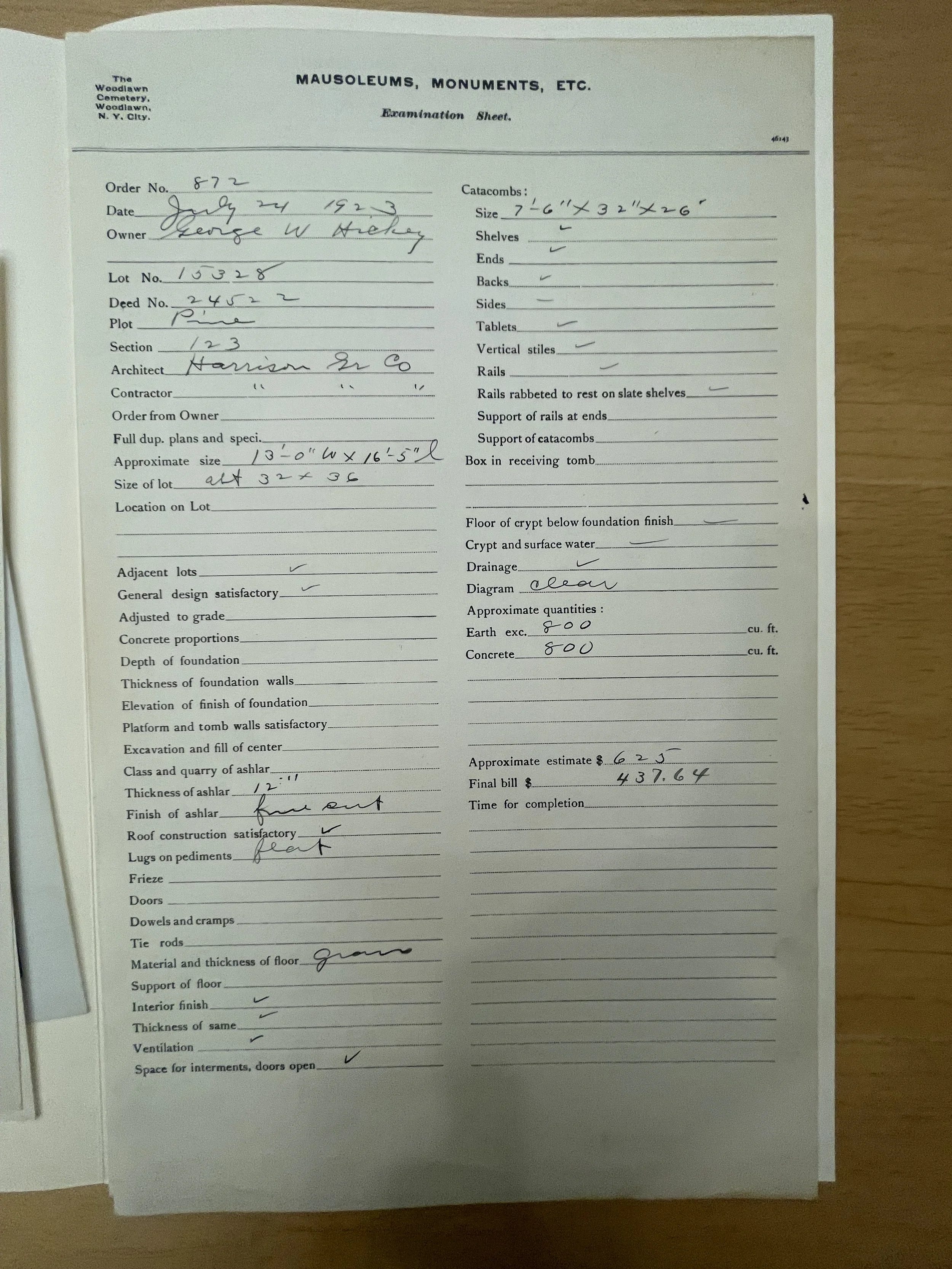
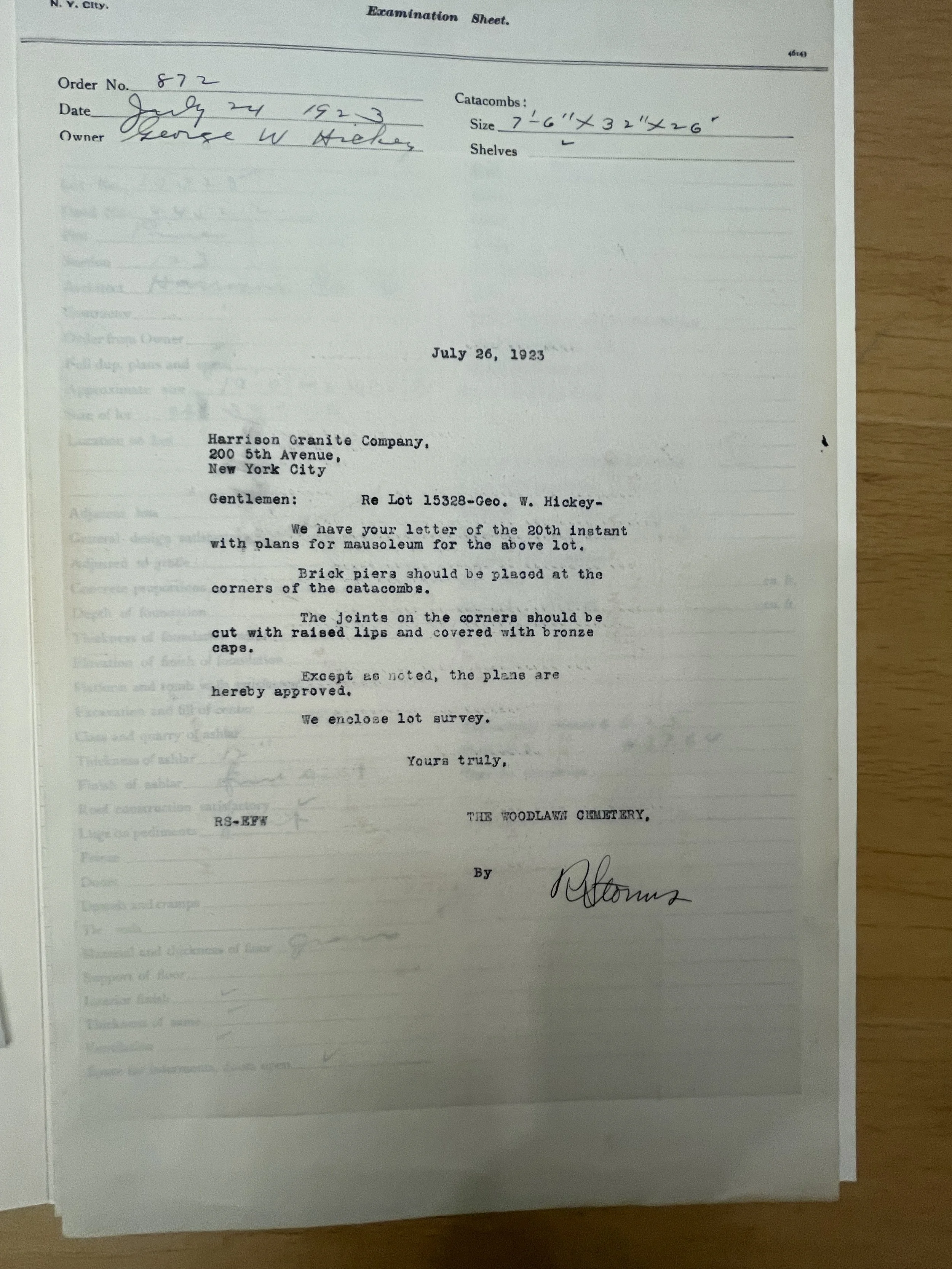
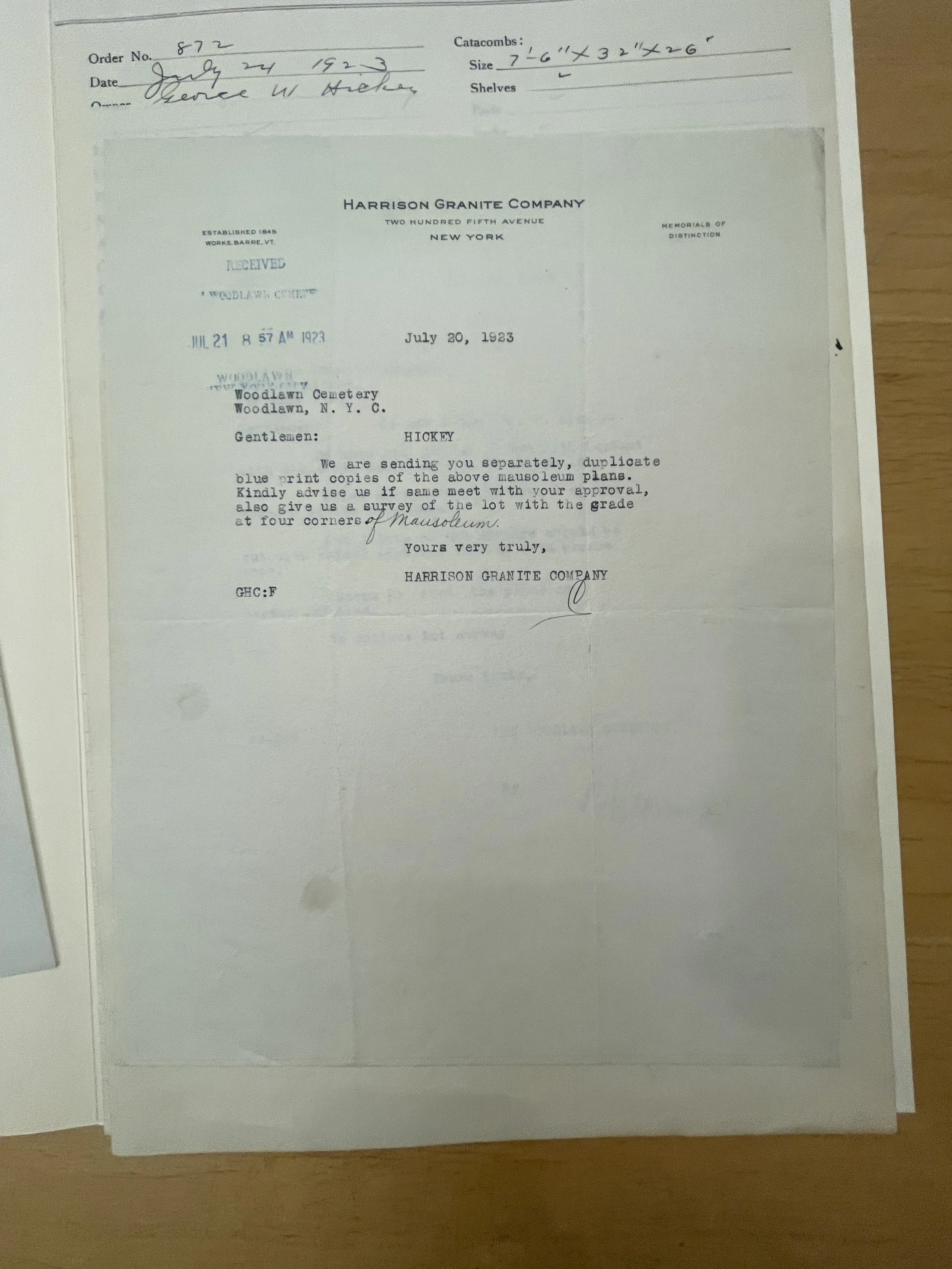
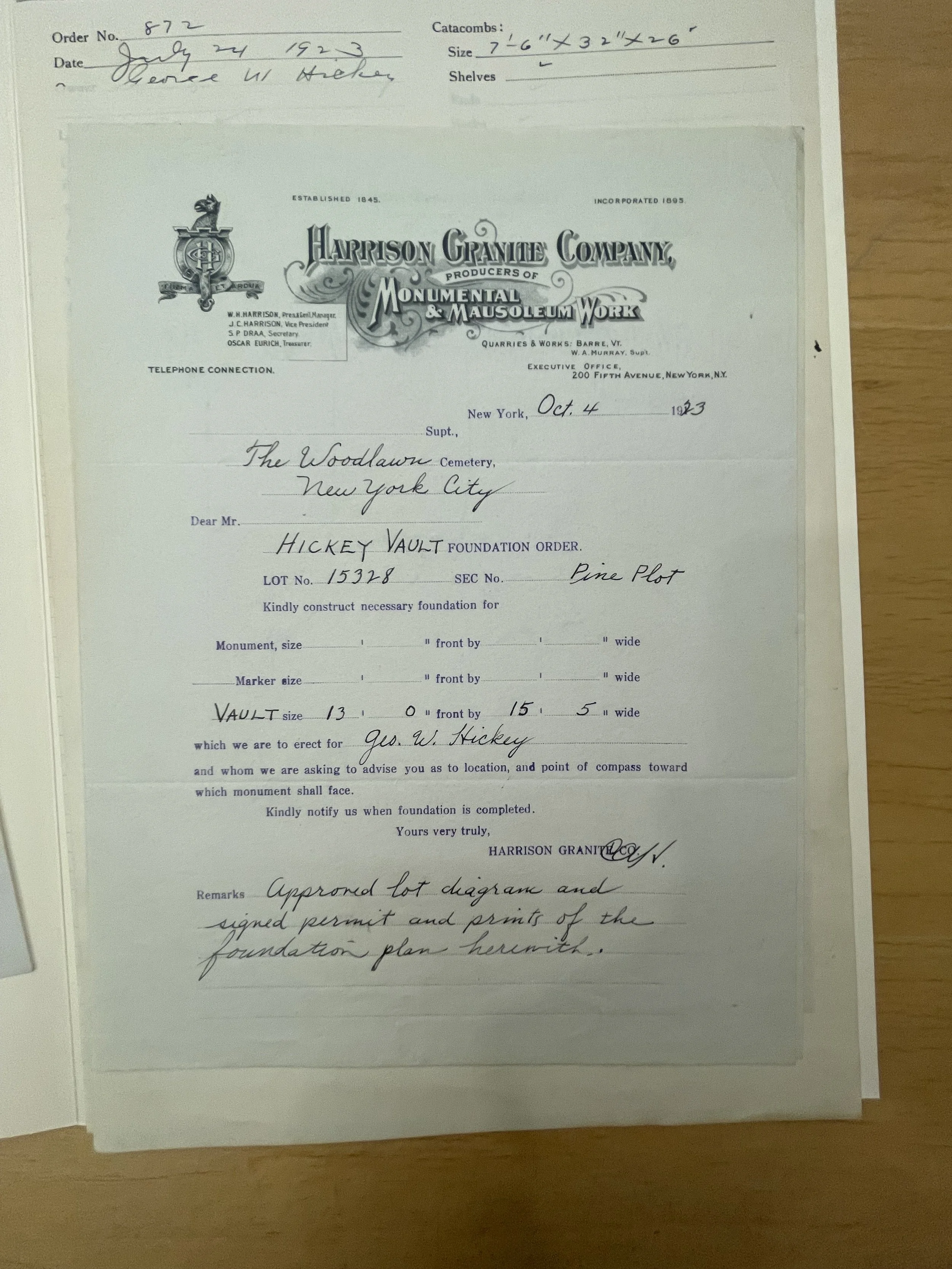
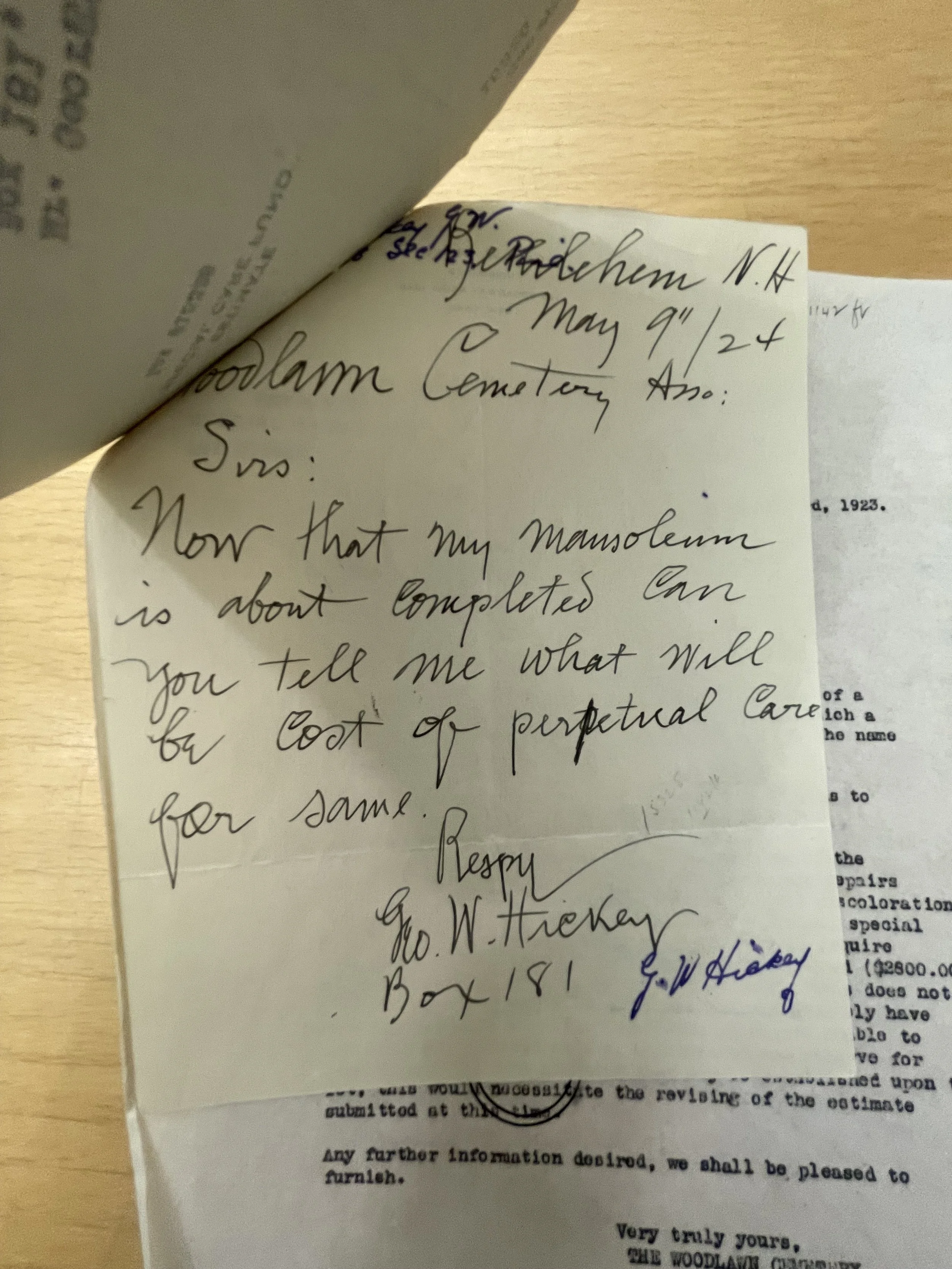
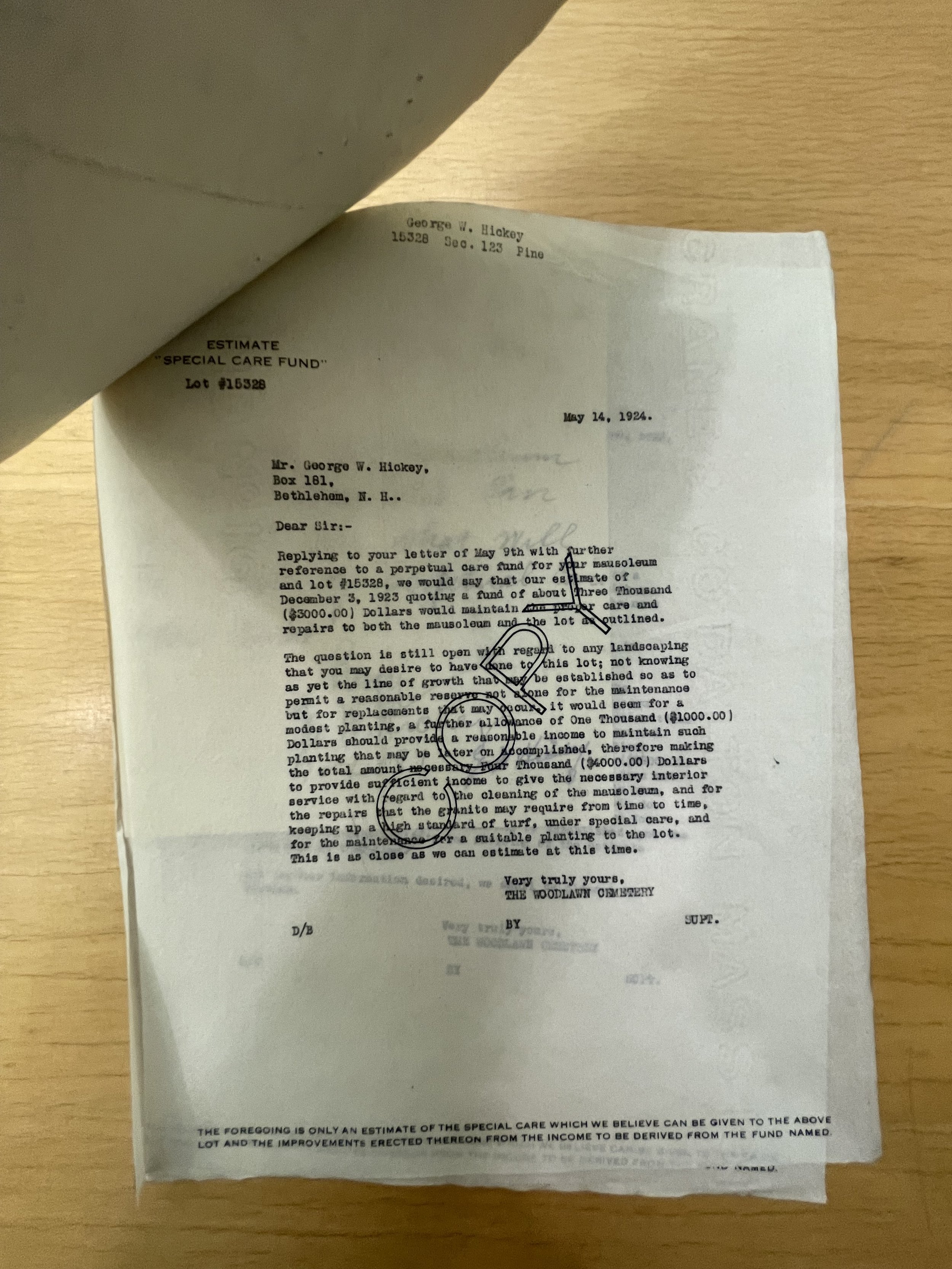
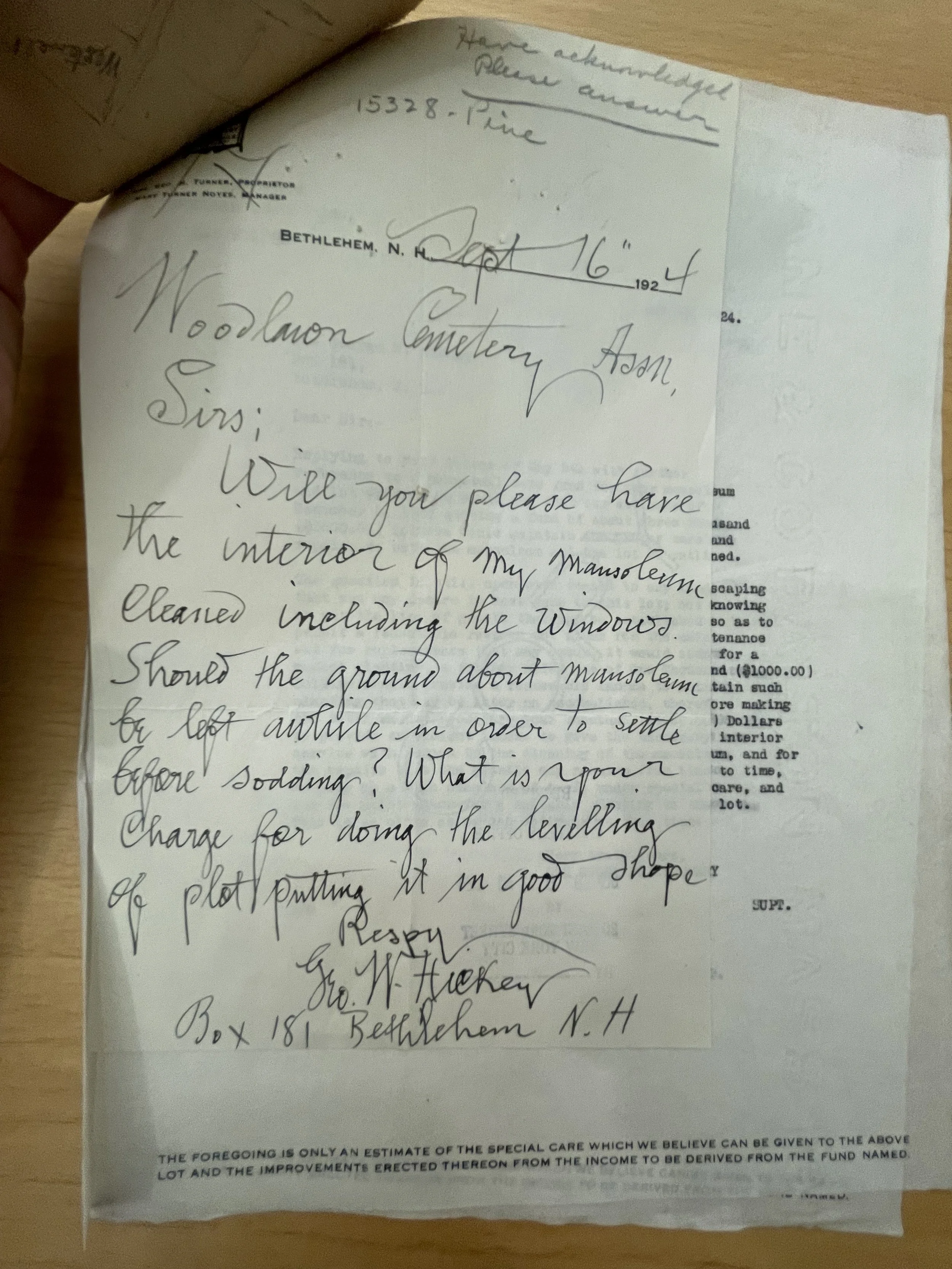
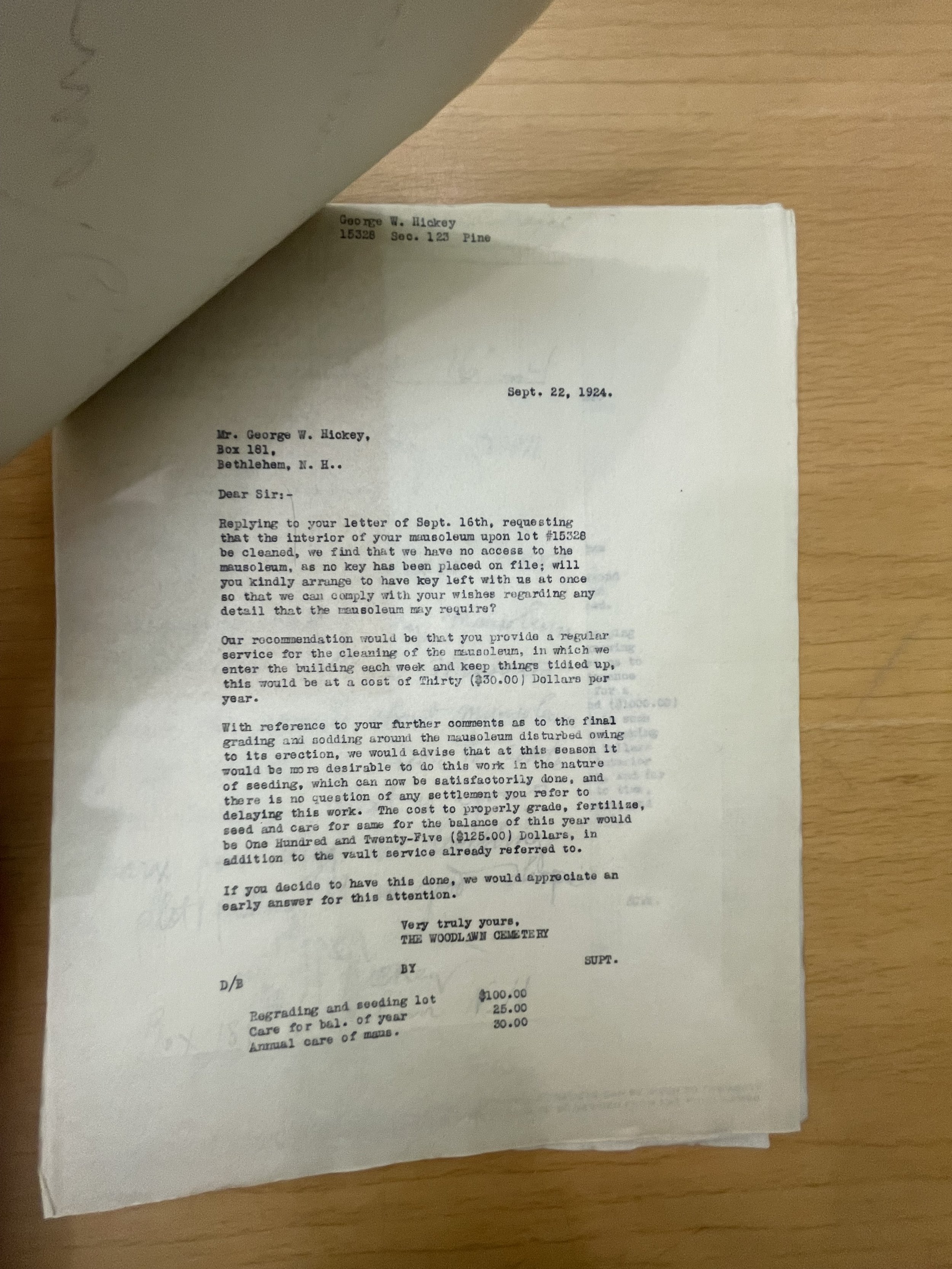
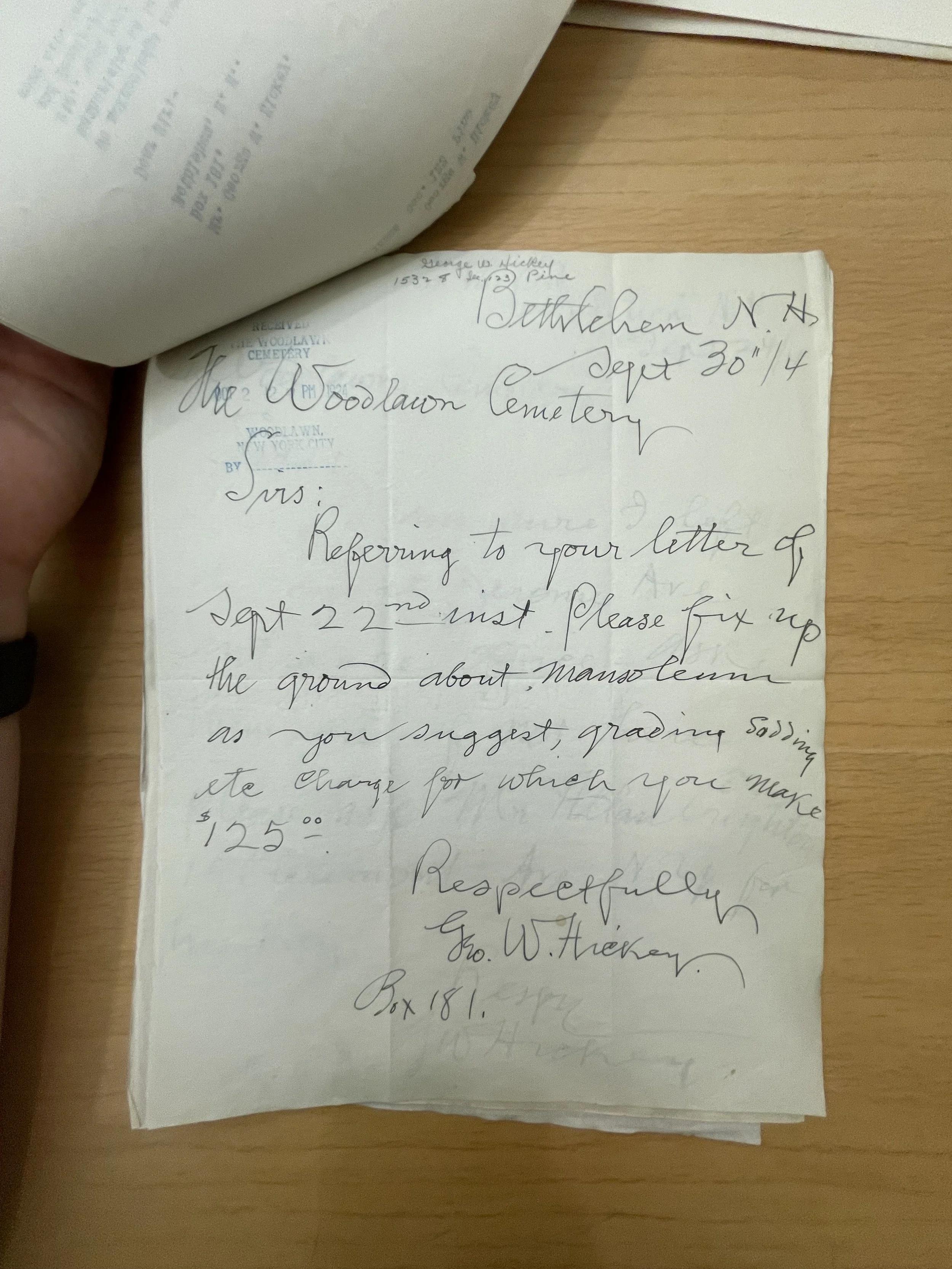
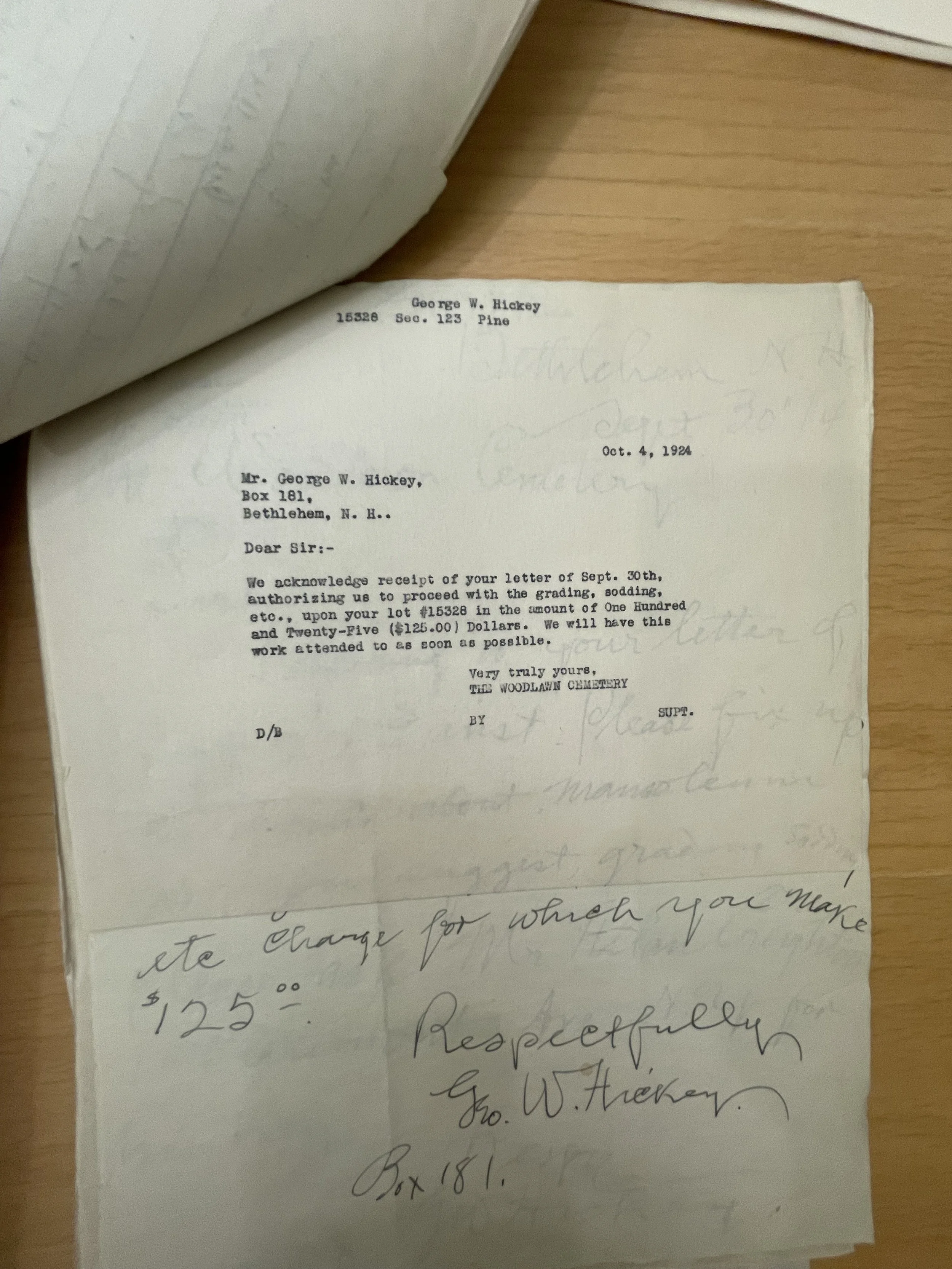
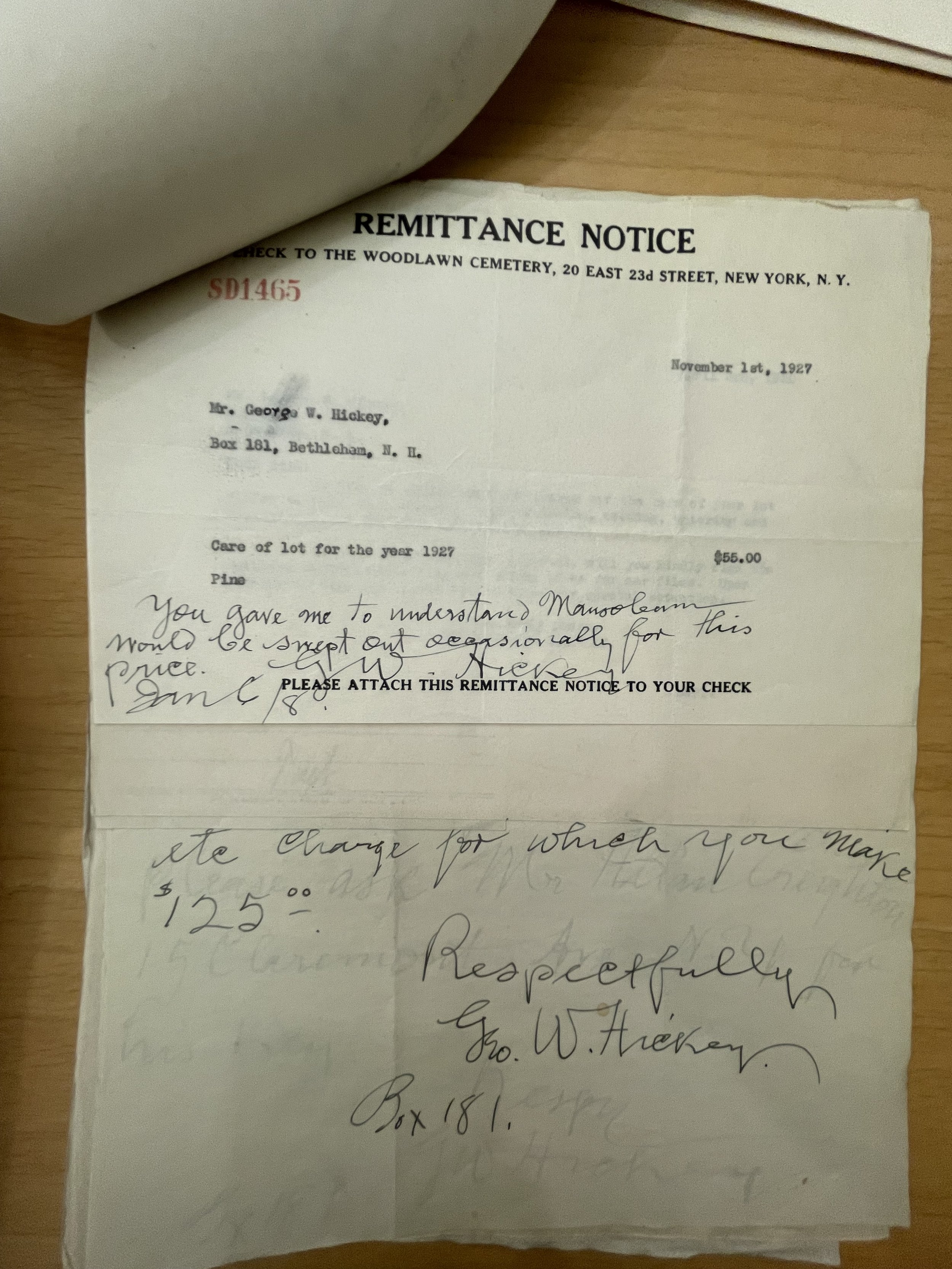
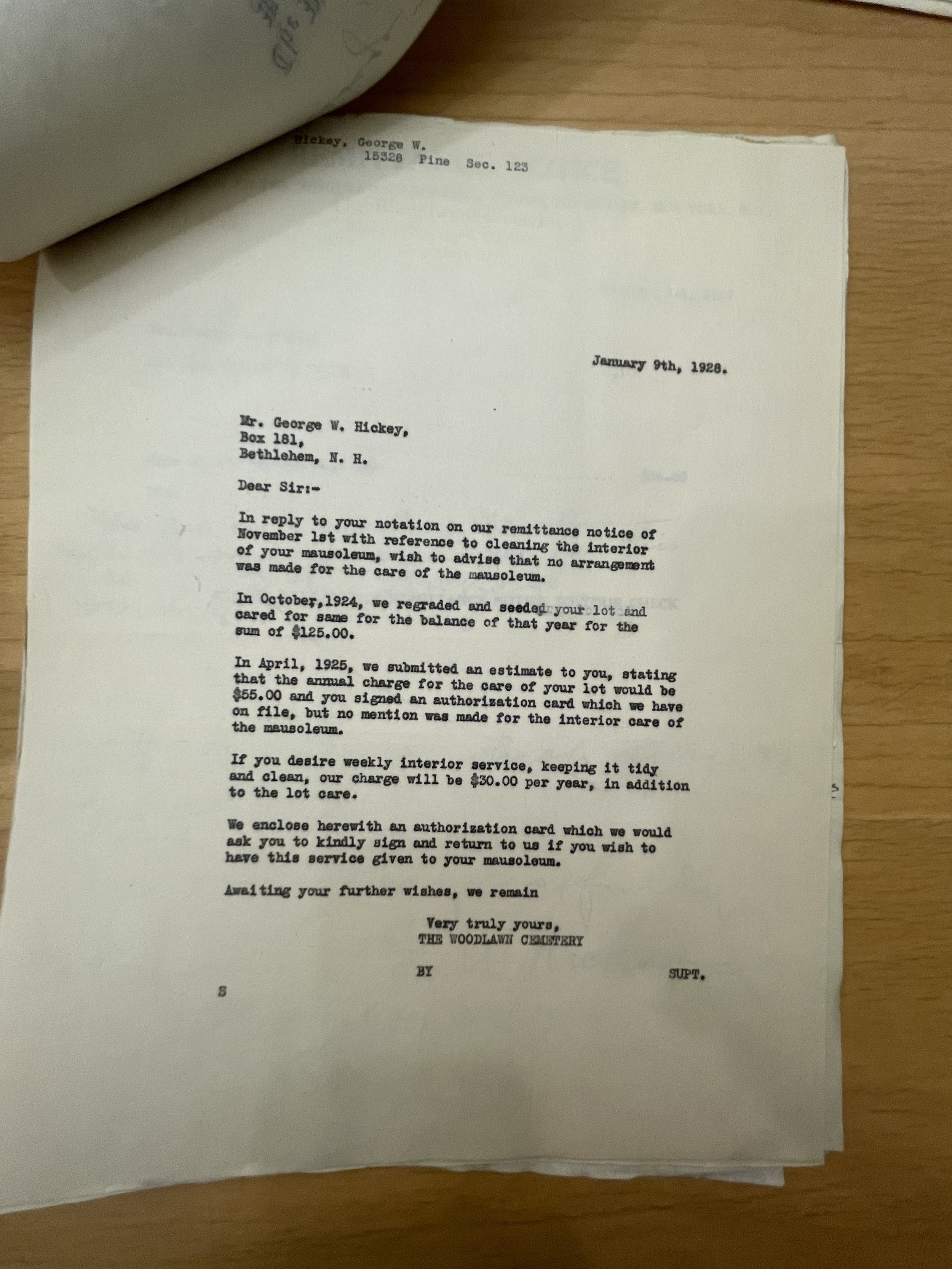
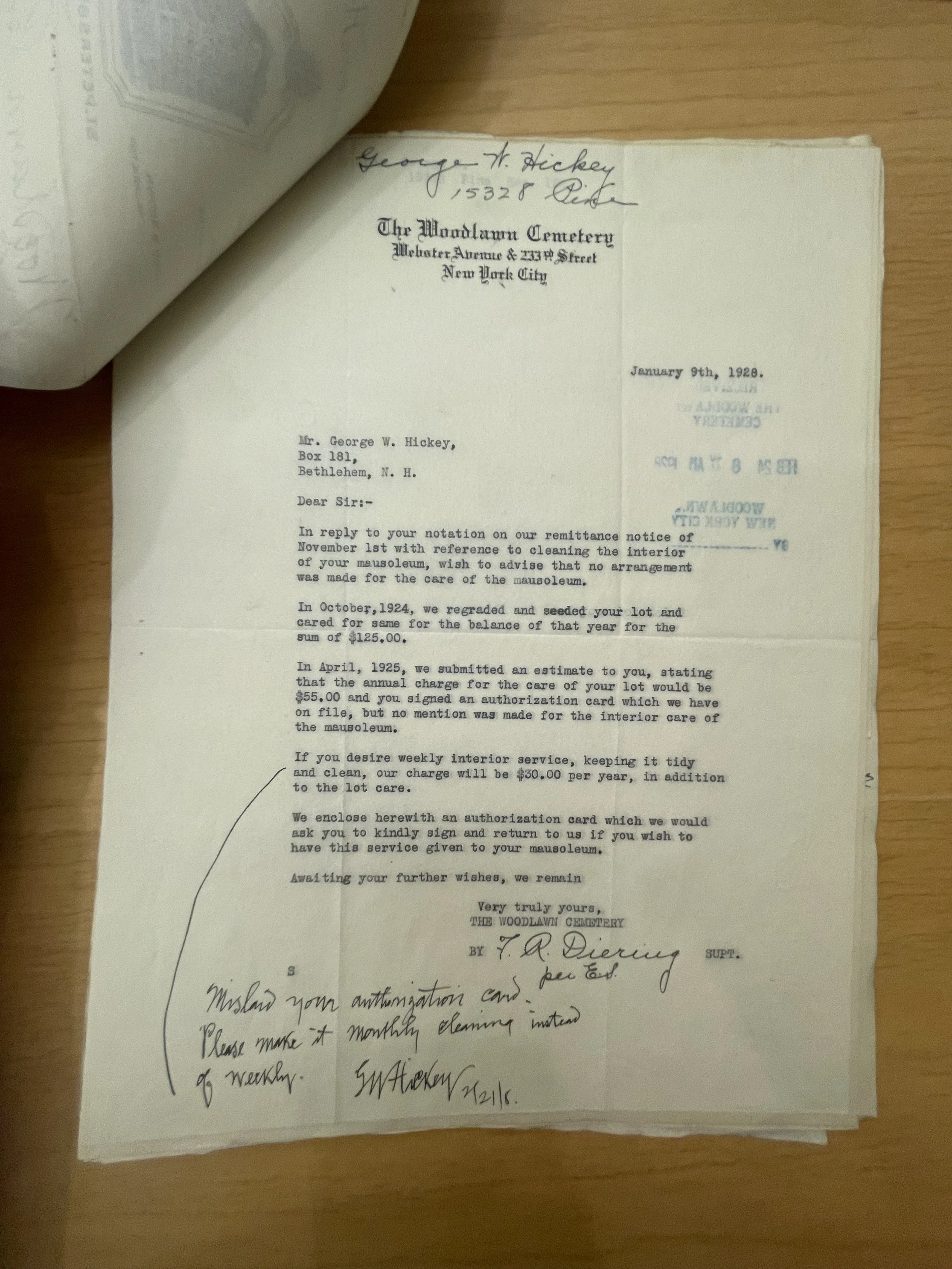
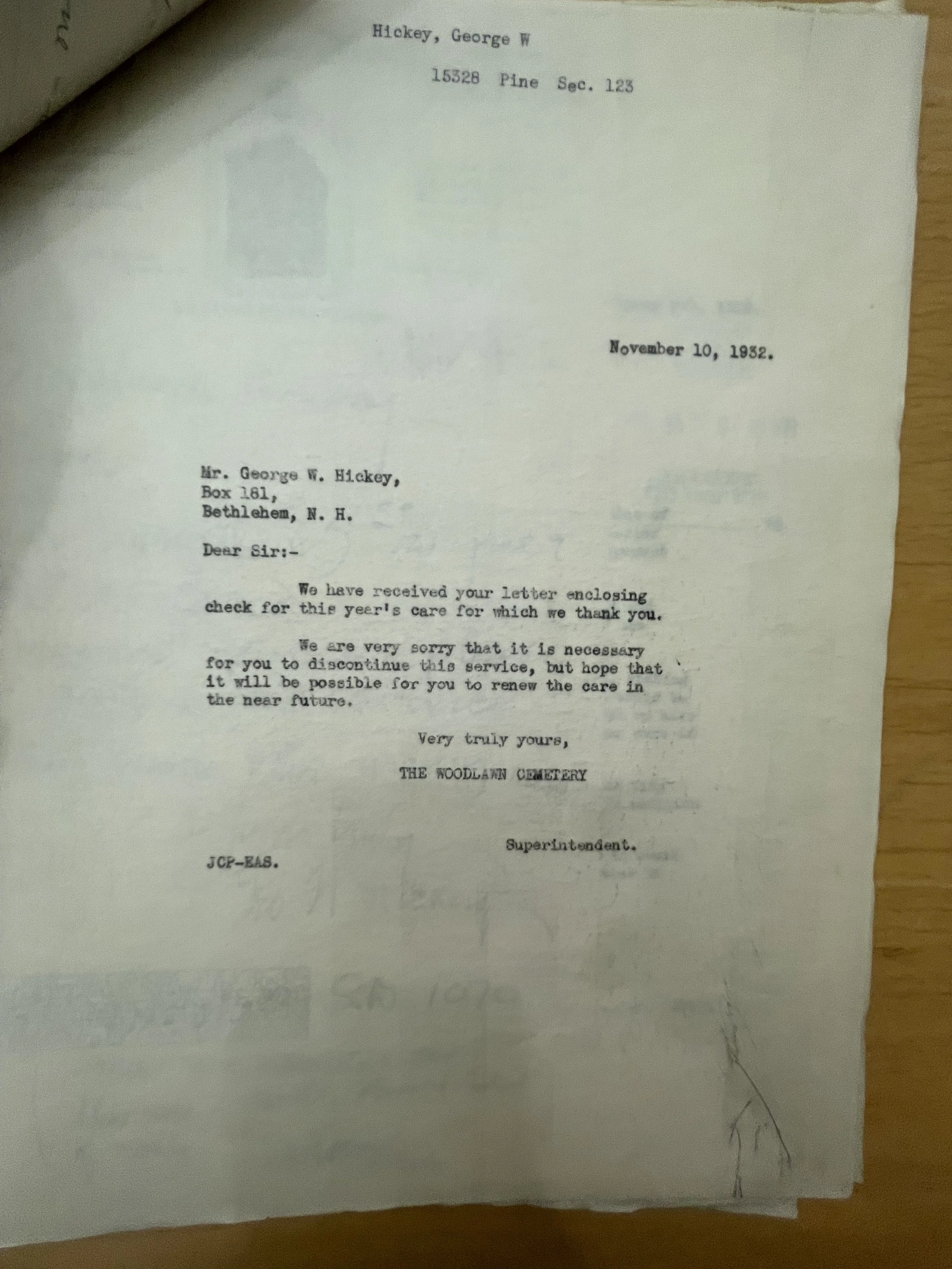
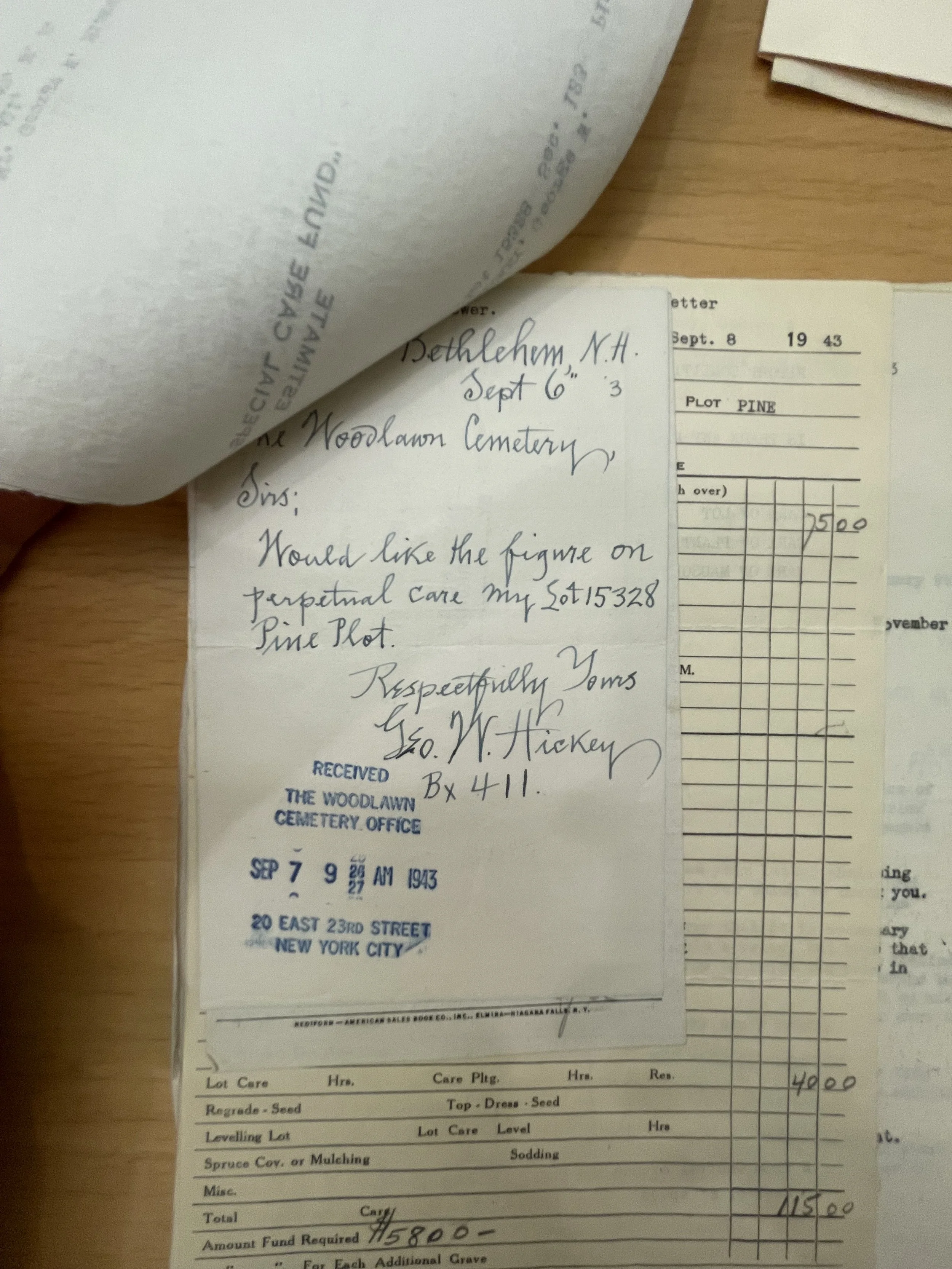
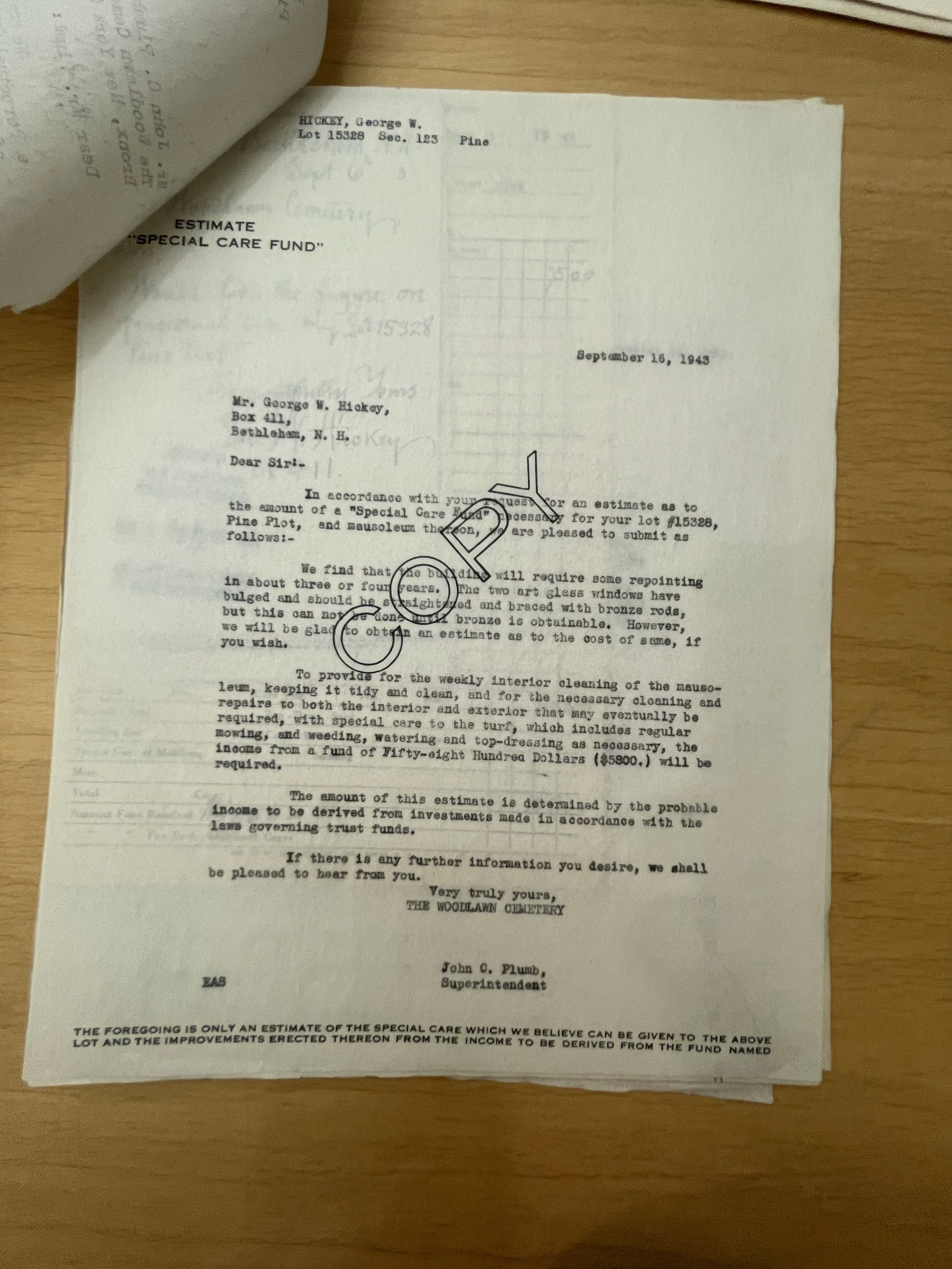
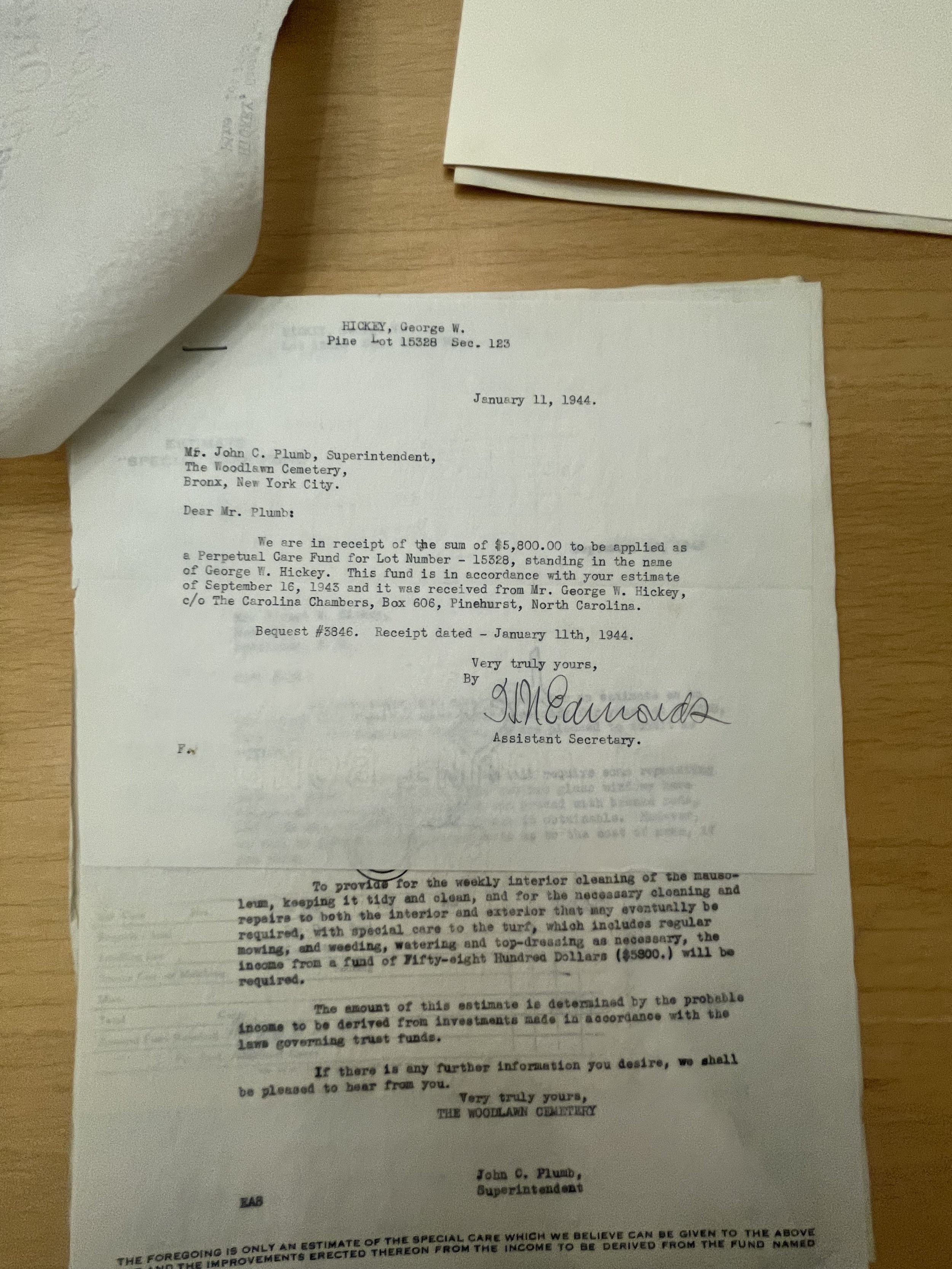
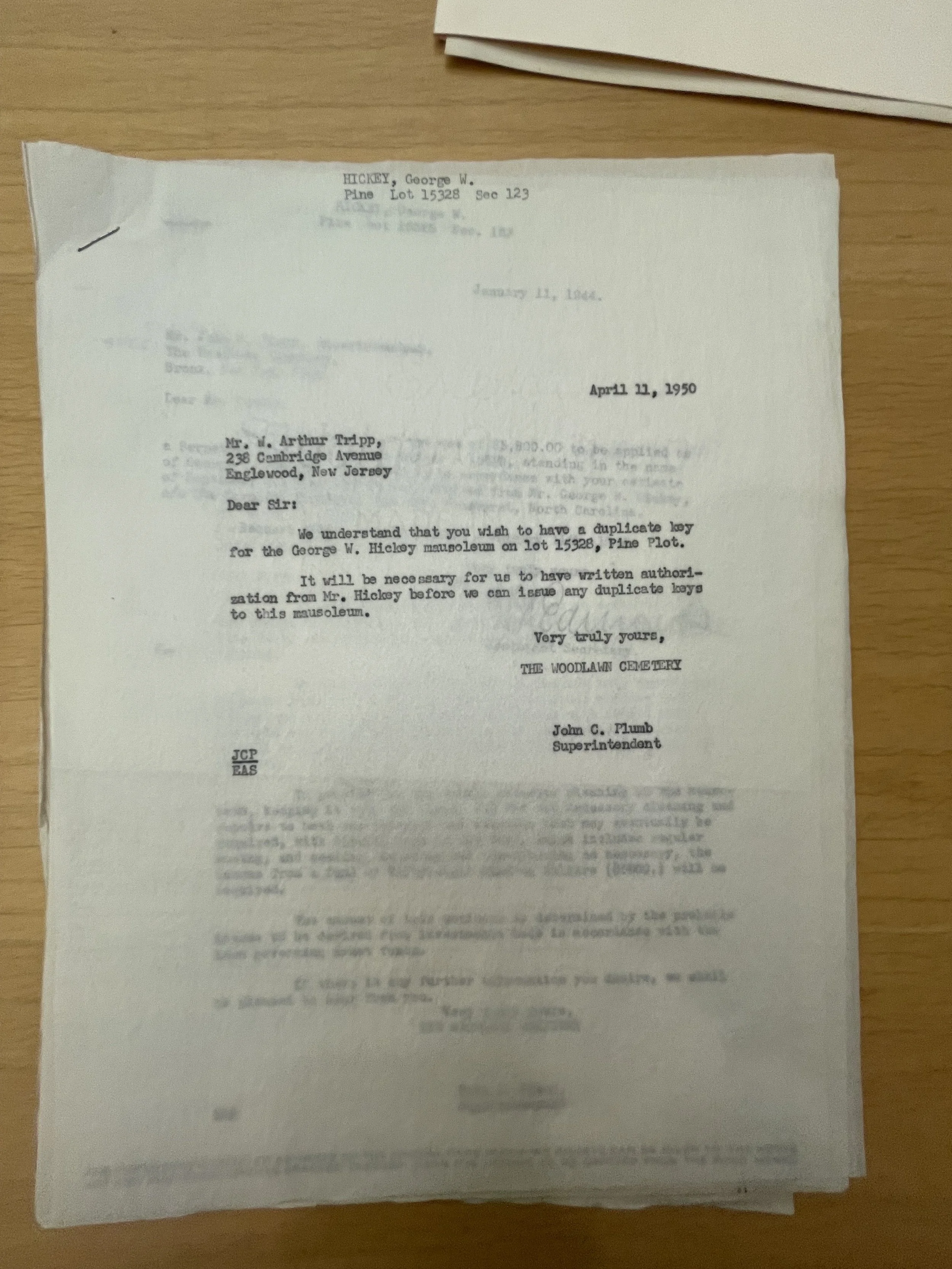
Avery Architecture Library's Woodlawn Cemetery Archive: blueprints from Harrison Granite Company (1922-1923), correspondence between George Hickey and Woodlawn Cemetery, plot maps, stained glass condition reports
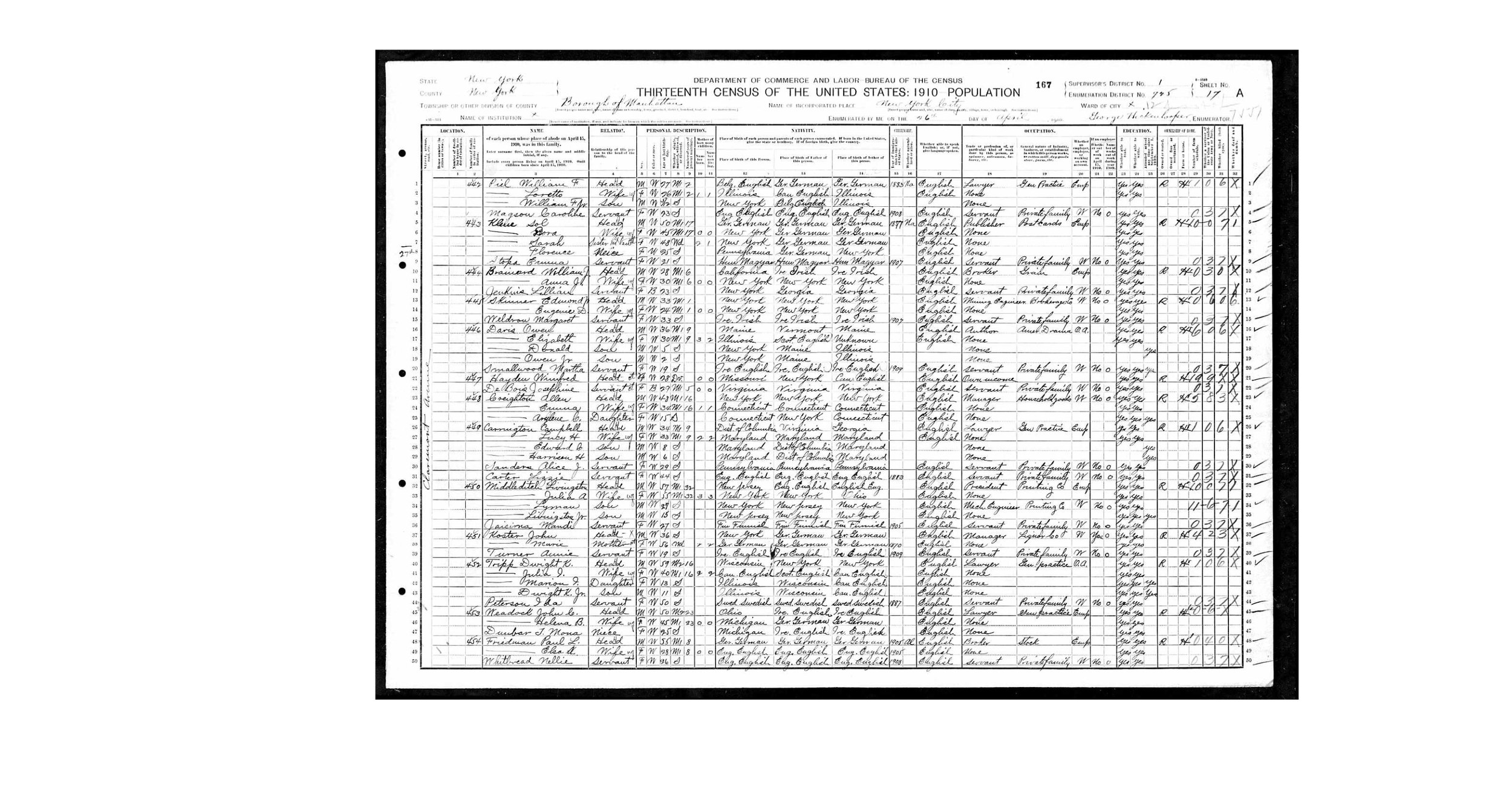
Census records (US Federal Census 1880-1940, Canadian Census 1861, New York State Census 1905-1920): traced household composition, occupations, residential patterns, and migration
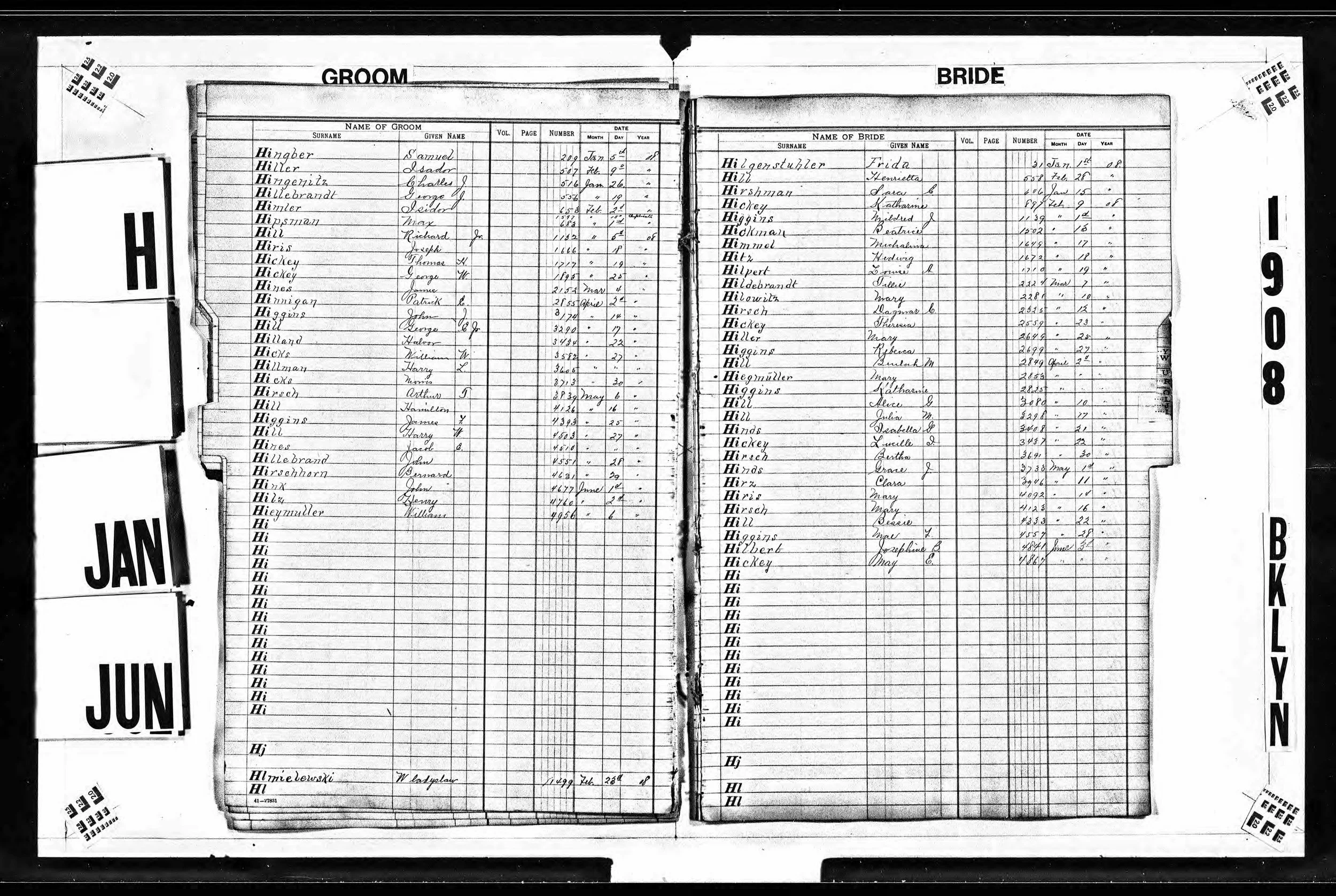
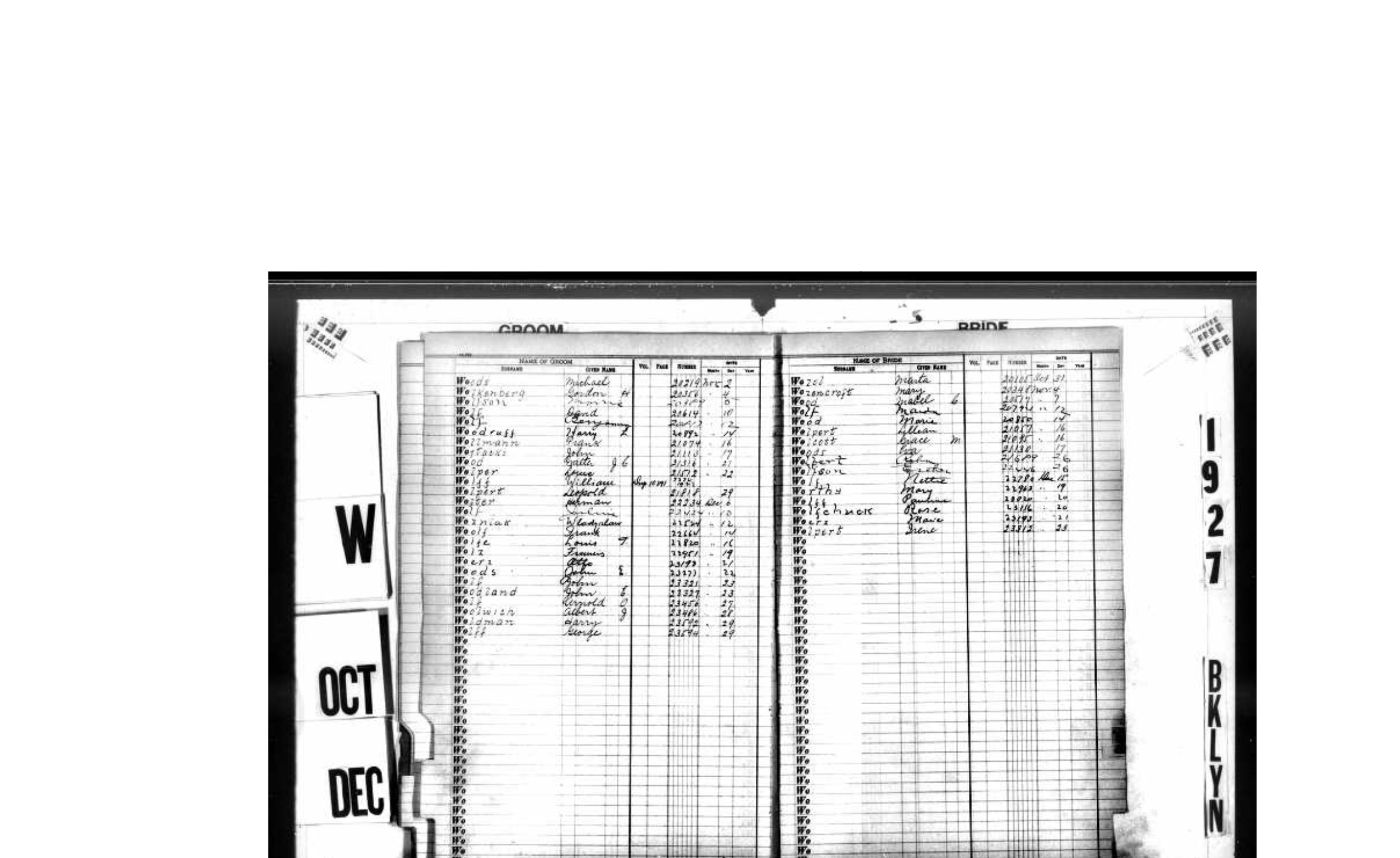
Marriage and death certificates: established family relationships and dates
Immigration and border crossing records (1924-1936): documented George Hickey's extensive travel after Mary's death
Newspaper archives (Brooklyn Daily Eagle, Watertown Daily Times, Herald News): obituaries, estate valuations, social announcements
Methodology and Gaps
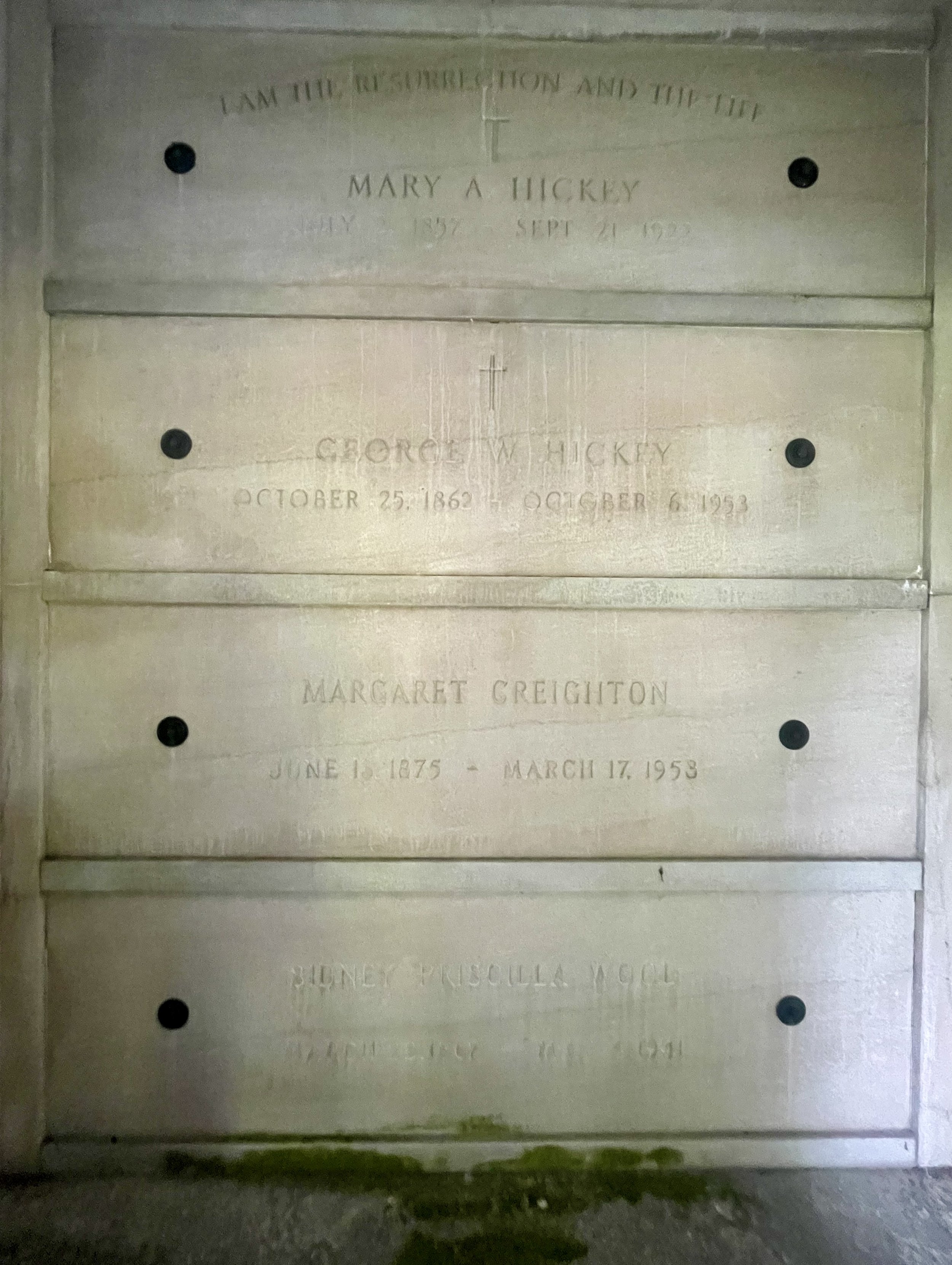
The archival work moved between material evidence at the cemetery and documentary sources. Inscriptions on the crypts provided names and dates, which led to census records showing the Hickeys, Mary's sister Margaret Creighton, and her other sister Sidney Priscilla Wood all living together at 209 Jefferson Avenue in Brooklyn. Property records and historical accounts revealed this address was a Woolworth-owned brownstone. Correspondence found in the Avery archives — including a 1928 letter from George to Woodlawn Cemetery written on Suwannee Hotel letterhead from St. Petersburg, Florida — provided evidence of his travel patterns and winter residences. Passenger manifests confirmed trips to Puerto Rico, England, Hawaii, Brazil, Gibraltar, and Germany throughout the 1920s and 1930s. The genealogical tracing extended beyond the interred individuals to locate living descendants. Sidney Priscilla Wood's line was traced through her daughter Mable Christina Krulder, granddaughter Audrey Priscilla Larry, and great-grandchildren currently living in South Carolina and New York.
Several archival puzzles emerged. Mary Hickey's substantial estate ($300,000 in 1923) is documented in the Brooklyn Daily Eagle but no will or inheritance record was found to explain its source. The most plausible explanation — that it came from the Woolworth family — is supported by circumstantial evidence (the family relationships, Mary's role managing a Woolworth store, the proximity of the burial plots) but not definitively proven. Additionally, the 1940 census lists a "George W. Hickey" at a different Manhattan address with slightly inconsistent biographical details, raising questions about George's living situation in his later years and whether he experienced financial decline before his death in 1953.